


How to Tell If You Need Emergency HVAC Service Right Now
Knowing the signs you need emergency HVAC service immediately could be the difference between a quick fix and a serious safety crisis. Some HVAC problems can wait a day or two. Others cannot — especially when St. George summers regularly push past 100°F and your system is the only thing standing between your family and dangerous heat.
Here are the most urgent signs that you need emergency HVAC service right now:
- Complete loss of heating or cooling during extreme temperatures (above 90°F or below 40°F)
- Burning smell or smoke coming from vents or the unit
- Rotten egg or gas odor near your furnace or HVAC equipment
- Sparks, flickering, or electrical buzzing from the unit
- Carbon monoxide alarm triggered in your home
- Loud banging, screeching, or grinding noises from the system
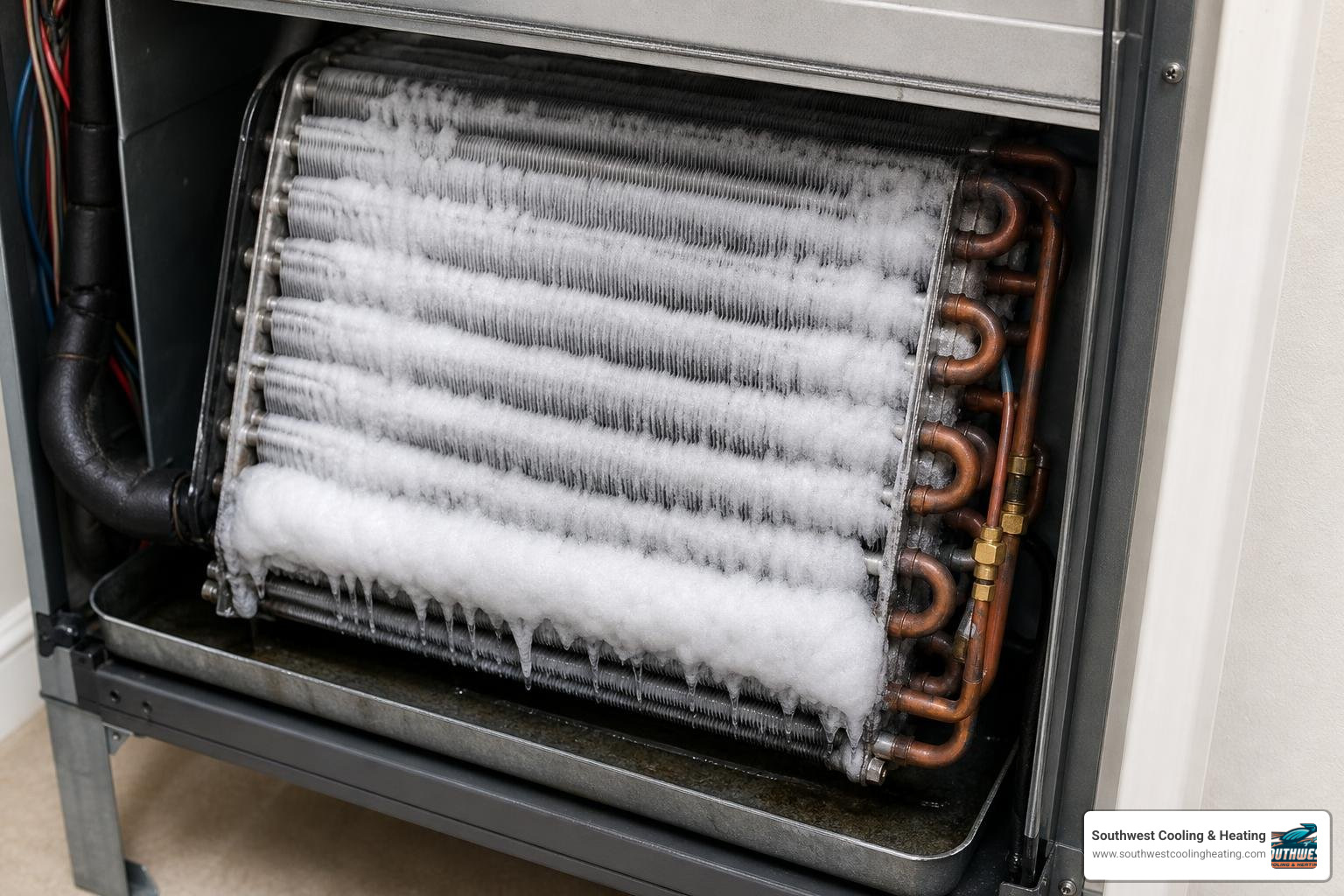
- Ice buildup on the indoor or outdoor unit
- System short cycling (turning on and off rapidly)
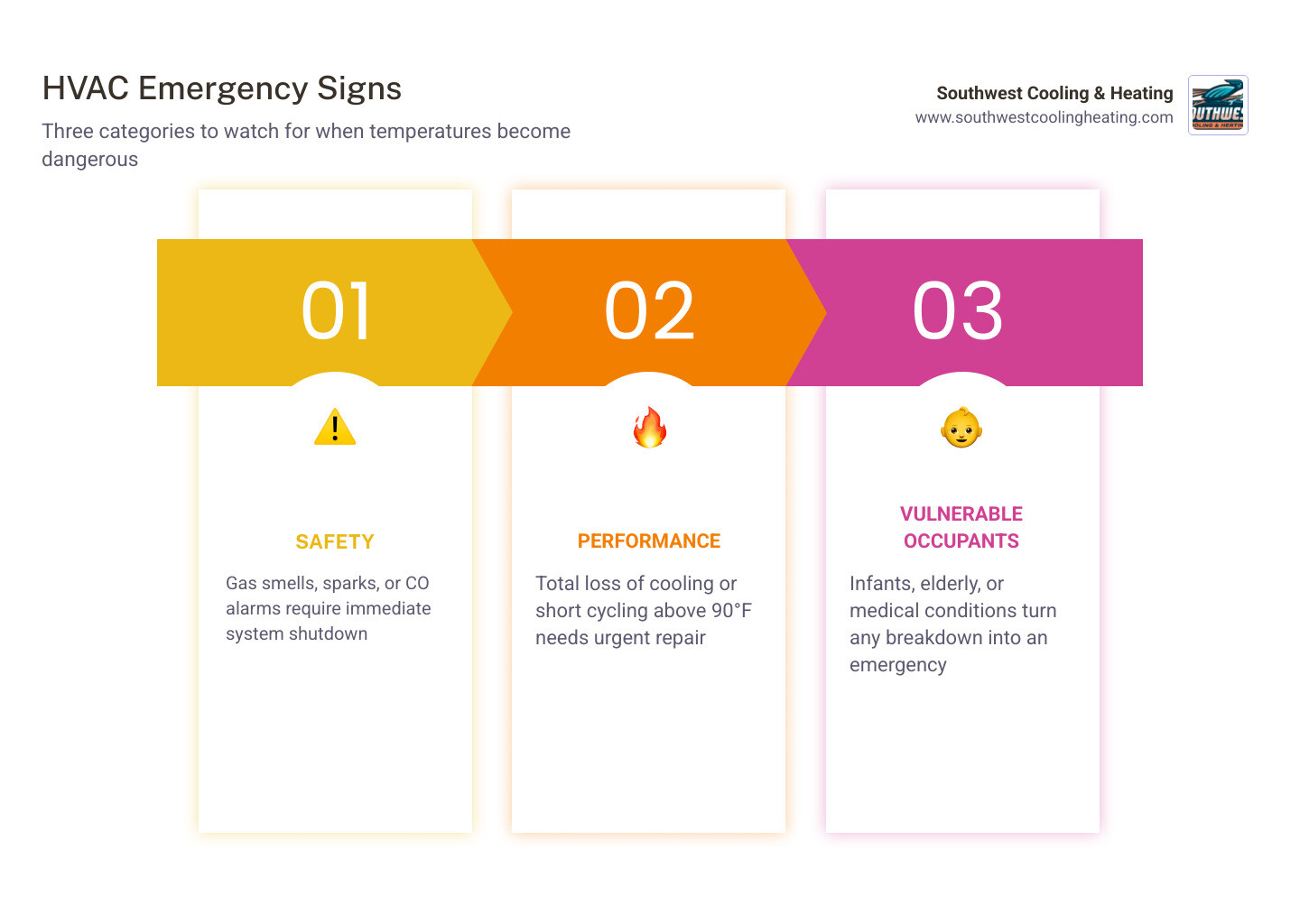
- Complete system failure with vulnerable occupants — infants, elderly, or those with medical conditions — in the home
If any of the above apply, turn off your system and call an HVAC professional immediately. Do not wait.
For most homeowners, an HVAC breakdown feels stressful and confusing — it is hard to know what is truly urgent and what can hold until morning. A broken AC at 2 a.m. during a mild night is frustrating. That same failure during a Southern Utah heat wave with a baby or elderly parent in the house is a genuine emergency. The difference matters, and knowing where that line is can protect your family, your home, and your wallet.
I’m Bruce Hymas, owner of Southwest Cooling and Heating, and after decades of serving families across St. George and Southern Utah, I have seen how quickly an ignored HVAC warning sign can turn into a dangerous — and costly — situation. Understanding the signs you need emergency HVAC service immediately is something I talk about with homeowners every day, and this guide covers everything you need to know to make the right call fast.
Quick signs you need emergency hvac service immediately terms:
What Qualifies as an HVAC Emergency vs. a Standard Repair?
When your heating or cooling system acts up, it is easy to assume the worst. However, not every weird noise or minor drop in airflow requires a technician to rush out to your home in the middle of the night. Distinguishing between a standard repair and a true emergency comes down to three main factors: safety risks, property damage, and extreme weather conditions.
To help you make the right call, we recommend using the 40/90 temperature rule. Generally, an HVAC failure becomes an immediate emergency if the outdoor temperature is above 90°F during the cooling season or below 40°F during the heating season. In the extreme climate of Southern Utah—whether you are facing a scorching July afternoon in Hurricane or a freezing winter night in Diamond Valley—indoor temperatures can reach dangerous levels in a matter of hours.
Beyond the temperature itself, the presence of vulnerable household members significantly increases the urgency. Infants, elderly residents, pregnant individuals, and pets are far more susceptible to heat exhaustion, heat stroke, or hypothermia. A standard repair that might wait until Monday for a young, healthy adult becomes an urgent priority when vulnerable loved ones are involved.
Additionally, safety risks like gas leaks, electrical faults, and active property damage (such as water pouring through a ceiling from a clogged condensate drain) always qualify as emergencies, regardless of the outdoor temperature. To make these distinctions easier to understand, we have put together a helpful guide on Red Alerts and Cold Comforts: Signs Your HVAC Needs Help ASAP.
| Issue Category | Standard Repair (Can Wait for Business Hours) | Emergency Situation (Call Immediately) |
|---|---|---|
| Indoor Temperature | Indoor temperature remains between 62°F and 78°F. | Indoor temperature climbs past 85°F or drops below 50°F. |
| System Performance | Slight drop in airflow; uneven cooling between rooms. | Complete system shutdown in extreme heat or cold. |
| Odors & Smells | Dusty smell when turning on the heater for the first time. | Burning plastic, electrical smoke, or rotten egg (gas) odors. |
| Sounds | Mild rattling or occasional clicking from the vents. | Screeching, heavy metal grinding, or loud banging. |
| Water & Ice | Small puddle near the outdoor drain line. | Active indoor flooding; thick ice buildup on coils or lines. |
| Occupant Health | No high-risk residents in the home. | Infants, elderly, or medically fragile occupants present. |
Red Flags: Signs You Need Emergency HVAC Service Immediately
Recognizing the warning signs of a system in crisis can save you from a total breakdown and prevent expensive secondary damage to your home. When your HVAC system is under extreme stress, it often broadcasts its distress through visible and physical red flags.
For instance, did you know that frozen evaporator coils are responsible for nearly 20% of emergency cooling failures? If you see ice forming on your indoor air handler or the outdoor copper refrigerant lines, your system is in immediate danger. Continuing to run an air conditioner with frozen coils can destroy the compressor—the most expensive component in the entire system.
Other critical red flags include a complete system shutdown during a heatwave, visible sparks coming from the outdoor condenser unit, or a triggered carbon monoxide alarm. If you find yourself facing a sudden system failure, review The Ultimate Survival Guide for When Your HVAC Quits to keep your household safe while help is on the way.
Below, we break down these critical warnings into sensory red flags (what you smell and hear) and performance red flags (how your system behaves).
Sensory Red Flags: Signs You Need Emergency HVAC Service Immediately
Your senses are incredibly reliable tools for identifying HVAC hazards. If something smells or sounds wrong, trust your instincts and shut the system down.
- Burning Plastic or Metallic Smells: Electrical issues account for nearly 18% of emergency HVAC calls. If you smell burning plastic, sulfur, or a sharp metallic odor coming from your vents, it usually indicates overheating wires, a failing blower motor, or a compromised circuit board. Turn off the power at your breaker panel immediately to prevent an electrical fire.
- Rotten Egg Odor: Because natural gas is naturally odorless, utility companies add a harmless chemical called mercaptan to give it a distinct “rotten egg” smell. If you smell this near your furnace or vents, evacuate your home immediately. Do not flip any light switches, use your phone indoors, or light matches, as a tiny spark can ignite the gas. Once you are safe outside, call 911 and your gas provider.
- Screeching or Metal Grinding: A loud, high-pitched screeching sound often points to a failing bearing in the blower motor or a slipped fan belt. A heavy metal grinding noise suggests that the blower wheel has come loose and is actively tearing itself apart inside the housing. If left running, this can shatter the wheel and cause extensive internal damage.
- Hissing or Gurgling Sounds: Hissing or gurgling noises usually indicate a pressurized refrigerant leak. Refrigerant-related emergencies represent about 30% of summer breakdowns, and because refrigerant requires EPA-certified handling, you must call for professional Emergency HVAC Services to locate and repair the leak safely.
Performance Red Flags: Signs You Need Emergency HVAC Service Immediately
When your system’s performance drops off a cliff, it is often a sign of a deeper mechanical or electrical failure.
- Complete System Shutdown: If your air conditioner or furnace refuses to turn on at all during extreme weather, you cannot afford to wait. In places like Santa Clara or Ivins, indoor temperatures can easily surpass 90°F within a few hours of an AC failure, putting vulnerable family members at risk.
- Frozen Evaporator Coils: Ice buildup on your system is never normal, even in the middle of a triple-digit St. George summer. Frozen coils are usually caused by a severe restriction in airflow (such as a heavily clogged filter) or a refrigerant leak. Running the system with frozen coils risks liquid refrigerant flooding back into the compressor, causing permanent mechanical failure.
- Rapid Short Cycling: If your HVAC system turns on, runs for a minute or two, and then shuts down—only to repeat the process moments later—it is short cycling. This places massive electrical and mechanical stress on the compressor and fan motors, quickly leading to a total system burnout.
- Weak or Lukewarm Airflow: If your vents are barely blowing air, or if your AC is blowing warm air during a heatwave, your system is working overtime to achieve nothing. Airflow reductions of just 10% can lower system efficiency by up to 15%, and systems experiencing airflow problems use up to 25% more energy. This extra strain can trigger a complete breakdown on hot days. If your cooling output has vanished, check out our guide on What to Do When Your AC Breaks in Extreme Heat.
Immediate Action Plan: What to Do Before Calling the Pros
When your HVAC system fails, it is easy to panic. However, taking a few systematic steps can help you determine if you have a simple, easily correctable issue or a true emergency that requires professional intervention.
Before you call for emergency service, follow this quick troubleshooting checklist:
- Check the Thermostat: Believe it or not, about 40% of HVAC emergencies actually start with the thermostat. Verify that your thermostat is set to the correct mode (“Cool” for summer, “Heat” for winter) and that the fan is set to “Auto.” If the screen is completely blank, try replacing the batteries. A dead battery or a loose wire can make your entire system appear completely broken.
- Inspect the Circuit Breaker: Locate your home’s main electrical panel and check the breaker labeled for your HVAC system. If it has tripped to the middle position, flip it fully to “Off” and then back to “On.” Important safety rule: If the breaker immediately trips again, do not attempt to reset it a second time. A repeatedly tripping breaker indicates a severe electrical fault, and forcing it to stay on can cause an electrical fire.
- Check the Air Filter: A heavily clogged air filter blocks airflow so severely that it can cause your evaporator coils to freeze or your furnace to overheat and shut down via its safety limit switch. If your filter is caked in dust and pet hair, replace it immediately.
- Inspect the Outdoor Unit: Ensure that your outdoor condenser unit is free of debris. Clear away overgrown weeds, leaves, or windblown trash. Your system needs at least two feet of clear space around it to release heat efficiently.
- Examine the Vents: Make sure your supply and return vents are open and unblocked by furniture, heavy drapes, or toys. Blocking vents restricts airflow and places unnecessary strain on the blower motor.
If you have completed these basic checks and your system still refuses to operate—or if you are experiencing any of the sensory red flags like burning smells or hissing—turn the system completely off at the thermostat and call for professional help. For a detailed, step-by-step breakdown of how to handle a system crisis, refer to Don’t Sweat It: Your Immediate HVAC Breakdown Action Plan.
Frequently Asked Questions About HVAC Emergencies
What temperature is considered an HVAC emergency?
Generally, we define a temperature-based HVAC emergency using the 40/90 rule. If the outdoor temperature is 90°F or hotter and your air conditioner fails, or if it is 40°F or colder and your heating system fails, it is considered an emergency.
In Southern Utah, these thresholds are particularly critical. During a summer heatwave in Toquerville or La Verkin, indoor temperatures can climb past 90°F within hours, leading to severe health risks like heat exhaustion or heat stroke. Conversely, during a cold snap in Winchester Hills, a lack of heating can quickly lead to hypothermia for vulnerable residents and risks freezing your home’s plumbing pipes, which can burst and cause catastrophic water damage.
Can a thermostat malfunction cause a total system failure?
Yes, absolutely. Because your thermostat acts as the central brain of your heating and cooling system, any communication breakdown can cause a total system failure. Approximately 40% of perceived HVAC emergencies are actually rooted in thermostat issues.
A blank screen, dead batteries, loose internal wiring, or a miscalibrated sensor can prevent the thermostat from sending the signal to turn on your AC or furnace. Before calling for emergency service, always verify that your thermostat has fresh batteries and that the display is active and responsive.
How does regular maintenance prevent emergency breakdowns?
Investing in regular seasonal maintenance is the single most effective way to protect your home from unexpected system failures. In fact, homeowners who invest in regular maintenance are 50% less likely to experience a total emergency breakdown.
During a professional tune-up, technicians can catch and resolve minor issues—such as a frayed electrical wire, a failing capacitor, or a slow refrigerant leak—before they escalate into a major system failure on the hottest day of the year. Furthermore, regular maintenance keeps your system running at peak efficiency, preventing the airflow restrictions and dirty coils that cause 42% of all air conditioner failures.
Conclusion
When your heating or cooling system fails unexpectedly, you do not have to navigate the stress alone. Knowing the signs you need emergency HVAC service immediately gives you the power to protect your home and keep your family safe when extreme weather strikes Southern Utah.
At Southwest Cooling & Heating, we have been providing reliable, high-quality HVAC services to our neighbors across St. George, Santa Clara, Bloomington Hills, Bloomington, Hidden Valley, Coral Canyon, Diamond Valley, Winchester Hills, Hurricane, Ivins, Toquerville, and La Verkin since 1980. We combine modern diagnostic technology with old-school customer service values, all backed by our performance and satisfaction guarantees.
If you are noticing any of the critical red flags discussed in this guide—or if your system has completely shut down during extreme weather—do not wait for the problem to get worse. Contact our expert team for prompt, professional Emergency HVAC Services today, and let us restore comfort and safety to your home.