


Why Every St. George Homeowner Needs to Know How to Prepare for HVAC Emergencies
Knowing how to prepare for hvac emergencies can be the difference between a minor inconvenience and a dangerous, costly crisis — especially when summer temperatures in St. George regularly push past 100°F.
Here’s a quick overview of the key steps to prepare for an HVAC emergency:
- Schedule seasonal tune-ups — Spring for your AC, fall for your heating system
- Install carbon monoxide and gas detectors on every level of your home
- Know your shut-offs — Locate your gas valve, electrical breakers, and HVAC disconnect switches now, before you need them
- Build an HVAC emergency kit — Include spare filters, flashlight, batteries, duct tape, and a portable fan or space heater
- Create a household plan — Assign roles, identify a safe room, and keep emergency contacts accessible
- Replace air filters every 1–3 months to prevent system strain and airflow failure
- Know when to call a pro — Gas smells, electrical burning odors, or complete system failure require immediate professional help
Your HVAC system is most likely to fail during the hottest or coldest days of the year — exactly when you need it most. In a place like St. George, where summer heat is not just uncomfortable but genuinely dangerous, that’s not a risk worth taking unprepared.
I’m Bruce Hymas, owner of Southwest Cooling & Heating, and with over four decades of HVAC experience serving St. George families, I’ve seen how a little preparation goes a long way in knowing how to prepare for hvac emergencies before they catch you off guard. Let’s walk through everything you need to know to protect your home, your comfort, and the people you care about.
Defining What Qualifies as an HVAC Emergency
When we talk about HVAC issues, there is a big difference between a slightly noisy fan and a full-blown crisis. In the desert climate of Southern Utah, an air conditioner that quits in July isn’t just an annoyance; it’s a health risk. Understanding Red Alerts and Cold Comforts: Signs Your HVAC Needs Help ASAP is the first step in protecting your household.
Generally, an HVAC emergency is any situation that threatens the safety of your family, the integrity of your property, or the health of vulnerable residents. This includes:
- Gas Leaks: The smell of rotten eggs or a hissing sound near your furnace.
- Electrical Hazards: Sparks, smoke, or a persistent burning plastic smell.
- Total Loss of Climate Control: If it is 105°F outside and your AC dies, your home can reach dangerous temperatures within hours.
- Carbon Monoxide Alerts: If your CO detector goes off, it is a life-threatening emergency.

Identifying Critical Hazards: Gas, CO, and Electrical
Knowing how to prepare for hvac emergencies means being able to spot the “big three” hazards before they escalate.
Natural Gas Leaks: Natural gas is naturally odorless, but utilities add a chemical called mercaptan to give it a distinct “rotten egg” smell. If you smell this, do not flip any light switches or use your phone inside. Static electricity or even a garage door opener can trigger an explosion. Evacuate immediately.
Carbon Monoxide (CO): This is the “silent killer.” It is colorless, odorless, and tasteless. It is produced by incomplete combustion in gas furnaces. Watch for yellow or flickering flames in your burner (they should be crisp and blue). If your CO alarm sounds, get everyone into the fresh air immediately.
Electrical Dangers: If you smell burning plastic or see “arcing” (sparks) coming from your unit or electrical panel, shut the power off at the breaker if it is safe to do so. These issues often stem from loose connections or failing capacitors and can quickly lead to a house fire.
Proactive Steps: How to Prepare for HVAC Emergencies
The best way to handle a crisis is to make sure it never happens. We like to say that An Ounce of Prevention: Keeping Your HVAC Out of the ER is worth a pound of emergency repair bills.
Regular maintenance isn’t just a suggestion; it’s a survival strategy for your equipment. In Santa Clara and Hurricane, our systems work harder than almost anywhere else in the country.
| Maintenance Task | DIY or Pro? | Frequency |
|---|---|---|
| Filter Replacement | DIY | Every 1–3 months |
| Clearing Debris from Outdoor Unit | DIY | Monthly |
| Thermostat Battery Check | DIY | Annually |
| Electrical Connection Tightening | Professional | Twice Yearly |
| Refrigerant Level Check | Professional | Annually |
| Heat Exchanger Inspection | Professional | Annually |
By scheduling a spring AC tune-up and a fall heating check, you allow a technician to find worn belts, weak capacitors, and clogged drain lines before they cause a system shutdown on a Saturday night.
Building a Survival Kit: How to Prepare for HVAC Emergencies
Even with the best maintenance, parts can fail. A “Go-Bag” for your HVAC system ensures you aren’t scrambling when the air stops moving. Keep these items in a dedicated bin in your garage or utility closet:
- Temporary Climate Tools: A high-quality portable fan for summer or a safe space heater for those rare freezing winter nights.
- Filters: Keep at least two spare air filters of the correct size on hand.
- Lighting: A powerful LED flashlight and extra batteries.
- Communication: A portable power bank for your phone so you can call for Emergency HVAC Services.
- Supplies: Bottled water and non-perishable snacks, especially if you have children or elderly family members.
- Repair Basics: Duct tape and a multi-tool for very minor, temporary fixes like securing a loose panel.
Creating a Household Strategy: How to Prepare for HVAC Emergencies
Does everyone in your house know what to do if the furnace starts making a loud grinding noise? Part of knowing how to prepare for hvac emergencies is having a practiced plan.
- Identify Vulnerable Members: Infants and the elderly cannot regulate body temperature as well as adults. If the AC fails during a heatwave, their safety is the priority. Have a plan to move them to a “cool room” or a neighbor’s house.
- Map Your Shut-offs: Every adult in the home should know where the main gas valve and the electrical breaker for the HVAC system are located. Label them clearly!
- Pet Safety: Don’t forget your furry friends. High indoor temperatures can lead to heatstroke in dogs and cats very quickly.
- Practice Drills: It might sound silly, but a quick 5-minute walkthrough once a year ensures everyone knows the evacuation route and where the emergency contact list is posted.
Immediate Safety and Troubleshooting Protocols
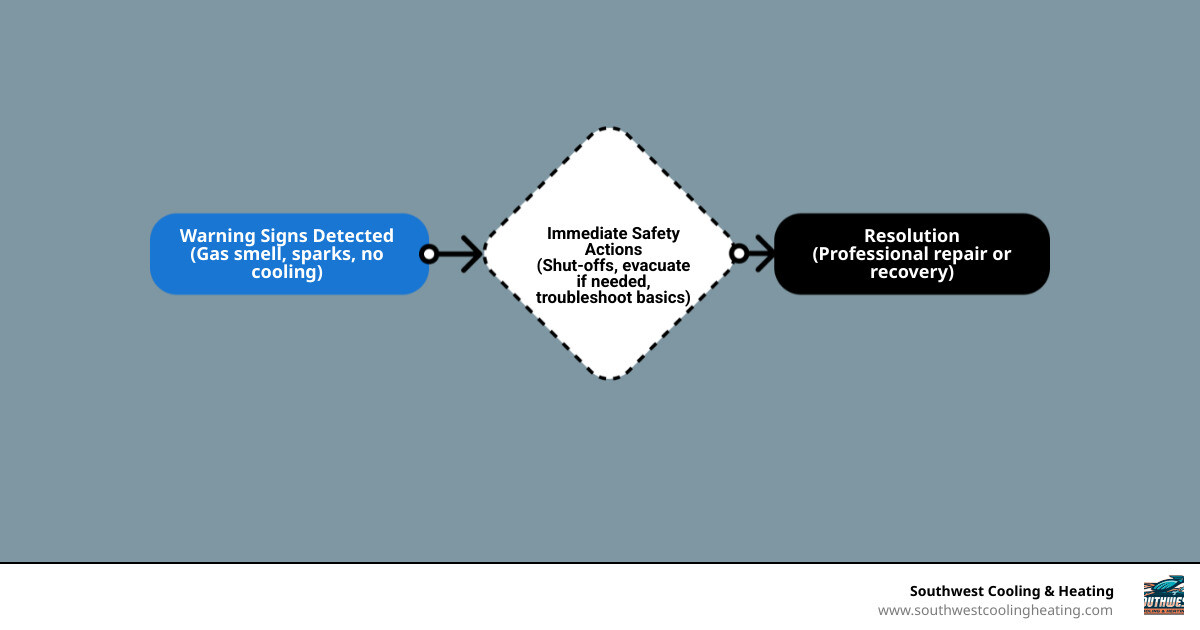
When the system stops, don’t panic. Before you call us, there are a few “sanity checks” you can perform. Sometimes the solution is simpler than you think. Follow our Don’t Sweat It: Your Immediate HVAC Breakdown Action Plan to see if you can restore comfort yourself.
- The Thermostat: Is the screen blank? It might just need new batteries. Ensure it is set to “Cool” in the summer and “Heat” in the winter, and that the set temperature is lower (or higher) than the current room temp.
- The Breaker Box: Check your electrical panel. If the HVAC breaker has tripped to the middle position, flip it all the way to “Off” and then back to “On.” If it trips again immediately, stop and call a pro—this indicates a short circuit.
- The Air Filter: A completely clogged filter can cause a system to overheat and shut down. If it’s grey and fuzzy, swap it out.
- The Drain Line: Many modern systems have a “float switch” that kills the power if the condensate drain line is backed up with algae or debris. If you see water in the secondary pan, your drain is clogged.
When to Call a Professional vs. Handling It Yourself
There is a line where DIY ends and professional danger begins. If you are asking yourself, “Should I Repair or Replace My HVAC System?“, consider the severity of the symptoms.
Call a professional immediately if you encounter:
- Refrigerant Leaks: If you see ice on the coils or hear a hissing sound, you likely have a leak. Refrigerant is toxic and requires EPA certification to handle.
- Motor Grinding: Screeching or metal-on-metal sounds mean a bearing has failed. Running the system further could destroy the entire motor.
- Persistent Short-Cycling: If the system turns on and off every two minutes, it is under extreme stress and will eventually “brick” the control board.
Protecting Vulnerable Residents During Extreme Weather
In St. George, Ivins, and La Verkin, the weather can be a formidable opponent. Whether it’s a 110-degree afternoon or a sudden monsoon storm, you need to know What to Expect When Your AC Expects the Unexpected.
During a heatwave, your AC is under maximum pressure. If it fails, keep the blinds closed, stay hydrated with cool water, and avoid using the oven. If the indoor temperature climbs above 85°F, it may be time to head to a local cooling center or a public library.
Monsoon storms often bring power surges. A lightning strike miles away can send a spike through the grid that fries your HVAC’s sensitive electronic control boards. We highly recommend whole-home surge protection to guard against these “hidden” emergencies.
Seasonal Preparation to Reduce Emergency Risks
Consistency is the secret to a long-lived HVAC system. In the Bloomington and Hidden Valley areas, dust and desert debris are constant threats.
- Spring Prep: We clean the outdoor coils, test the capacitor (the “battery” that starts your motor), and check refrigerant levels. This ensures your AC can handle the June heat spike.
- Fall Prep: We inspect the heat exchanger for cracks (to prevent CO leaks) and ensure the ignition system is clean and reliable.
- Landscaping: Keep at least 2 to 3 feet of clear space around your outdoor unit. Overgrown bushes or weeds restrict airflow, forcing the compressor to work harder and fail sooner.
Frequently Asked Questions and Conclusion
At Southwest Cooling & Heating, we’ve been keeping St. George comfortable since 1980. We know the local climate, the common equipment failures, and exactly how to prepare for hvac emergencies in our unique desert environment. Whether you are in Coral Canyon or Diamond Valley, our goal is to provide you with the peace of mind that comes from a reliable, well-maintained system.
If you find yourself in a crisis, don’t wait. Our team is ready to help with Emergency HVAC Services that get your home back to a sanctuary of comfort.
What should I have ready when contacting emergency HVAC services?
To help our technicians diagnose your issue faster, please have the following ready:
- System Info: The make and model of your unit (usually found on a sticker on the side of the outdoor or indoor unit).
- Symptoms: Are there weird sounds, odd smells, or error codes on the thermostat?
- Indoor Status: What is the current temperature inside?
- Access: Ensure the path to your indoor furnace and outdoor condenser is clear of debris or locked gates.
How often should HVAC systems be inspected to prevent emergencies?
We recommend a professional inspection twice a year. Think of it like a dental checkup—catching a small “cavity” in your system now prevents a “root canal” repair later. We suggest an AC check in March or April and a heating check in September or October.
What role do carbon monoxide and gas detectors play in HVAC safety?
They are your first line of defense. Because CO is invisible and odorless, you cannot detect it with your senses. Place detectors outside every sleeping area and on every floor of your home. Test the batteries every six months (a good rule is to do this when the clocks change for Daylight Savings). These devices provide the early warning needed to evacuate before health symptoms like dizziness or nausea begin.
Don’t wait for the next St. George heatwave to find out if your system is ready. Take these steps today to master your home’s comfort and stay safe all year long!