


When Your AC Breaks During Extreme Heat in St. George, Utah: What to Do First
What to do when your AC breaks during extreme heat is something no homeowner wants to figure out in real time — especially in St. George, Utah, where summer temperatures regularly climb past 100°F and staying cool isn’t just a comfort issue, it’s a safety one.
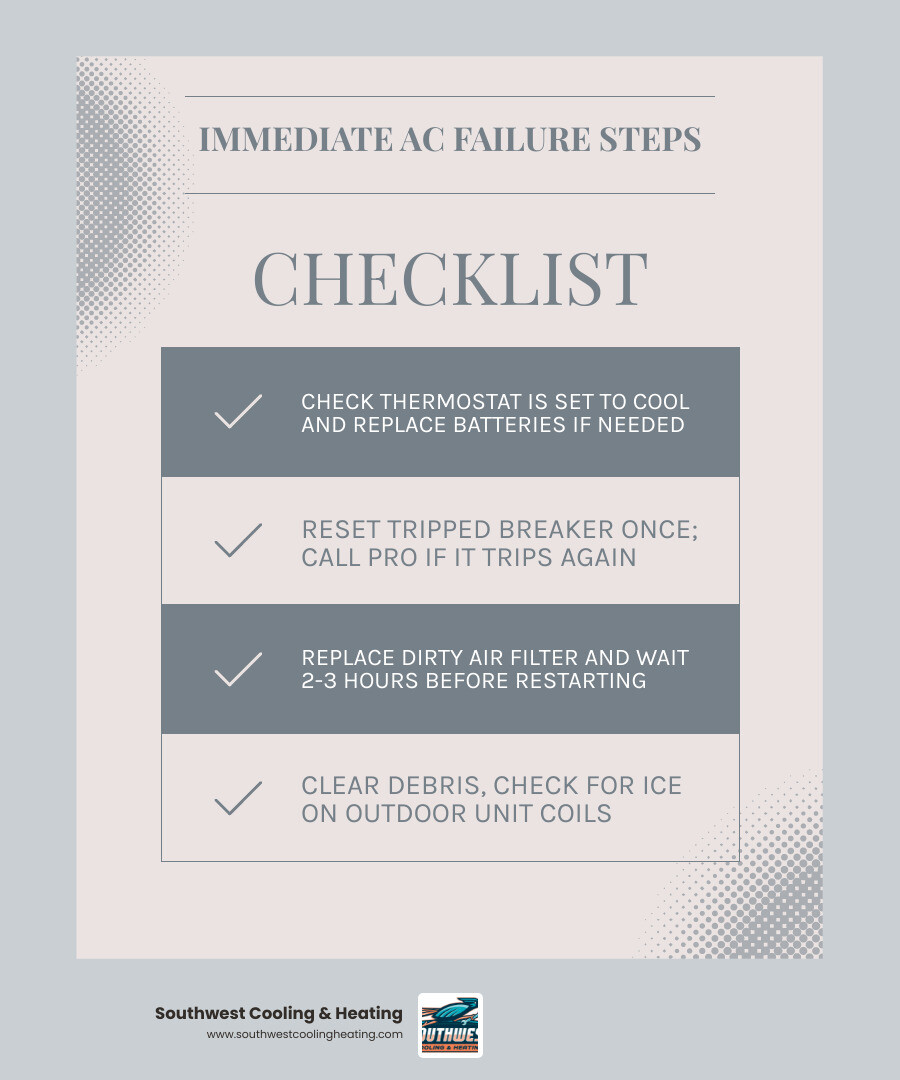
Here’s what to do right away:
- Check your thermostat — Make sure it’s set to “Cool” and the temperature is below the current indoor reading. Replace batteries if needed.
- Check your circuit breaker — Look for a tripped breaker labeled “AC” or “HVAC” and reset it once. If it trips again, stop and call a professional.
- Replace a dirty air filter — A clogged filter can shut the system down. If you can’t see light through it, swap it out and wait 2–3 hours before restarting.
- Check the outdoor unit — Clear any debris and look for ice buildup. If coils are frozen, turn the system off and let it thaw.
- Move vulnerable people and pets to the coolest room in the house immediately.
- Block sunlight — Close blinds and curtains on south- and west-facing windows.
- Stay hydrated — Drink water consistently and avoid caffeine and alcohol.
- Call an HVAC professional if none of the above resolves the issue.
A broken AC during a Washington County heatwave isn’t just an inconvenience — it can become a medical emergency within hours, particularly for infants, the elderly, and pets. Indoor temperatures can rise faster than most people expect once cooling stops, and the longer the system stays down, the greater the risk.
I’m Bruce Hymas, owner of Southwest Cooling and Heating, and with decades of experience helping St. George homeowners navigate exactly this kind of situation, I’ve seen how quickly an AC failure in extreme heat can escalate — and how knowing what to do when your AC breaks during extreme heat can make all the difference. In this guide, I’ll walk you through every step, from immediate safety actions to smart long-term prevention.
Immediate Safety Steps: What to Do When Your AC Breaks During Extreme Heat

When the air conditioning fails on a scorching summer afternoon in Southern Utah, it doesn’t take long for your home to turn into an oven. In our high-desert climate, indoor temperatures can climb by several degrees every hour once the cool air stops flowing. Your immediate priority must shift from saving your comfort to protecting your household’s health.
Panic is a natural response when you realize the vents are blowing warm air, but staying calm and executing a structured plan is your best defense. We recommend keeping a cool head and checking out Don’t Sweat It: Your Immediate HVAC Breakdown Action Plan to guide your family through those critical first minutes of a cooling emergency.
First, stop and assess the situation. Is the air completely off, or is the fan blowing warm air? If the system is still running but not cooling, turn it off at the thermostat immediately. Leaving a malfunctioning system running can burn out the compressor or damage other critical components, turning a simple fix into a major system failure. Once the system is safely shut down, focus on keeping your body temperature down and securing your living space.
Protecting Vulnerable Family Members and Pets
During an extreme heatwave, not everyone in your home reacts to rising temperatures the same way. Even an indoor temperature of 80°F can be considered excessive heat for babies, infants, young children, the elderly, immunocompromised individuals, and pets. These groups have a harder time regulating their internal body temperatures, making them highly susceptible to heat-related illnesses like heat exhaustion and heat stroke.
When you are figuring out what to do when your AC breaks during extreme heat, you must prioritize these vulnerable household members:
- Infants and Young Children: Keep babies in the absolute coolest room of the house. Dress them in a single layer of lightweight, breathable cotton clothing. Monitor them closely for signs of lethargy, extreme fussiness, or a lack of tears when crying, which indicates dehydration.
- The Elderly and Chronically Ill: Aging bodies do not sweat as efficiently. If you have elderly family members living with you in Santa Clara or Bloomington, monitor their breathing and mental clarity. Confusion, dizziness, and nausea are red flags of heat exhaustion.
- Our Four-Legged Friends: Pets cannot sweat like humans; they rely on panting to cool down. Ensure your dogs and cats have constant access to fresh, cold water. You can wipe their paws and bellies with a damp towel to help them release heat. Never leave them in a room without active air circulation.
If your home’s indoor temperature climbs past 85°F and you have high-risk individuals in the house, do not wait out the repair at home. It is time to execute an evacuation plan. Move them to a cooler location, such as a local library, a shopping mall, or a friend’s home in Hurricane or Ivins where the AC is working. For more details on managing these high-stakes scenarios safely, read The Ultimate Survival Guide for When Your HVAC Quits.
Creating a Heat-Proof Sanctuary in Your Home
If you must stay in your home while waiting for our technicians to arrive, you need to create a designated “cool sanctuary.” Rather than trying to keep the entire house cool, pick one room—preferably on the lowest level of your home, like a basement or a ground-floor room with minimal window exposure—and focus all your cooling efforts there.
Here is how to optimize your sanctuary:
- Manage Solar Heat Gain: Close all blinds, drapes, and shutters immediately. Windows are the primary entry point for outdoor heat. If you have south- or west-facing windows, hanging heavy blankets or cardboard over them can block out intense afternoon sun.
- Strategic Fan Placement: Running a fan creates a wind-chill effect that makes you feel about 4 degrees cooler, turning an 84-degree house into a more bearable 80 degrees. Fans cool people, not rooms, so turn them off when you leave the space to conserve energy.
- Limit Indoor Heat Sources: Avoid using the oven, stove, dishwasher, or clothes dryer. Even turning on incandescent light bulbs can generate unnecessary heat. Opt for cold meals like salads or sandwiches, and keep lighting to an absolute minimum.
- Utilize Cross-Ventilation Wisely: In St. George, Washington County weather is incredibly dry and hot. Do not open your windows during the day if the outdoor temperature is higher than the indoor temperature—this will only let more hot air in. Only open windows at night if the desert air drops below your indoor house temperature, and use box fans to pull the cool night air in while pushing warm air out.
To understand more about why our local climate puts such an intense load on residential systems, take a look at Why Washington County Weather Is Hard on Your AC.
Quick DIY Troubleshooting Before Calling a Professional
Before you pick up the phone to call for emergency service, there are a few simple checks you can perform. Up to 15% of emergency AC service calls turn out to be minor issues—like a dead thermostat battery or a tripped breaker—that you can safely resolve yourself. Walking through these troubleshooting steps can save you time and get your home back to a comfortable temperature much faster.
For a complete breakdown of what to check when your system acts up, read our guide on What to Expect When Your AC Expects the Unexpected.
Checking the Thermostat and Circuit Breaker
The first step is to check the brain of your cooling system: the thermostat.
- Verify Settings: Ensure the thermostat is set to “Cool” and the fan is set to “Auto” or “On.” If it was accidentally switched to “Heat” or “Off” by a family member, your system obviously won’t run.
- Check the Batteries: If your thermostat has a blank digital screen, replace the batteries immediately. Many smart or digital thermostats rely on battery power to communicate with your HVAC system.
- Inspect the Circuit Breaker: Head to your home’s main electrical panel. Look for the circuit breakers labeled “AC,” “Air Conditioner,” or “HVAC.” If a breaker has tripped, it will be positioned in the middle, between “On” and “Off.” Flip it completely to the “Off” position first, then flip it back to “On.”
Note: If the breaker trips again immediately, do not attempt to reset it a second time. This indicates a serious electrical fault or a failing compressor, and continuing to reset it can cause an electrical fire or permanent motor damage.
Inspecting the Air Filter and Outdoor Condenser
Airflow is the lifeblood of your air conditioning system. When airflow is restricted, your system has to work twice as hard, which often leads to overheating and automatic safety shutdowns.
- The Air Filter: Check your indoor return air filter. If the filter is clogged with dust, pet dander, or fine Southern Utah red sand, slide it out and replace it with a fresh one. A severely dirty filter can restrict airflow so much that the indoor evaporator coil freezes over, stopping all cooling. If you suspect your system has frozen up, keep the system off for 2 to 3 hours to let the ice melt completely before trying to restart it with a clean filter.
- The Outdoor Condenser Unit: Go outside and inspect the metal condenser unit. Over time, desert winds can blow leaves, dirt, weeds, and debris against the unit’s exterior fins. Ensure there is at least two feet of clear space around the entire condenser. If the metal fins are coated in a thick layer of red dust, you can gently rinse them with a garden hose (do not use a pressure washer, as this will bend the delicate aluminum fins and permanently restrict airflow).
When to Stop DIY and Call for Emergency HVAC Services
While basic troubleshooting is great, there comes a point where DIY efforts must stop. Working with high-voltage electricity and pressurized chemical refrigerants is incredibly dangerous and requires specialized training, licensing, and tools. Trying to fix complex mechanical failures yourself can void your manufacturer’s warranty, ruin your equipment, and put your personal safety at risk.
If you have performed the basic checks on your thermostat, breaker, and filter, and your home is still heating up, it is time to call in the professionals. We provide rapid-response Emergency HVAC Services throughout St. George, Coral Canyon, Diamond Valley, and surrounding areas to get your cooling restored safely.
Recognizing Serious Mechanical Failures and What to Do When Your AC Breaks During Extreme Heat
Several common AC issues crop up during extreme summer heatwaves because systems are forced to run at maximum capacity for hours on end. Here are the red flags that indicate a serious mechanical issue requiring professional attention:
- Frozen Evaporator Coils: If you see ice forming on the brass refrigerant lines leading to your outdoor unit, or if the indoor cabinet is dripping water, your coils are frozen. Turn off the system immediately to prevent compressor damage and call us.
- Refrigerant Leaks: If your AC is running constantly but only blowing lukewarm air, you might have a refrigerant leak. Refrigerant does not get “used up” like gas in a car; low levels always point to a physical leak in the copper coils. Adding more refrigerant without repairing the leak is a violation of EPA guidelines and will not solve the underlying issue.
- Failing Capacitors: Capacitors act like temporary batteries that provide the electrical “kick” your compressor and fan motors need to start up. High outdoor temperatures can cause these components to bulge, leak, or fail entirely. If you hear a low humming noise coming from your outdoor unit but the fan isn’t spinning, a dead capacitor is the likely culprit.
- Burning Smells or Unusual Noises: If you smell burning plastic, sulfur, or electrical smoke, or if you hear loud screeching, clanking, or banging noises, shut down power at the breaker panel immediately. These are signs of motor failure or electrical shorts that pose an immediate fire hazard.
For a deeper dive into the warning signs you should never ignore, read Red Alerts and Cold Comforts: Signs Your HVAC Needs Help ASAP.
Deciding Between AC Repair and System Replacement
If your air conditioner suffers a major breakdown during the peak of summer, you will face a critical decision: should you invest in repairing your current unit, or is it time to replace it entirely?
While we always strive to provide reliable repairs, older systems that have spent a decade battling Southern Utah’s intense summer heat may reach a point of diminishing returns. Well-maintained AC systems typically last 12–15 years, but heavy use in hot desert climates often shortens that lifespan.
To help you make the right choice, we recommend using the “50% Rule.” If the cost of a single repair exceeds 50% of the value of a brand-new, energy-efficient cooling system, replacement is almost always the smarter, more economical long-term decision.
| Factor | Favor Repair | Favor Replacement |
|---|---|---|
| System Age | Under 10 years old | Over 12–15 years old |
| Frequency of Breakdowns | First major issue | Repeated summer failures |
| Energy Bills | Consistent and manageable | Spiking during summer months |
| Refrigerant Type | Uses modern R-410A | Uses phased-out R-22 (Freon) |
| System Sizing | Properly cools all rooms | Struggles with uneven temperatures |
If you decide that a repair is the best path forward, our team is ready to perform precise, lasting repairs to get your system back on track. Learn more about our professional AC Repair options.
How to Prevent Future Summer AC Breakdowns
The best way to handle an AC emergency is to make sure it never happens in the first place. When summer temperatures spike, the sudden workload puts immense stress on mechanical components. Taking proactive steps in the spring can keep your system out of trouble when the heatwave hits. For a complete guide on preventative care, read An Ounce of Prevention: Keeping Your HVAC Out of the ER.
The Importance of Regular Maintenance and Smart Thermostat Settings
Regular preventative maintenance is the single most effective way to ensure your air conditioner survives the summer. We recommend scheduling a professional tune-up twice a year—once in the spring before the cooling season starts, and once in the fall.
During a professional maintenance visit, our certified technicians will:
- Clean the condenser and evaporator coils to ensure optimal heat transfer.
- Test electrical connections, capacitors, and contactors for wear and tear.
- Check refrigerant charge levels and inspect lines for leaks.
- Clear the condensate drain line to prevent water backups and algae clogs.
- Verify that your system is running at peak energy efficiency.
Additionally, it is crucial to understand the physical limits of your equipment. A typical air conditioner can only lower indoor temperature by about 20 degrees below the outside temperature; exceeding this puts excessive strain on the system. When it is 115°F in St. George, trying to force your home down to 68°F will keep your system running 100% of the time, leading to overheated motors and eventual system failure. Set your thermostat to a reasonable 78°F to 80°F on extremely hot days, and use fans to stay comfortable.
Long-Term Upgrades to Reduce Heat Strain and What to Do When Your AC Breaks During Extreme Heat
If you want to permanently reduce the strain on your cooling system and lower your monthly utility bills, consider making a few long-term home efficiency upgrades:
- Upgrade Attic Insulation: Proper attic insulation can reduce heat gain through windows by up to 40% and solar heat absorption by up to 60% during peak cooling periods. In total, proper home insulation can decrease your overall energy consumption by up to 40%.
- Seal and Insulate Ductwork: Leaky air ducts can lose up to 30% of your conditioned air to unconditioned spaces like your attic or crawlspace. Sealing duct leaks ensures that all the cold air your system produces actually reaches your living areas.
- Install Ductless Mini-Split Systems: If you have a room that is always hot—like an upstairs bedroom, a home office, or a converted garage—adding a ductless mini-split system can provide targeted cooling to that space without putting extra strain on your central air conditioner.
Frequently Asked Questions about AC Failures in Extreme Heat
Why does my AC struggle so much when outdoor temperatures exceed 95°F?
Your air conditioner doesn’t actually “create” cold; it works by absorbing heat from inside your home and releasing it outdoors. When outdoor temperatures exceed 95°F, the temperature difference between the indoor air and outdoor air becomes very large. This makes it much harder for the outdoor condenser unit to release heat, forcing your compressor to work at maximum capacity for extended periods. This extra strain is why older or neglected systems often break down on the hottest days of the year.
Is it safe to keep resetting my circuit breaker if it keeps tripping?
No, it is highly dangerous to repeatedly reset a tripping breaker. A circuit breaker’s job is to cut power when it detects an electrical overload or a short circuit. If your AC trips the breaker, it is a clear warning sign of an underlying electrical problem—such as a failing compressor, a shorted wire, or a bad capacitor. Forcing the breaker back on repeatedly can overheat your electrical panel, melt wiring, or cause an electrical fire.
How can I quickly cool down my house without air conditioning?
To cool down fast without AC, focus on body cooling and strategic ventilation:
- Set up box fans to create a cross-breeze, and place a large bowl of ice directly in front of the fan to create a DIY evaporative cooler.
- Apply cold, damp towels or ice packs to your body’s pulse points—such as your wrists, neck, temples, and behind your knees—to quickly lower your core temperature.
- Take cool showers or baths.
- Keep all blinds and curtains completely shut during the day to block out solar heat, and stay consistently hydrated by drinking plenty of water.
Conclusion
Experiencing an air conditioner breakdown during a Southern Utah heatwave is stressful, but having a clear plan ensures your family stays safe and comfortable while repairs are underway. Remember to prioritize vulnerable family members and pets, perform basic DIY troubleshooting steps, and know exactly when to call in the professionals.
Since 1980, Southwest Cooling & Heating has provided reliable, high-quality HVAC services to homeowners in St. George, Santa Clara, Bloomington Hills, Winchester Hills, Toquerville, La Verkin, and surrounding communities. We combine modern technology with old-school values, backed by our performance and satisfaction guarantees.
If your air conditioner is struggling or has stopped working entirely during extreme heat, don’t wait for your home to become dangerously hot. Contact us today for fast, expert Emergency HVAC Services and let us bring comfort back to your home.