


When Your HVAC Fails: What Every St. George Homeowner Needs to Know Right Now
Knowing how to stay safe during a heating or cooling emergency can be the difference between a stressful afternoon and a life-threatening situation — especially here in St. George, Utah, where summer temperatures regularly push well past 100°F. Extreme heat is responsible for more annual deaths than any other weather-related hazard in the United States, and when your HVAC system fails at the worst possible moment, the clock starts ticking fast.
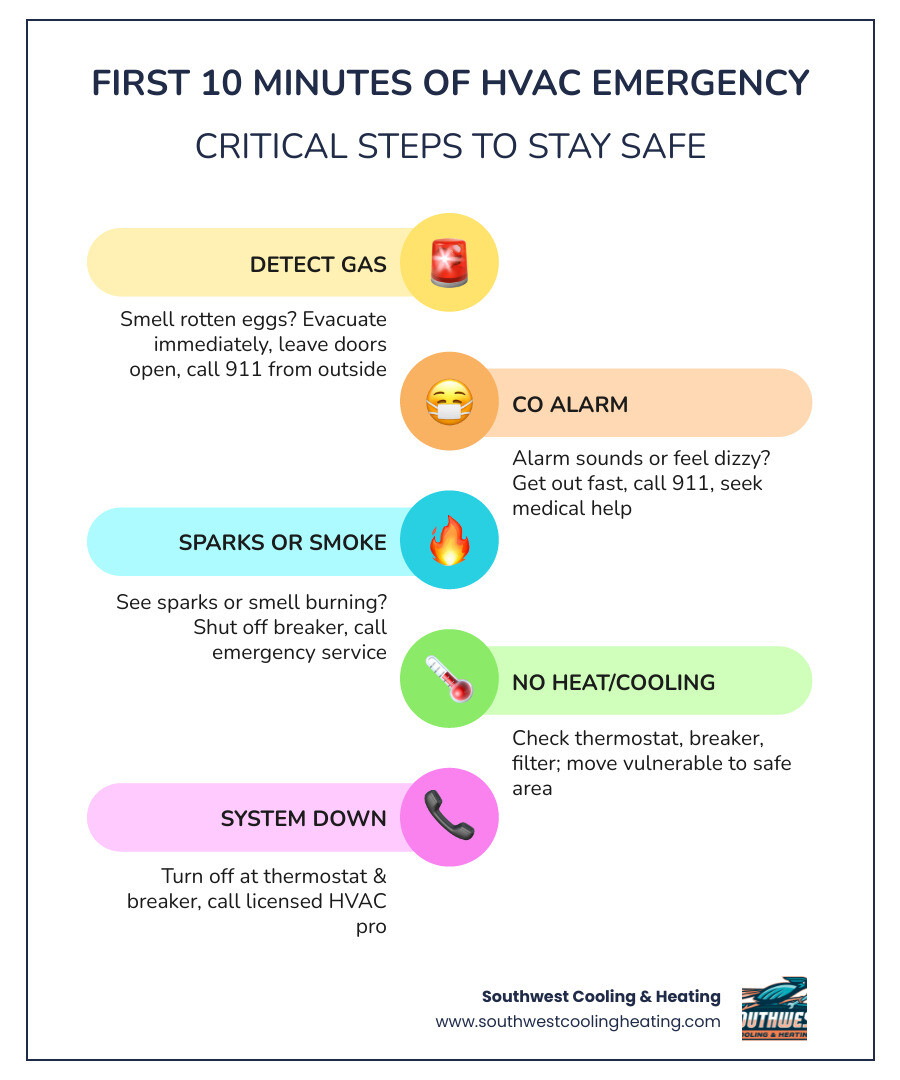
If your heating or cooling system just failed, here’s what to do immediately:
- Smell gas or rotten eggs? Evacuate everyone now, leave doors open as you exit, and call 911 from outside. Do not touch any switches.
- CO alarm sounding? Get out immediately, call 911, and seek medical attention if anyone feels dizzy, nauseated, or confused.
- See sparks, smoke, or smell burning plastic? Turn off the HVAC breaker at your electrical panel and call for emergency service.
- No heat in winter? Check your thermostat settings, circuit breaker, and air filter before calling a technician.
- No cooling in summer? Check the thermostat, breaker, outdoor unit for debris, and air filter. Move vulnerable family members to the coolest room.
- Extreme indoor temperatures? Move children, elderly, and pets to a safer environment — a neighbor’s home, a library, or a local cooling center — while you wait for repairs.
- None of the above, but system is completely down? Shut off the system at the thermostat first, then at the breaker, and call a licensed HVAC professional.
Here in St. George, an HVAC breakdown isn’t just an inconvenience — it’s a genuine health risk. With April 2026 already bringing early heat advisories across Southern Utah, homes can become dangerously warm within just a few hours of a cooling failure. And in winter, a furnace that goes out overnight can put pipes, pets, and vulnerable family members at serious risk before sunrise.
This guide walks you through every stage of an HVAC emergency: what to do in the first ten minutes, how to protect the people and things you care about most, how to troubleshoot safely, and when to call for professional help.
I’m Bruce Hymas, owner of Southwest Cooling and Heating — a family business serving the St. George area since 1980 — and over the decades I’ve seen what happens when homeowners don’t know how to stay safe during a heating or cooling emergency. In this guide, I’ll share the practical, no-nonsense steps that protect your family and your home while help is on the way.
Immediate Safety Protocols: Gas, Smoke, and Carbon Monoxide
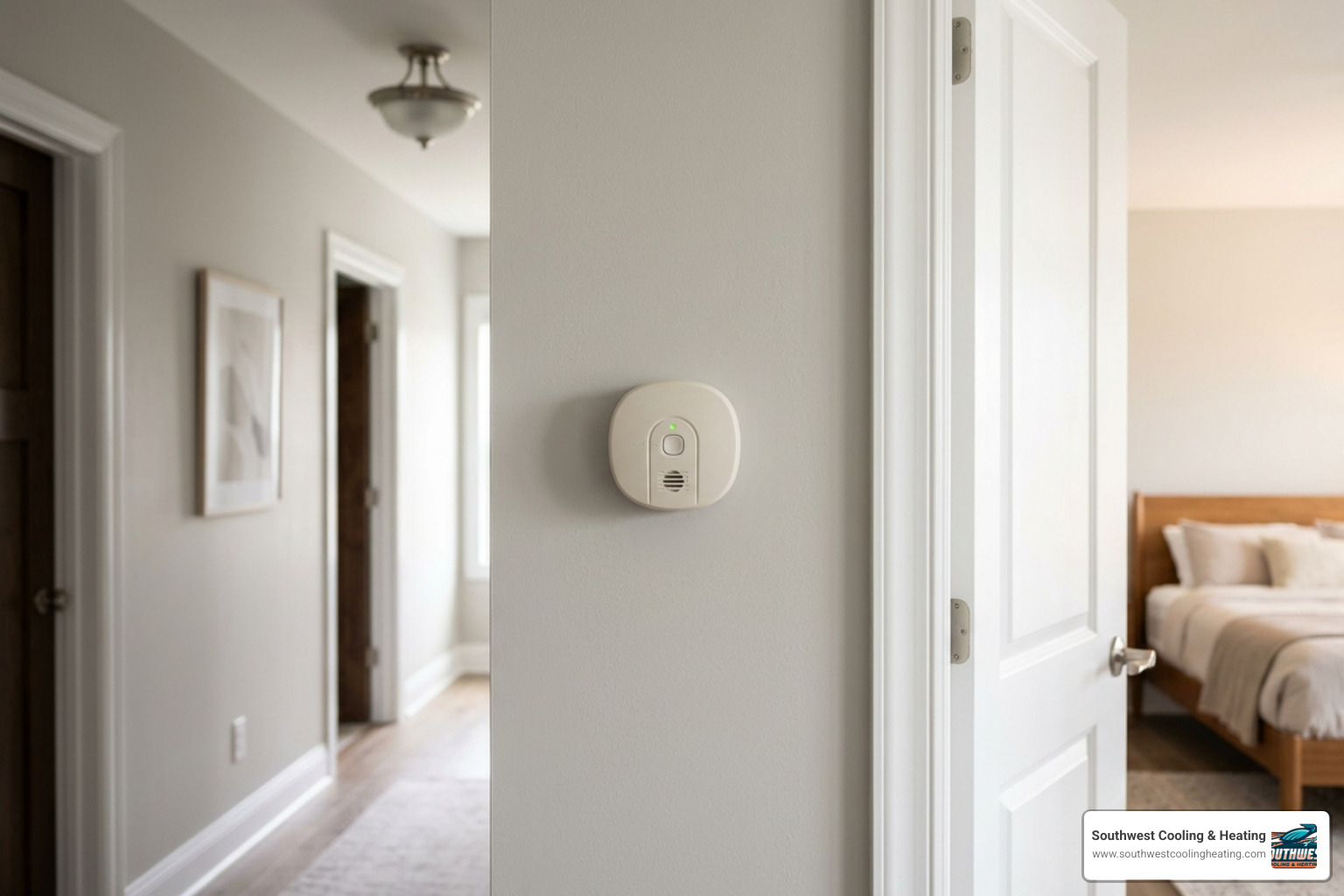
When we talk about an HVAC emergency, the most critical threats aren’t just about temperature—they are about the air you breathe and the physical safety of your structure. If you detect a “rotten egg” smell, you are likely smelling mercaptan, an additive used to help homeowners identify natural gas leaks. If this occurs, do not use your phone, do not flip a light switch, and do not start your car in the garage. These actions can create a spark. Evacuate immediately and contact 911 from a safe distance.
Carbon Monoxide (CO) is a “silent killer” because it is colorless and odorless. Modern furnaces are designed to vent these gases safely, but a cracked heat exchanger can allow CO to seep into your living spaces. If your CO detector alarms, or if family members experience sudden headaches, dizziness, or nausea, treat it as a life-threatening event. Evacuate the premises and do not return until emergency responders give the all-clear. For situations involving potential leaks or system failures that threaten your health, our Emergency HVAC Services are available to provide rapid response.
Visible smoke or the smell of burning plastic often indicates an electrical failure within the blower motor or control board. In these cases, it is vital to perform a Furnace Repair or inspection before attempting to restart the unit. Shutting down the power at the breaker is the only way to ensure the electrical current stops feeding a potential fire.
How to Stay Safe During a Heating or Cooling Emergency in St. George
In Southern Utah, “extreme heat” is generally defined as a period where temperatures exceed 90°F for at least two to three days. During these stretches, your home acts like an oven, trapping heat even after the sun goes down. To understand how to stay safe during a heating or cooling emergency, you must prioritize hydration. The average person needs at least 3/4 of a gallon of water daily to prevent heat-related illness. If your AC fails during a St. George July, that requirement increases as your body works harder to cool itself through sweat.
If your system goes down, you may also face secondary property damage. During cooling failures, a clogged drain line can lead to a condensate overflow, damaging your ceilings or flooring. In rare winter freezes, a lack of heat can lead to frozen pipes in as little as three to six hours if temperatures drop significantly below 55°F indoors. If you notice water pooling or the system simply won’t kick on, seeking professional AC Repair quickly can prevent these secondary disasters.
Safe Alternatives Comparison Table
| Method | Safety Rating | Best Use Case | Risk Factor |
|---|---|---|---|
| Cooling Centers | High | Extreme heatwaves | Travel during peak heat |
| Electric Space Heaters | Moderate | Supplemental winter heat | Fire hazard (keep 3ft clear) |
| Cool Showers/Baths | High | Immediate body cooling | Temporary relief only |
| Propane Grills/Heaters | DANGEROUS | Outdoor use only | Carbon Monoxide poisoning |
| Opening Windows | Variable | Evening/Early morning | Increases heat during day |
Essential Steps for How to Stay Safe During a Heating or Cooling Emergency
When the air stops moving, your first goal is to preserve the existing temperature for as long as possible. During a summer outage, close all window shades and drapes to block out the “greenhouse effect.” Wear lightweight, loose-fitting clothing and avoid using the oven or dryer, which add unnecessary heat to the home. If you are dealing with a winter failure, reach out for Heating Repair immediately, and in the meantime, gather everyone into a single room to preserve body heat.
Don’t forget the “4-hour rule” for your kitchen. An unopened refrigerator will keep food safe for about 4 hours. A full freezer can last 48 hours if you keep the door shut. If your HVAC emergency is part of a larger power outage, prioritize eating the perishables in the fridge first before they spoil.
Protecting Vulnerable Family Members: How to Stay Safe During a Heating or Cooling Emergency
Certain groups are at much higher risk during temperature extremes. This includes the elderly, infants, pets, and those with chronic respiratory illnesses. Children under four years old are particularly susceptible to heat, as their bodies warm at a faster rate than adults.
Keep a close eye on anyone showing signs of heat exhaustion (heavy sweating, paleness, muscle cramps) or the much more dangerous heat stroke. Heat stroke is a medical emergency characterized by a body temperature above 103°F, red/dry skin, and confusion. If you suspect heat stroke, call 911 immediately. For our neighbors in Hurricane, Ivins, or Santa Clara, Contact Us if you need advice on whether your system’s failure constitutes a health emergency for a vulnerable loved one.
Troubleshooting, Prevention, and Post-Repair Verification
Before you assume the worst, there are a few basic checks every homeowner should perform. We often find that “emergencies” in Bloomington or Hidden Valley are actually simple fixes:
- Thermostat: Is it set to “Auto” and “Heat” or “Cool”? Are the batteries fresh?
- Circuit Breakers: Check your electrical panel. If the HVAC breaker has tripped to the middle position, flip it all the way off and then back on once. If it trips again, do not touch it—call us for AC Repair.
- Air Filters: A clogged filter can cause a furnace to overheat and shut down or an AC coil to freeze into a block of ice. Replace your filter every 1-3 months.
- Outdoor Unit: Ensure there is at least 2-3 feet of clearance around your condenser. Leaves, dirt, or debris can “choke” the system.
The 15 Percent Rule
Did you know a poorly maintained HVAC system can lose up to 15 percent of its energy efficiency every single year? This isn’t just about higher bills; it’s about the strain on the equipment. Most Furnace Repair calls we receive in the winter could have been prevented with a fall tune-up. To prevent future emergencies, ensure you have surge protection installed to safeguard the sensitive electronics in modern high-efficiency units.
Verifying the Fix
Once a technician has completed the repairs, don’t just take their word for it. Run the system through a full cycle. Check that the airflow is consistent at every vent and that the temperature at the register matches the setting on the thermostat. Listen for any unusual grinding or clicking sounds that might indicate a lingering mechanical issue.
Frequently Asked Questions about HVAC Emergencies
When does an HVAC issue qualify as a true emergency?
An issue is a true emergency if it threatens safety (gas, smoke, CO), if outdoor temperatures are extreme (above 95°F or below 35°F), or if there are vulnerable individuals (infants, elderly, or those with medical conditions) in the home. If it’s a mild 75-degree day and your AC makes a funny noise, that is likely a scheduled repair rather than an emergency.
How long can my home stay safe without heating or cooling?
In St. George, a well-insulated home may stay comfortable for 4-6 hours during a summer day. However, once the indoor temperature exceeds 85°F, the risk of heat exhaustion begins to rise. In winter, the primary concern is often pipe protection; if your indoor temp drops below 55°F, you should take active steps to prevent freezing.
What should I tell a technician when calling for emergency service?
To speed up the diagnosis, tell us the make and model of your unit (usually found on a sticker on the side), any specific error codes on the thermostat, and a description of any strange sounds or smells. Knowing if the fan is spinning outside but the air inside is warm helps us bring the right parts the first time.
Conclusion
At Southwest Cooling & Heating, we’ve been helping our neighbors in St. George, Hurricane, La Verkin, and beyond since 1980. We understand that an HVAC failure is more than just a mechanical problem—it’s a disruption to your family’s safety and comfort. Whether you are in Santa Clara or Toquerville, our team is committed to providing quick, expert assistance backed by performance guarantees.
Don’t wait until the temperature in your living room hits 90 degrees. If you suspect your system is failing, or if you want to prevent the next crisis with a professional maintenance check, reach out to us today for Emergency HVAC Services. Stay safe, stay hydrated, and let us handle the heavy lifting.