


What Every St. George Homeowner Needs to Know About AC and Heat Waves
Knowing how to help your AC during heat wave events can be the difference between staying cool and facing a costly breakdown in the middle of a St. George summer. When outdoor temperatures climb past 100°F — which is a regular reality across Southern Utah — your AC isn’t just working hard, it’s running at or beyond its design limits. Most residential systems are built to maintain roughly a 20-degree difference between indoor and outdoor temperatures. That means when it’s 110°F outside, expecting your home to stay at 70°F isn’t realistic. The system will run continuously, components will wear faster, and without the right habits and maintenance in place, failure becomes a real risk.
Here’s a quick overview of the most effective ways to protect your AC during a heat wave:
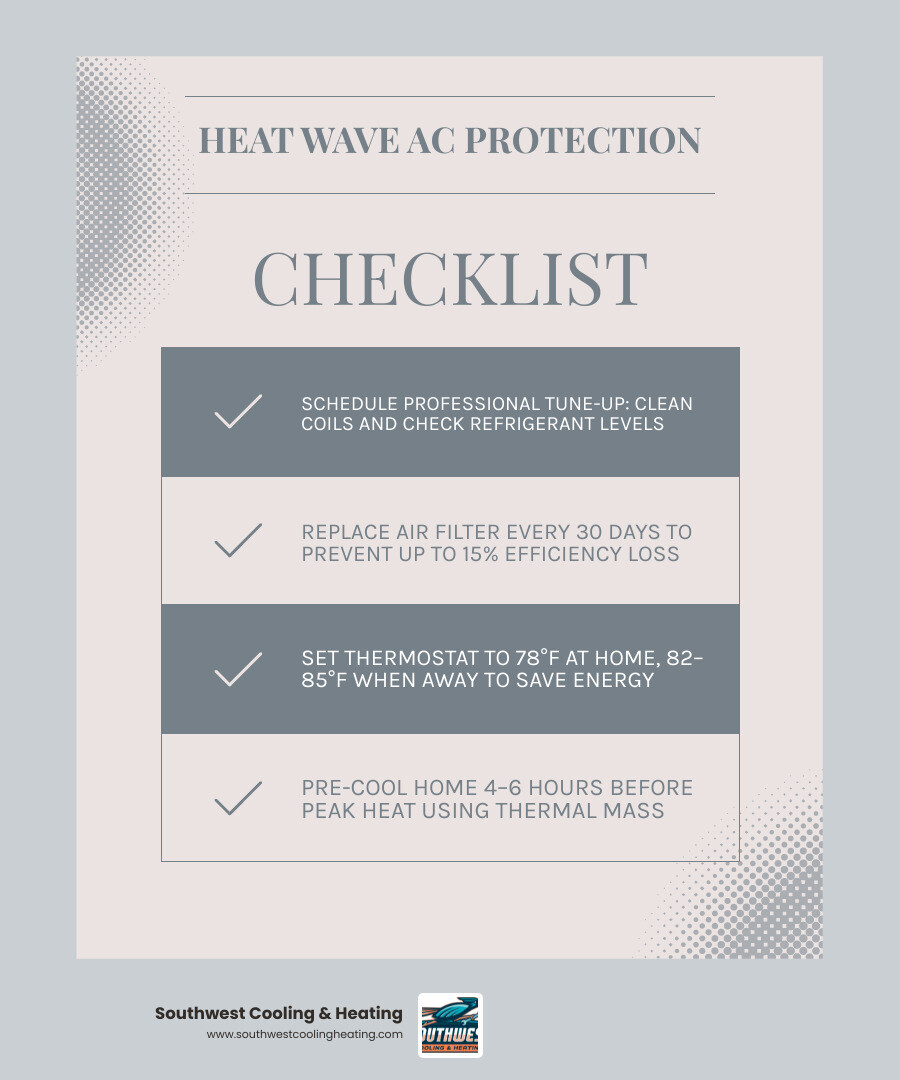
- Schedule a professional tune-up before summer peaks — clean coils, check refrigerant, inspect electrical connections
- Replace or check your air filter every 30 days — a clogged filter can cut efficiency by up to 15%
- Set your thermostat to 78°F when home, 82–85°F when away — each degree lower increases energy use by roughly 3%
- Pre-cool your home 4–6 hours before peak afternoon heat — use your home’s thermal mass to your advantage
- Use ceiling fans to supplement your AC — they can make a room feel up to 4°F cooler, letting you raise the thermostat without sacrificing comfort
- Reduce heat gain from inside and outside — close blinds on south- and west-facing windows, avoid using ovens or dryers during peak hours
- Keep 2 feet of clearance around your outdoor condenser unit — blocked airflow forces the compressor to work harder
- Know the warning signs of a struggling system — ice on refrigerant lines, short cycling, weak airflow, or unusual sounds mean it’s time to call a pro
- Have a plan for power outages — know your options and keep safety top of mind
- Consider upgrading if your system is over 10–15 years old — modern high-efficiency units handle extreme heat far better than aging ones
The heat waves hitting St. George and the broader Southern Utah region aren’t slowing down, and your AC is the first line of defense for your family’s safety and comfort.
I’m Bruce Hymas, owner of Southwest Cooling & Heating, and with over four decades of HVAC experience serving St. George and surrounding communities, I’ve seen how the right preparation can prevent the most common heat-wave AC failures. In this guide, I’ll walk you through everything you need to know about how to help your AC during heat wave events — from pre-season maintenance to smart daily habits — so your system stays reliable all summer long.
Pre-Season Prep: How to Help Your AC During Heat Wave Events
Preparing your cooling system before extreme weather hits is the absolute best way to protect your investment. Think of your air conditioner like a marathon runner. You wouldn’t expect someone to run 26.2 miles in triple-digit desert heat without prior training and a physical checkup. Yet, many homeowners expect their AC units to run continuously for days on end without any pre-season preparation.
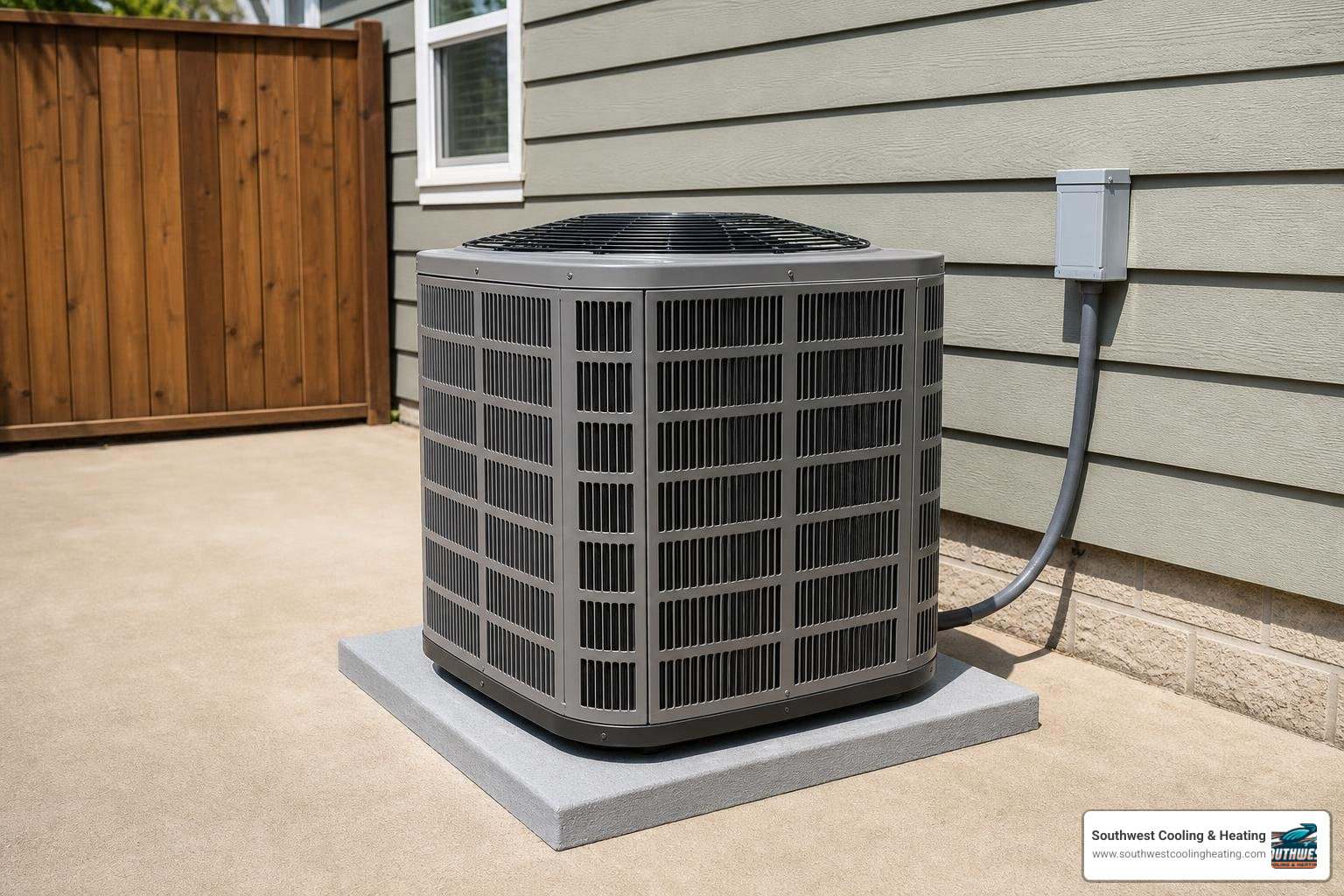
To understand why pre-season prep is so critical, it helps to understand the physics of residential cooling. Your air conditioner does not actually “create” cold air. Instead, it extracts heat from inside your home and transfers it outdoors. This process relies heavily on the “20-degree rule.” Most standard residential HVAC systems are designed to handle a maximum temperature differential of about 20 degrees Fahrenheit between the indoor air and the outdoor air.
When the outdoor temperature in places like Santa Clara or Coral Canyon climbs to 105°F, your system is physically designed to cool your indoor spaces down to about 85°F. Expecting it to reach 70°F forces the compressor and fan motors to run 24/7 without a break. This continuous operation pushes the system past its engineered design temperature, causing internal components to overheat and accelerating mechanical wear.
By implementing a “pre-cooling” strategy, you can use your home’s thermal mass to ease this transition. Pre-cooling involves lowering your thermostat by a few degrees early in the morning (between 4:00 AM and 9:00 AM) when outdoor temperatures are at their lowest. This cools down your walls, furniture, and flooring. When the peak afternoon heat hits, your home acts as a cold reservoir, reducing the overall workload on your air conditioner. To make sure your system is physically capable of handling this strategy, proactive care is essential. Read more about why early action matters in our guide, An Ounce of Prevention Keeping Your HVAC Out of the ER.
Essential Maintenance Tasks to Prevent Summer Breakdowns
To keep your system running smoothly when the sun gets serious, there are several critical maintenance steps you should take before and during the summer months:
- Change Air Filters Regularly: Replacing a dirty, clogged air filter with a clean one can increase the energy efficiency of your air conditioner by 5% to 15%. When a filter is clogged with dust, pet dander, and desert pollen, it restricts airflow. This lack of airflow causes the evaporator coil to drop below freezing, turning condensation into ice and completely blocking your cooling system.
- Keep Outdoor Coils Clean: Your outdoor condenser unit needs to shed heat into the surrounding air. If the metal fins are covered in dirt, grass clippings, or leaves, the heat gets trapped inside the system. You can gently rinse the outdoor coils with a garden hose (never use a pressure washer, as it can bend the delicate aluminum fins) to clear away debris.
- Ensure Outdoor Clearance: Maintain at least a two-foot clear radius around your entire outdoor condenser unit. Cut back any encroaching desert shrubs, weeds, or decorative plants. If airflow around the outdoor unit is restricted, the compressor oil can overheat and become acidic, leading to a catastrophic compressor burnout.
- Seal Leaky Ductwork: In a typical house, 20% to 30% of conditioned air is lost through duct leaks and poor connections before it ever reaches your living spaces. When hot attic air leaks into your return ducts, it dramatically increases the temperature of the air your AC has to cool. Sealing these leaks keeps the cold air where it belongs.
- Schedule Professional Inspections: Some tasks require specialized tools and training. A professional technician can check refrigerant levels, test electrical capacitors, and clean internal drain lines. To understand how often these checks should occur, refer to our helpful breakdown: Is Your HVAC Crying for Help Here Is How Often You Should Service It.
Smart Thermostat Settings and Habits for Extreme Heat
How you operate your thermostat during a heat wave directly impacts your system’s lifespan and your monthly utility bills. During peak summer afternoon hours, local electrical grids face massive strain. In hot climates, air conditioning can account for a massive portion of residential electricity usage during peak summer hours. By managing your thermostat settings intelligently, you protect both your equipment and your wallet.
For comprehensive strategies tailored to our local climate, check out our guide on The Best Way to Cool Your Southern Utah Home This Summer.
Thermostat Adjustments: How to Help Your AC During Heat Wave Events
The golden rule of thermostat management during a heat wave is to avoid drastic temperature adjustments. Many homeowners make the mistake of coming home to a warm house and cranking the thermostat down to 60°F in hopes of cooling the house faster.
Your AC runs at the exact same speed regardless of whether you set it to 60°F or 70°F. Setting it lower only forces the compressor to run longer, increasing the risk of a system freeze-up.
- Set the Thermostat to 78°F: The U.S. Department of Energy recommends setting your thermostat to 78°F when you are home during the summer. Each degree you raise the thermostat setting reduces your cooling energy use by roughly 3%. Conversely, each degree you set it below 78°F can increase your energy consumption by 6% to 8%.
- Use a Stair-Step Approach: If you prefer a cooler home at night, do not drop the temperature all at once. Lower the thermostat by one or two degrees at a time as the outdoor temperature drops. This prevents the system from running continuously for hours during the hottest parts of the evening.
- Optimize Your Away Settings: Raising your thermostat 7 to 10 degrees for eight hours a day can save you up to 10% on your summer cooling bills. When you leave for work, set your thermostat to 82°F or 85°F. Never turn the system completely off; doing so allows heat and humidity to saturate your walls and furniture, forcing your AC to work twice as hard to recover when you return.
Supplemental Cooling: How to Help Your AC During Heat Wave Events
You do not have to rely solely on your air conditioner to stay comfortable. Supplementing your HVAC system with alternative cooling methods reduces its overall workload.
Using a ceiling fan is one of the easiest ways to keep comfortable. While fans do not actually cool the air in a room, they create a wind-chill effect on your skin by evaporating sweat more efficiently. Using a ceiling fan can make a room feel up to 4°F cooler than it actually is, allowing you to raise your thermostat setting without sacrificing personal comfort. Just remember: fans cool people, not rooms. Turn them off when you leave the space to save electricity.
During a heat wave, make sure your ceiling fans are rotating counterclockwise to push cool air straight down.
| Cooling Method | Average Power Consumption | Relative Energy Impact |
|---|---|---|
| Ceiling Fan | 30 – 75 Watts | Minimal (Runs on pennies a day) |
| Standard Central AC | 3,000 – 5,000 Watts | High (Accounts for majority of summer utility bills) |
Reducing the Cooling Load Through Home Improvements
To truly understand how to help your AC during heat wave events, you must look at your home as a complete thermal envelope. The less heat that enters your living spaces, the less work your air conditioner has to perform.
Solar heat gain through windows is one of the primary drivers of indoor temperature spikes. Windows can account for up to 30% of unwanted heat gain in a typical home. Installing reflective window films, solar screens, or high-quality thermal blackout curtains can block up to 70% of this solar heat before it ever radiates into your rooms. Keep these window treatments closed on all south- and west-facing windows during the afternoon hours.
Additionally, upgrading your attic insulation to R-38 or R-60 standards can prevent up to 40% of heat transfer from your attic into your living spaces. During July and August in Bloomington or Ivins, attic temperatures can easily soar past 140°F. Proper insulation and sealed weatherstripping around doors and windows prevent this extreme heat from migrating into your cool home. To learn more about why our local environment puts so much stress on your cooling equipment, read Why the Southern Utah Desert Is Your HVAC Systems Toughest Opponent.
Managing Indoor Humidity and Airflow
While Southern Utah is known for its dry desert air, late-summer monsoons can bring unexpected humidity spikes to areas like Toquerville and La Verkin. Humidity makes the air feel significantly hotter because it prevents your body from cooling itself through sweat.
High humidity also places a double burden on your air conditioner. Your AC must work to remove moisture from the air (latent cooling) before it can effectively lower the air temperature (sensible cooling).
To help your system manage this load:
- Run Exhaust Fans: Use bathroom and kitchen exhaust fans during and after showers or cooking to vent hot, humid air directly outside.
- Avoid Heat-Generating Appliances: Postpone running your dishwasher, washing machine, and clothes dryer until the cooler early morning or late evening hours. Avoid using your oven during peak afternoon heat; opt for outdoor grilling or microwave cooking instead.
- Keep Interior Vents Open: Never close supply vents in unused rooms to save energy. Modern HVAC systems are balanced to distribute air throughout the entire house. Closing vents increases pressure within your ductwork, which can cause duct leaks, damage your blower motor, and lead to frozen coils.
Recognizing Warning Signs of AC Failure and Handling Emergencies
Even the best-maintained systems can experience issues when subjected to prolonged, triple-digit heat waves. Recognizing the early warning signs of mechanical distress can help you address issues before they lead to a complete system breakdown.
Keep an eye out for these common red flags:
- Short Cycling: If your AC turns on and off rapidly every few minutes, it may be overheating, experiencing electrical issues, or suffering from restricted airflow.
- Weak or Warm Airflow: If the air coming out of your vents feels lukewarm or weak, your system may be low on refrigerant, have a failing capacitor, or have a damaged blower motor.
- Unusual Noises: Squealing, grinding, rattling, or clicking sounds coming from either the indoor or outdoor unit indicate loose components, failing bearings, or electrical issues.
- Ice Accumulation: Visible ice on your outdoor refrigerant lines or the indoor evaporator coil is a major warning sign. This is usually caused by restricted airflow (dirty filters) or a refrigerant leak.
For a detailed look at what these symptoms mean and how to address them quickly, read Red Alerts and Cold Comforts Signs Your HVAC Needs Help ASAP.
What to Do During a Power Outage or AC Breakdown
If your air conditioning system fails completely during an extreme heat event, your immediate priority must be the safety of your household. Extreme heat can be incredibly dangerous, especially for young children, the elderly, and pets.
First, if you notice ice on your system, turn the thermostat to “Off” and switch the fan setting to “On.” This allows the system to thaw out safely. Do not turn the cooling back on until the ice has completely melted, which can take anywhere from 2 to 24 hours.
If your system breaks down entirely, follow the steps outlined in What to Do When Your AC Breaks in Extreme Heat and consult The Ultimate Survival Guide for When Your HVAC Quits to keep your family safe while waiting for repairs.
If you find yourself in a cooling emergency, do not hesitate to contact our team for Emergency HVAC Services.
Long-Term Benefits of Upgrades and When to Replace Your System
If your air conditioner is more than 10 to 15 years old and struggles to keep up every summer, it may be time to consider an upgrade rather than continuing to pay for frequent, expensive repairs.
Modern air conditioning systems are significantly more energy-efficient than those manufactured a decade ago. Seasonal Energy Efficiency Ratio (SEER2) ratings measure the cooling efficiency of these systems. Upgrading from an older SEER 10 unit to a modern SEER 18+ system can reduce your cooling energy consumption by nearly 50%. Over time, these monthly utility savings can help offset the cost of your new system.
Modern systems also feature variable-speed compressors and advanced humidity controls that allow them to handle extreme desert heat wave events with far less strain. Instead of constantly turning on and off at full power, a variable-speed system can run at lower, highly efficient speeds to maintain a perfectly consistent temperature all day long.
Frequently Asked Questions about Heat Wave AC Care
Why can’t my AC keep my home at 70 degrees when it’s 105 outside?
As mentioned earlier, standard residential air conditioning systems are designed to achieve a maximum temperature drop of about 20 degrees from the outdoor temperature. When outdoor temperatures climb to 105°F or higher, your system is operating at its absolute physical limit. Expecting it to reach 70°F is unrealistic and puts immense stress on the compressor. Setting your thermostat to 78°F is a safer, more realistic goal during extreme weather.
How often should I change my air filter during a hot summer?
During peak summer cooling months, you should check your air filter every 30 days. If you have pets, live in a dusty area of Southern Utah (like Diamond Valley or Winchester Hills), or have family members with allergies, you may need to replace your filter every three to four weeks to maintain optimal airflow.
Is it better to turn the AC off or leave it at a higher temperature when I’m at work?
Never turn your AC completely off when you leave for the day. Doing so allows heat and humidity to build up inside your home’s walls, floors, and furniture. When you return and turn the system back on, it will have to run continuously for hours to remove that accumulated heat load, wasting energy and stressing your system. Instead, raise your thermostat to 82°F or 85°F while you are away.
Conclusion
Taking proactive steps to help your air conditioner during extreme heat wave events protects your home’s comfort, lowers your monthly utility bills, and extends the lifespan of your cooling system. From simple tasks like replacing your air filters and clearing debris around your outdoor unit to adjusting your daily thermostat habits, your daily choices make a massive difference.
At Southwest Cooling & Heating, we have been helping homeowners across St. George, Santa Clara, Bloomington, Hidden Valley, Hurricane, and surrounding communities stay comfortable since 1980. We combine modern HVAC technology with old-school customer service values to ensure your home remains a cool, safe sanctuary all summer long.
If your air conditioner is struggling to keep up with the summer heat, Schedule expert AC services in Hurricane with our team of certified professionals today!