


Identifying the Red Flags: What Constitutes an HVAC Emergency?
In our four decades of serving the St. George area, we’ve seen that many “emergencies” start as small, whisper-quiet issues. An HVAC emergency is generally defined as any situation that poses a direct threat to your health, safety, or the integrity of your property. In the middle of a July heatwave in Hurricane or Santa Clara, a complete loss of cooling isn’t just an inconvenience; it can be a health hazard for the elderly, infants, and pets.
Common causes of sudden failures include electrical component breakdowns, refrigerant leaks, or a seized blower motor. However, safety issues are the most critical. If you smell a “rotten egg” odor, that is a sign of a natural gas leak, and you should evacuate immediately and call your gas provider. If you notice a burning electrical smell or see smoke, shut the system off at the breaker and seek Emergency HVAC Services right away.
Recognizing the warning signs of system failure
Your HVAC system usually tries to tell you it’s struggling long before it quits. Learning to listen can save you from a middle-of-the-night crisis. Keep an ear out for:
- Strange Noises: Banging, screeching, or rattling often points to a loose belt or a failing motor bearing.
- Frequent Cycling: If your unit turns on and off every few minutes, it’s likely overheating or has a failing sensor.
- Uneven Temperatures: If the bedroom is a sauna while the living room is a fridge, your system is struggling to distribute air.
- Rising Bills: A sudden spike in your utility bill usually means the system is working twice as hard to do half the work.
Ignoring these signs often leads to an expensive AC Repair that could have been a simple adjustment a month earlier.
Immediate steps to take during a total breakdown
If the air stops blowing, don’t panic. Before calling for help, perform these quick safety and troubleshooting checks:
- Check the Thermostat: Is the screen blank? It might just need new batteries.
- Inspect the Breaker: Check your electrical panel for a tripped circuit breaker. Flip it all the way off and then back on once.
- Clear the Area: Ensure nothing is blocking the return air vents or the outdoor condenser unit.
- Shut it Down: If you hear loud mechanical grinding, turn the system off at the thermostat to prevent further damage to the compressor.
Whether it’s a furnace that won’t kick on in Winchester Hills or an AC that’s blowing warm air in Bloomington, acting fast can prevent a minor glitch from becoming a total Heating Repair nightmare.
How to Prevent HVAC Emergencies with Maintenance
The secret to a long-lived, reliable system isn’t luck; it’s consistency. When you prioritize how to prevent hvac emergencies with maintenance, you are essentially giving your system a “health check” that catches wear and tear before it results in a catastrophic failure.
| Feature | Well-Maintained System | Neglected System |
|---|---|---|
| Average Lifespan | 15–25 Years | 7–10 Years |
| Risk of Breakdown | Reduced by 95% | High (especially in peak season) |
| Energy Efficiency | Operates at 95% of original rating | Loses ~5% efficiency every year |
| Monthly Cost | Lower utility bills | 15–20% higher energy usage |
By investing in AC Maintenance, you ensure that every part of the machine is working in harmony. ABM research shows that systematic maintenance can reduce the risk of costly breakdowns by up to 95%. In a place like St. George, where the heat is relentless, that peace of mind is worth its weight in gold.
Understanding how to prevent HVAC emergencies with maintenance through airflow
Airflow is the lifeblood of your HVAC system. When airflow is restricted, the system has to work harder, which raises the internal temperature and puts immense “static pressure” on the blower motor. This is the #1 cause of motor burnout.
Using high-quality air filters with the correct MERV rating (usually between 8 and 11 for most homes) ensures that dust doesn’t coat the sensitive evaporator coils. Dirty coils act like an insulator, preventing the refrigerant from absorbing heat, which can lead to frozen coils and a dead compressor.
The financial impact of proactive system care
Proactive care is always cheaper than reactive repair. Organizations and homeowners alike find that proper maintenance saves between 5% and 20% annually on energy bills. Furthermore, well-maintained fans can use up to 60% less energy than those struggling against dirt and friction.
When you avoid just one major Furnace Repair or AC compressor replacement, the maintenance plan has already paid for itself several times over. Plus, keeping your equipment in top shape preserves your manufacturer’s warranty, which often requires proof of professional maintenance to remain valid.
The Homeowner’s Checklist for Seasonal and Monthly Care
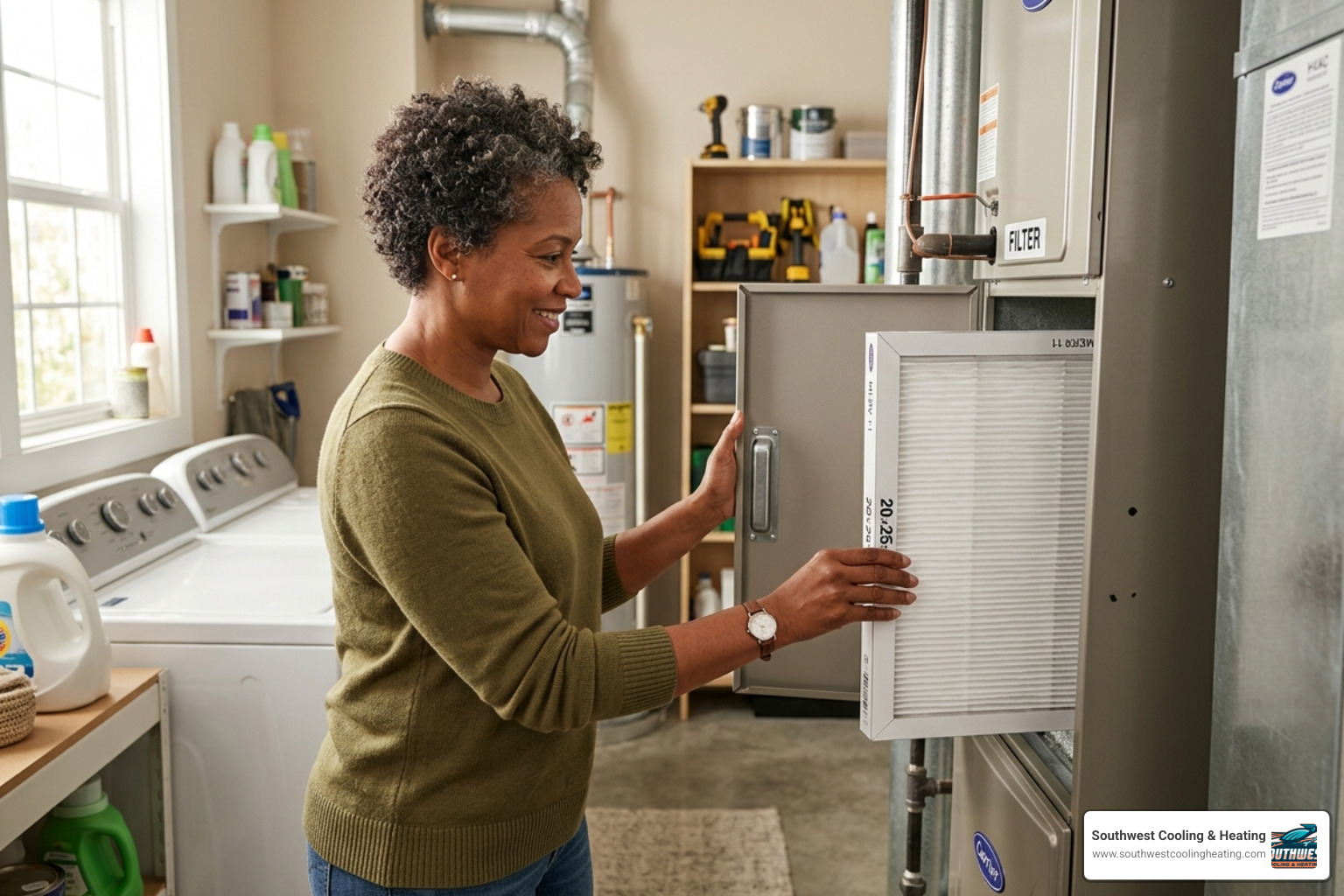
While we handle the heavy lifting, there are several things you can do in your Santa Clara or Ivins home to keep things running smoothly. Think of these as the “daily vitamins” for your air conditioner.
Simple DIY steps for how to prevent HVAC emergencies with maintenance
- Monthly Filter Checks: In the dusty St. George environment, check your filter every 30 days. If you have pets or allergies, replace it immediately if it looks gray or furry.
- Clear the Perimeter: Keep shrubs, weeds, and “stuff” at least 2 feet away from your outdoor unit. It needs to breathe to dump heat effectively.
- Drain Line Maintenance: Every few months, pour a cup of vinegar followed by warm water down the condensate drain line. This kills algae that can clog the pipe and cause water to back up into your home.
- Outdoor Shading: If possible, provide shade for your outdoor unit during the hottest part of the day, but ensure the shade structure doesn’t block airflow.
By following these steps, you are actively participating in Furnace Maintenance and AC care, ensuring your system doesn’t have to fight for its life every afternoon.
Common mistakes that lead to preventable failures
We often see the same mistakes leading to emergency calls. One of the biggest is “landscaping overgrowth.” It’s tempting to hide that “ugly” metal box with thick bushes, but if you choke the airflow, you will kill the compressor.
Another mistake is closing too many registers in unused rooms. This doesn’t save energy; instead, it increases pressure in the ductwork and can cause the blower motor to fail prematurely. Finally, never ignore “small” sounds. A little squeak in April is often a broken motor in August.
Professional Maintenance: The Ultimate Safety Net
While DIY tasks are great, some things require a professional touch. Our 21-point inspection is designed to find the hidden “time bombs” in your system. This includes tightening electrical connections, measuring refrigerant levels, and testing safety controls.
When we perform a tune-up, we check the amperage of your motors. If a motor is drawing too much power, we know it’s failing before it actually stops. This allows for a scheduled Heating Repair on your terms, rather than an emergency call on a Sunday night.
Why electrical and refrigerant checks are critical
Loose electrical connections are responsible for roughly 85% of HVAC failures. Heat causes wires to expand and contract, which can loosen terminals over time, leading to sparks or melted components.
Refrigerant is another critical factor. A system that is just 10% low on refrigerant can see a 20% drop in cooling efficiency. Because HVAC systems are sealed, a low charge always means there is a leak. Detecting and fixing these leaks early prevents the compressor from running “dry” and burning out, which would lead to a very expensive AC Repair.
The benefits of long-term maintenance contracts
Many of our neighbors in Coral Canyon and Diamond Valley choose a maintenance agreement. These plans offer several major advantages:
- Priority Service: If you do have an issue during a heatwave, you jump to the front of the line.
- Documented History: A full record of service can increase your home’s value by up to 7% and is essential for warranty claims.
- Automatic Reminders: We call you when it’s time for your Furnace Maintenance, so you don’t have to remember.
Leveraging Smart Technology to Avoid System Failure
In 2026, technology is your best ally in how to prevent hvac emergencies with maintenance. Modern smart thermostats do more than just change the temperature; they act as a “check engine light” for your home.
Using smart thermostats for early detection
Smart thermostats can monitor runtime patterns. If the system is running 20% longer than usual to reach the same temperature, the thermostat can send an alert to your phone. This early warning can help you catch a failing capacitor or a clogged filter before the system shuts down entirely.
These devices also provide detailed energy reports, helping you see the direct impact of your AC Maintenance. With the new SEER2 efficiency standards now in full effect, staying on top of these digital insights is the best way to ensure you’re getting the performance you paid for.
Frequently Asked Questions about HVAC Prevention
How often should I schedule professional HVAC maintenance?
We recommend a professional tune-up twice a year. Schedule your AC service in the spring (March/April) and your furnace service in the fall (September/October). This ensures your system is ready for the extreme temperatures of the coming season.
What are the most common causes of sudden HVAC failure?
The “Big Three” are dirty air filters, electrical component failure (like a blown capacitor), and refrigerant leaks. All three of these are specifically checked and addressed during a standard maintenance visit.
Can a dirty air filter really cause a total system emergency?
Yes! A clogged filter restricts airflow, causing the internal components to overheat. This can melt wiring, kill the blower motor, or cause the evaporator coil to freeze solid. A $15 filter can easily cause a $1,500 repair if ignored.
Conclusion
At Southwest Cooling & Heating, we believe that your home should be your sanctuary, not a source of stress. Since 1980, we’ve been helping our neighbors in St. George, Hurricane, Ivins, and throughout Washington County stay comfortable by focusing on quality and prevention.
Knowing how to prevent HVAC emergencies with maintenance isn’t just about saving money — though it certainly does that — it’s about the comfort and safety of your family. Whether you are in Santa Clara or Bloomington Hills, our team is ready to provide the expert assistance and modern technology needed to keep your system in peak condition.
Don’t wait for the next record-breaking heatwave to find out if your system is up to the task. Contact us today to schedule your seasonal tune-up or to learn more about our Emergency HVAC Services. We are here to ensure your HVAC system stays out of the “ER” and keeps your home perfectly comfortable all year long.