


Why the Standard Filter Rules Break Down in St. George’s High Desert Climate
How high desert arid conditions affect filter replacement frequency is one of the most important — and most overlooked — maintenance questions for homeowners in St. George, Utah. The short answer: the desert forces you to replace filters far more often than national guidelines suggest.
Quick Answer: How Often Should You Replace Filters in a High Desert Arid Climate?
| Household Type | Recommended Replacement Frequency |
|---|---|
| Standard home, no pets | Every 30-60 days |
| Home with pets or allergy sufferers | Every 20-45 days |
| Near construction, open mesas, or unpaved roads | Every 20-30 days |
| During haboobs or monsoon dust events | Inspect immediately; replace if visibly clogged |
| During peak summer (June-September) | Every 30 days minimum |
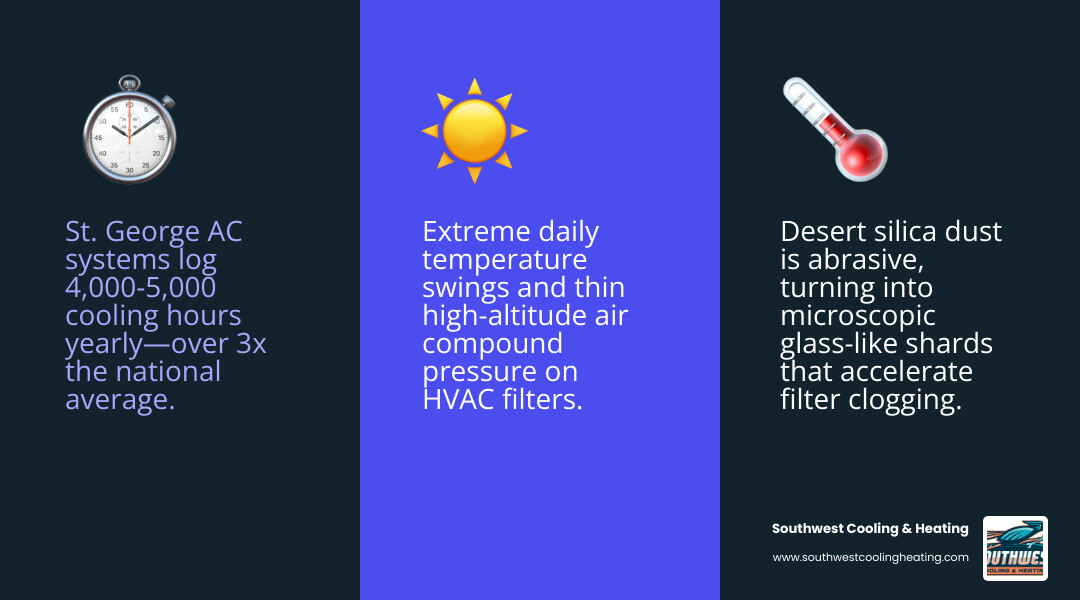
The national “replace every 90 days” rule was built around moderate climates logging 800 to 1,500 cooling hours per year. St. George and the surrounding Southern Utah desert push AC systems to 4,000 to 5,000 cooling hours annually. That is not a small difference — it is a completely different operating environment. Add silica-heavy dust, intense UV radiation, extreme daily temperature swings, and high-altitude thin air, and your filter is under assault from every direction at once.
Pull a filter out of a St. George home after just 30 days and you will often find it caked solid with fine gray powder — not because something is wrong with the system, but because that is simply what the high desert does.
I’m Bruce Hymas, owner of Southwest Cooling and Heating, and with over four decades of hands-on experience serving St. George and the surrounding Southern Utah communities, I have seen how high desert arid conditions affect filter replacement frequency and what happens to systems when homeowners follow generic national advice instead of climate-specific guidance. In the sections below, I will walk you through exactly why this environment demands a different approach — and what you can do to protect your equipment and your home.
The Science of Silica: How High Desert Arid Affects Filter Replacement Frequency
To understand why your filter turns gray so fast, we have to look at what is actually in the air. Desert dust isn’t like the soft lint or “bunny dust” found in more humid regions. In the high desert, our dust is primarily composed of microscopic silica particles and mineral fragments.
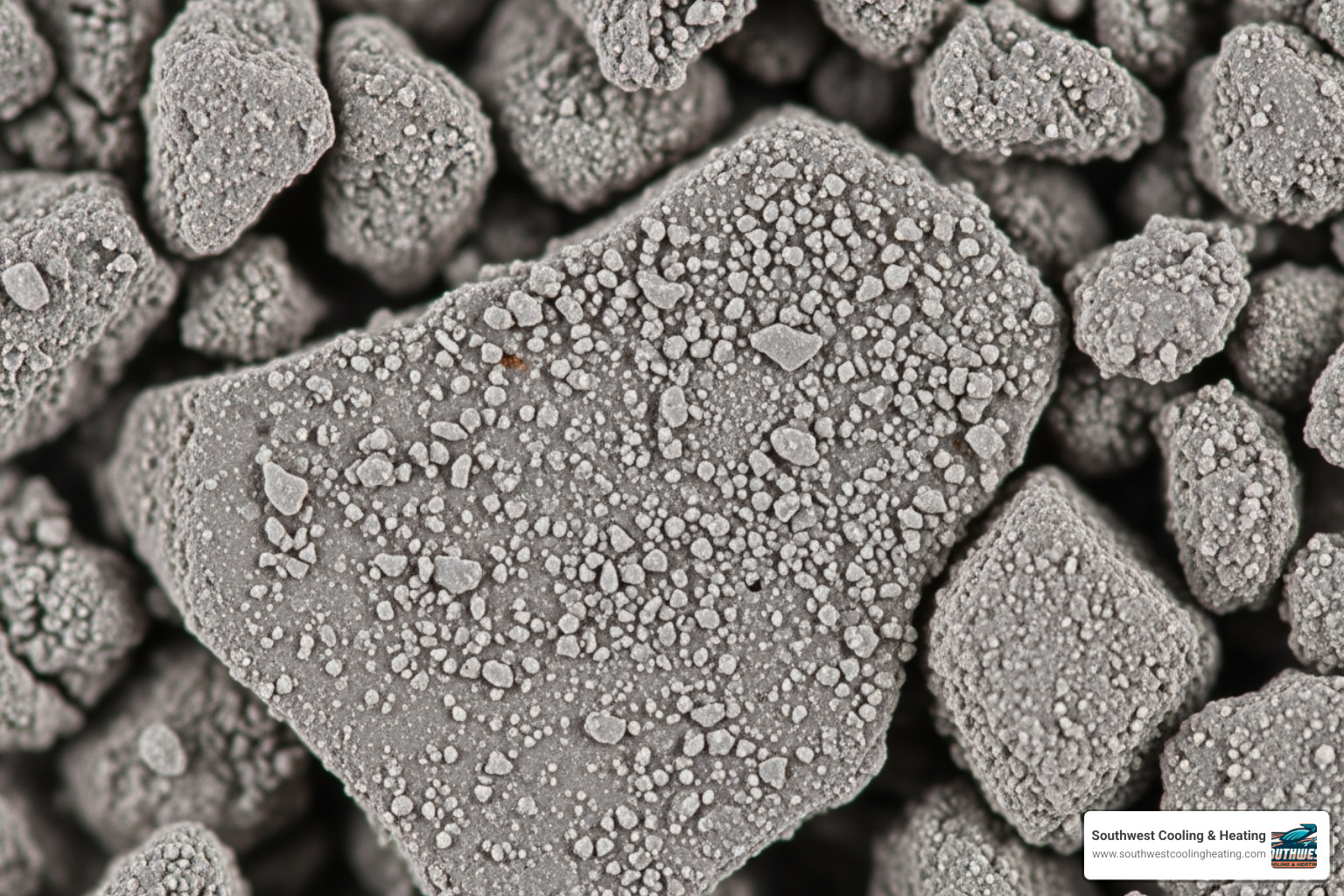
When these particles enter your HVAC system, they create what we call the “sandpaper effect.” These tiny, sharp shards act like microscopic glass, physically pitting and scoring internal components as they fly past. If your filter is old or low-quality, these particles bypass the media and begin abrasive wear on your blower motor and evaporator coils. This leads to a steady SEER efficiency degradation, where your system might lose 0.5 to 1.0 points of efficiency every single year. Regular AC Maintenance is the only way to ensure these abrasive shards haven’t already begun to eat away at your system’s lifespan.
Why the 90-Day Rule Fails in Arid Climates
The industry standard of changing filters every three months is a recipe for disaster in places like Hurricane or Ivins. Most AC systems in moderate climates run for a few hours a day. In our scorching summers, systems log between 4,000 and 5,000 cooling hours per year.
Because we deal with massive sensible heat loads—the actual temperature of the air rather than the humidity—our systems run almost continuously from June through September. When the blower is running, it is pulling air. When it pulls air, it pulls dust. In the high desert, a filter reaches its maximum dust-holding capacity in 30 to 60 days. Beyond that, the filter becomes a wall, forcing the system to work harder to breathe, which can lead to expensive repairs. This is why Desert Comfort Decoded and Why Heat Pumps Love Southern Utah emphasizes the need for high-performance filtration that can handle the sheer volume of air we move.
Environmental Stressors and How High Desert Arid Affects Filter Replacement Frequency
It’s not just the dust that kills filters; it’s the environment itself. The high desert is a land of extremes. Intense UV radiation can physically degrade filter materials, especially if they are located near intake vents or in areas with sun exposure. We often see material hardening or filter media cracking before the filter is even “full” of dust.
Furthermore, our extreme diurnal temperature swings—where it can be 105°F during the day and 65°F at night—cause the metal and plastic components of your HVAC system to expand and contract rapidly. This “thermal cycling” can make filter pleats brittle and cause them to collapse under the weight of the dust load. In the winter, the moisture-frost impact of our cold desert nights can cause condensation to freeze on a dirty filter, creating a solid block of ice that chokes your furnace. Understanding An Ounce of Prevention: Keeping Your HVAC Out of the ER means realizing that a $20 filter is the cheapest insurance policy you can buy against these environmental stressors.
High-Altitude Challenges and Filtration Risks
Elevation plays a massive role in how your system breathes. In many of our service areas, like Diamond Valley or Winchester Hills, we are operating at significant elevations.
| Elevation (Feet) | Air Density (% of Sea Level) | Efficiency Loss | Filter Impact |
|---|---|---|---|
| 0 (Sea Level) | 100% | 0% | Standard |
| 2,500 (St. George) | ~91% | ~10% | Increased Airflow Requirement |
| 5,000 (High Desert) | ~82% | ~20% | High Blower Strain |
At these altitudes, the air is thinner. To achieve the same amount of cooling, your system has to move 15% to 20% more air volume than a system at sea level. This puts an incredible strain on the blower motor. When you combine thin air with a clogged filter, the motor has to work twice as hard to pull the same amount of “cooling power” into your home. As noted in the Southern Utah HVAC Guide: Choosing a Provider That Actually Knows the Heat, altitude can cause up to a 4% efficiency loss for every 1,000 feet of elevation, making proper filtration even more critical.
Managing Dust Loads and How High Desert Arid Affects Filter Replacement Frequency
Seasonal events like haboobs or monsoon dust storms can clog a brand-new filter in a single afternoon. These storms send static pressure spikes through your system, potentially pulling dust right through the filter media.
A unique desert problem occurs when this fine dust meets the condensation on your evaporator coils. Because desert dust is often hygroscopic (it attracts water), it turns into a thick “bio-slime” or sludge. This sludge creates a permanent barrier on your coils, leading to massive airflow restriction and eventual system failure. We recommend Simple Ways to Scrub Your Home’s Air Clean to prevent this buildup from reaching your expensive internal components.
The Risks of High-MERV Filters in Thin Air
Many homeowners think that buying the most expensive, high-MERV (Minimum Efficiency Reporting Value) filter is the best way to protect their home. However, in high-altitude arid regions, a MERV 13 or higher filter can actually be dangerous.
These filters are very dense. In thin mountain air, a high-MERV filter creates so much static pressure that it can cause the blower motor to overheat and fail. It’s a delicate balance between filtration and airflow. If the filter is too restrictive, your system will “short-cycle,” turning on and off rapidly, which wears out the compressor. Following The Ultimate Hidden Valley Guide to Keeping Your AC Happy usually means sticking to a MERV 8 to 11 filter, which provides excellent protection without suffocating your AC.
Maintenance Strategies for Southern Utah Homeowners
Knowing how high desert arid affects filter replacement frequency is only half the battle; you also need to know how to inspect your system properly.
We recommend the “Light Test.” Hold your filter up to the sun or a bright light. If you cannot see light passing through the fibers, the filter is “blind” and needs to be replaced immediately, regardless of how many days it has been in the slot. For our neighbors in Santa Clara or Bloomington Hills, we suggest using synthetic media filters. Unlike fiberglass, synthetic pleated designs have a much higher surface area, allowing them to trap more desert grit without collapsing.
During the spring-to-summer transition, your filter should be checked every two weeks. This is the windiest time of year in Southern Utah, and the amount of airborne particulate is at its peak. If you are a pet owner, your schedule should be even tighter—every 20 to 45 days. Pet dander acts like a “glue” for desert dust, causing filters to mat over much faster than in pet-free homes. Regular Furnace Maintenance during the shoulder seasons ensures that your system is clean before the extreme heat or cold hits.
Hidden Costs of Filter Neglect
Neglecting your filter in the desert isn’t just about air quality; it’s about your wallet. A clogged filter can increase your energy bill by up to 15% because the system has to run longer to cool the house. Over time, this neglect reduces the equipment lifespan significantly. While the national average for an AC unit is 15-20 years, in high desert regions like ours, that lifespan can drop to 7.5 to 10 years if maintenance is ignored.
Signs your filter has failed in the desert:
- A thin layer of grit or dust on your furniture just hours after cleaning.
- Whistling or humming sounds coming from the return air vent.
- Frozen evaporator lines (ice on the copper pipes outside).
- A sudden 20% spike in your monthly utility bill.
- The smell of “dust” or “burning” when the heater or AC kicks on.
When airflow is restricted, the compressor oil can begin to break down due to excessive heat, leading to a “burnt” compressor—one of the most expensive repairs in the industry.
Frequently Asked Questions about Desert HVAC Maintenance
Why does my filter look gray after only two weeks in St. George?
This is usually due to the high concentration of fine particulates and minerals in our soil. If you live near open mesas, unpaved roads, or active construction in areas like Coral Canyon or Washington, your system is essentially acting as a giant vacuum cleaner for the neighborhood. It’s a sign the filter is doing its job!
Can I use a standard fiberglass filter during monsoon season?
We generally advise against it. Fiberglass filters (the cheap “see-through” ones) are designed to catch “boulders”—large lint and hair. They do almost nothing to stop the fine silica dust of a monsoon storm. During these months, a pleated synthetic filter is much more effective at protecting your indoor air quality and your system’s coils.
How does low humidity affect the way dust sticks to my AC coils?
In humid climates, dust clumps together and often falls out of the air. In our low humidity, dust stays bone-dry and lightweight, allowing it to stay airborne longer and penetrate deeper into your HVAC system. Once it hits the damp evaporator coil, it sticks like glue, creating a “mud” that is very difficult to clean without professional tools.
Conclusion
Living in the beautiful high desert of Southern Utah means accepting that our environment is tough on machinery. Understanding how high desert arid affects filter replacement frequency is the first step in ensuring your home remains a sanctuary of comfort. Whether you are in St. George, Ivins, or Toquerville, your HVAC system is working harder than almost anywhere else in the country.
At Southwest Cooling & Heating, we’ve been helping our neighbors in the Hurricane Valley and Greater St. George area navigate these challenges since 1980. We combine modern technology with old-school values to keep your air clean and your bills low. Don’t wait for your system to struggle under the weight of desert dust. Schedule your professional AC Maintenance today and let us ensure your home stays cool, no matter how high the dust flies.