


Why What Happens If You Dont Change Your Air Filter Matters More Than You Think
What happens if you dont change your air filter is a question every homeowner should be able to answer — because the consequences move fast and hit hard. Here is a quick summary:
- Higher energy bills — A clogged filter forces your system to work harder, increasing energy consumption by 5% to 15% and pushing utility bills up by as much as 20% to 30%
- Poor indoor air quality — Dust, pet dander, mold spores, and other pollutants recirculate through your home instead of being captured
- HVAC system damage — Restricted airflow strains the blower motor, freezes evaporator coils, and can crack the heat exchanger
- Premature system failure — Neglected filters can cut your HVAC system’s lifespan from 15 to 20 years down to 10 to 12 years
- Reduced car performance — A dirty engine air filter causes horsepower loss, lower fuel efficiency, and long-term engine wear
- Uneven heating and cooling — Some rooms get too hot or too cold as airflow becomes restricted throughout the home
- Mold and bacteria growth — Moisture trapped by poor airflow creates conditions for mold to grow inside your ductwork
Most homeowners treat their air filter like it’s invisible — out of sight, out of mind. But that small, inexpensive filter is quietly doing one of the most important jobs in your home: protecting your HVAC system and the air your family breathes. Skipping a simple filter swap can set off a chain reaction of problems that ends with an expensive repair call on the hottest day of a St. George summer.
I’m Bruce Hymas, owner of Southwest Cooling and Heating, and with over four decades of HVAC experience serving the St. George area, I’ve seen what happens if you dont change your air filter — from frozen coils in July to blower motors that burned out years too early. In the sections below, I’ll walk you through exactly what goes wrong, why it happens, and how to stay ahead of it.
Simple guide to what happens if you dont change your air filter terms:
- best air filter for your home
- how often should you change your hvac air filter
- how pets affect how often you change your filter
What Happens If You Dont Change Your Air Filter in Your Home or Vehicle?
Whether it is the heating and cooling system keeping your home comfortable or the engine powering your car down the road, air filters are the primary line of defense against airborne debris. When you ignore these filters, the immediate result is severe airflow restriction.
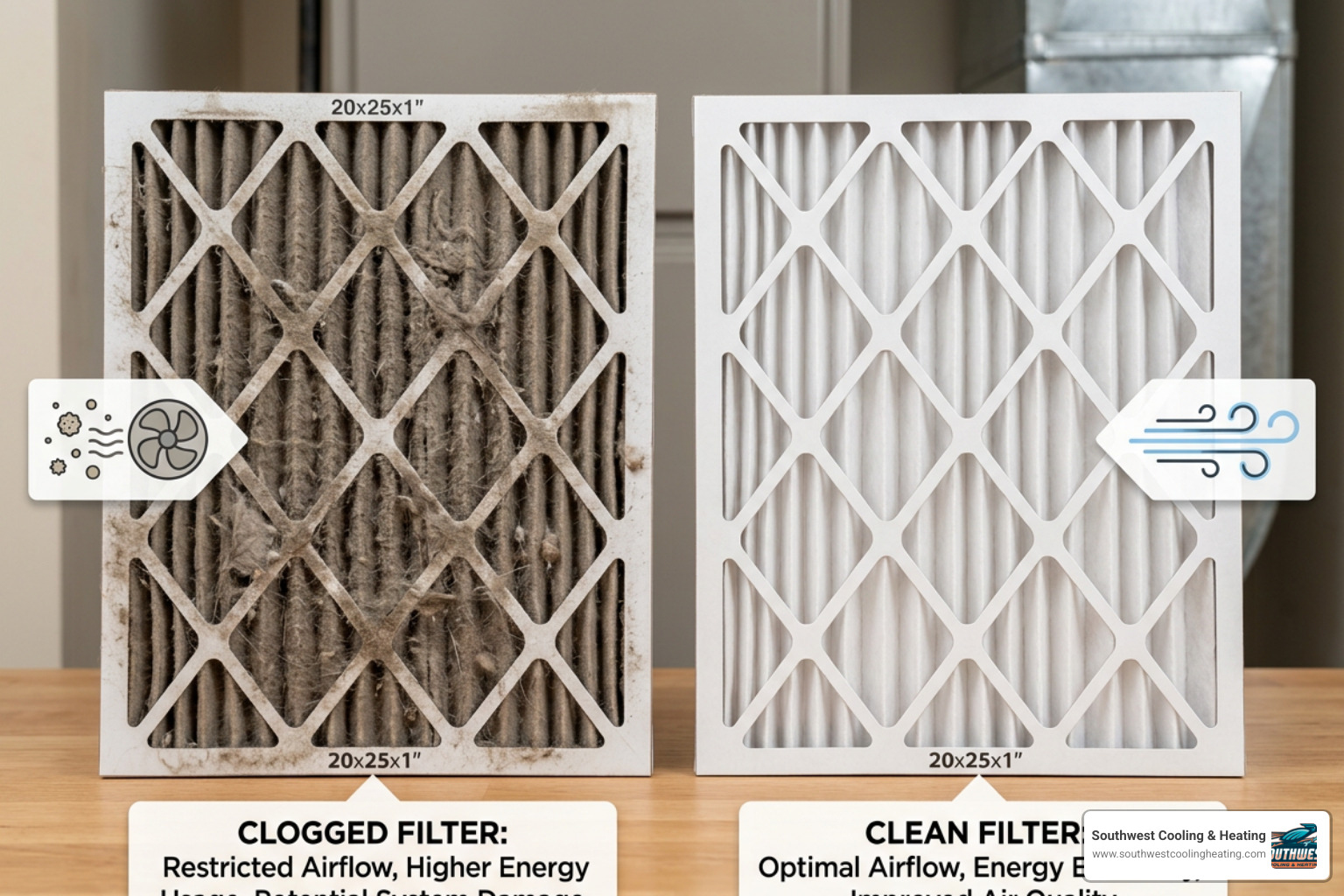
In your home’s HVAC system, a clogged filter acts like a solid wall. Because the system cannot pull enough air through the return vents, it has to run much longer and work significantly harder to distribute conditioned air. This extra work creates immense mechanical strain on internal components and triggers a phenomenon known as “short cycling.”
Short cycling occurs when your furnace or air conditioner overheats or freezes up, causing it to shut down prematurely for safety, only to turn back on minutes later. This constant on-and-off cycle rapidly wears out expensive parts. In the long run, neglecting a simple filter replacement is the quickest way to land your system in the mechanical emergency room. You can learn more about avoiding these preventable breakdowns in our guide on An Ounce of Prevention: Keeping Your HVAC Out of the ER.
The Domino Effect of Restricted HVAC Airflow
When airflow is restricted, it sets off a destructive domino effect across three of your HVAC system’s most delicate and expensive components:
- The Blower Motor: This is the fan responsible for pushing air throughout your home. When the filter is clogged, the blower motor must pull against extreme resistance. This causes the motor to draw more electrical current, overheat, and eventually burn out.
- The Evaporator Coils: In cooling mode, your air conditioner relies on warm indoor air blowing across the cold evaporator coils. The refrigerant inside these coils absorbs the heat. If a dirty filter blocks that warm air, the temperature around the coils drops below freezing. The condensation on the coils turns to ice, creating “frozen coils.” This ice blocks all remaining airflow, and worse, can cause liquid refrigerant to flood back into your compressor, destroying it.
- The Heat Exchanger: In the winter, your furnace relies on constant airflow to carry heat away from the heat exchanger. Without sufficient airflow, the heat exchanger quickly overheats. The metal expands and contracts too rapidly under this extreme thermal stress, which eventually leads to a cracked heat exchanger. A cracked heat exchanger is a severe safety hazard that can leak deadly carbon monoxide into your home.
How a Clogged HVAC Filter Spikes Energy Bills
A dirty air filter is one of the primary culprits behind mysteriously rising utility bills. Because your system has to run for extended periods to heat or cool your home, its energy consumption spikes.
While a clean filter allows your system to operate at peak efficiency, a dirty filter can increase your HVAC system’s energy consumption by 5% to 15%. In terms of your monthly budget, neglecting to change your air filter can increase your utility bills by 20% to 30%.
Keeping your system clean not only keeps your monthly bills manageable but also ensures you enjoy the full lifespan of your equipment. To understand how regular maintenance and clean filters support system longevity, read about The Ultimate Guide to New HVAC Benefits Beyond Comfort.
The Risks of a Clogged Car Engine Air Filter
Just like your home’s HVAC system, your vehicle’s engine needs to breathe. The engine air filter prevents dirt, dust, road debris, and sand from entering the combustion chamber. When this filter becomes clogged, your engine is starved of oxygen.
This restriction leads to several performance issues, including:
- Horsepower Loss and Sluggish Acceleration: Your car may feel slow to respond when you step on the gas pedal because the engine cannot draw enough air to burn fuel efficiently.
- Reduced Fuel Efficiency: To compensate for the lack of air, your car’s computer may inject more fuel into the combustion chamber, dropping your fuel economy by 5% to 15%.
- Mass Airflow (MAF) Sensor Damage: A saturated or deformed filter can allow fine dust particles to bypass the filter media. This dust can coat the delicate MAF sensor, causing rough idling, engine misfires, and triggering the “Check Engine” light.
- Accelerated Engine Wear: If particles manage to slip through a degraded filter, they can act like sandpaper inside the engine cylinders, scratching the cylinder walls and piston rings. In fact, industry data shows that 75% of engine damage is done in the first 25% of the air filter’s life if it is left in place long after it has become saturated.
The Impact on Indoor Air Quality and Family Health
Many homeowners believe that air filters are designed solely to clean the air they breathe. In reality, their primary job is to protect the sensitive internal mechanical components of your HVAC system. However, a clean filter has the highly beneficial side effect of keeping your indoor air clean.
According to the Environmental Protection Agency (EPA), indoor air quality is on average two to five times worse than the air outdoors, and in some locations, it can be up to 100 times worse. Because modern homes in Southern Utah are tightly sealed to keep out the desert heat, pollutants like dust, pet dander, pollen, and mold spores become trapped inside. When your air filter is completely full, it can no longer capture these particles, forcing them to recirculate through your living spaces.
Fortunately, there are simple habits you can build to combat this issue. Discover how to improve your home’s air in our guide on Simple Ways to Scrub Your Homes Air Clean.
Respiratory Issues and Allergy Triggers
When your HVAC system continuously recirculates unfiltered air, it turns your home into a hotspot for respiratory irritants. For family members suffering from asthma or seasonal allergies, a dirty filter can trigger frequent, severe flare-ups.
As dust, pollen, and pet dander bypass the saturated filter, they settle on your furniture, carpets, and bedding, only to be kicked back into the air when you walk through the room. Over time, breathing in these high concentrations of airborne pollutants can lead to persistent coughing, throat irritation, headaches, fatigue, and even chronic respiratory infections.
Mold and Bacteria Growth in the Ductwork
A dirty air filter can also introduce moisture-related hazards to your ductwork. When restricted airflow causes your AC’s evaporator coils to freeze, the ice eventually melts. This melting ice can overwhelm the system’s condensate drain pan, leading to standing water inside the HVAC unit.
As the system continues to run, this moisture evaporates into the stagnant, restricted air stream. Dark, warm, and humid ductwork combined with a steady supply of organic dust creates the perfect breeding ground for mold, mildew, and bacteria. Once mold begins growing inside your ducts, it releases microscopic spores into the air, leading to persistent musty odors and serious long-term health risks for everyone in the household.
How Often to Replace Your Filters Based on Household Conditions
How often you should swap out your filter depends heavily on your specific living situation. A single person living in a quiet apartment will have vastly different filter needs than a large family with multiple pets.
To help you determine the best schedule for your home, consult How Often to Change Your HVAC Air Filter: A Simple Guide. Additionally, understanding the Minimum Efficiency Reporting Value (MERV) rating of your filter is crucial. Standard residential filters typically range from MERV 5 to MERV 8, which are excellent for catching dust and pollen without restricting airflow. Higher MERV ratings (such as MERV 11 to 13) trap smaller particles like pet dander and smoke, but they fill up much faster and require more frequent changes.
| Filter Type | MERV Rating | Average Lifespan | Best Suited For |
|---|---|---|---|
| Fiberglass (Flat) | MERV 1–4 | 30 days | Low-use properties, vacation homes |
| Pleated Paper | MERV 5–8 | 60–90 days | Standard homes, no pets |
| High-Efficiency Pleated | MERV 11–13 | 30–60 days | Homes with pets, mild allergy sufferers |
| Media Filters (3-5 inch) | MERV 11–16 | 6–12 months | Large homes, advanced filtration systems |
How Pets and Allergies Affect the Timeline
If you have furry family members, your air filter’s lifespan drops significantly. Dogs and cats shed hair and release dander constantly, which is drawn directly into your return vents.
As a general rule, adding even one pet to your household reduces your filter’s effective lifespan by roughly 30 days. If you have multiple pets or family members who suffer from severe allergies, your filters can become completely clogged in as little as 20 to 45 days. To learn more about managing this common household challenge, check out our article on How Pets Affect How Often You Change Your Filter.
High Desert Arid Conditions and Seasonal Usage
Living in Southern Utah presents unique environmental challenges for your HVAC system. In areas like St. George, Santa Clara, Hurricane, and Ivins, our high desert climate brings intense heat, high winds, and frequent dust storms.
During our blistering summer months, your air conditioner runs almost continuously, pulling massive volumes of dusty air through your system. Fine desert dust can clog a standard filter much faster than normal household dust. To keep your system running smoothly through the summer peak, you should inspect your filter monthly and replace it more frequently. You can find detailed regional advice in our guide on How High Desert Arid Conditions Affect Filter Replacement Frequency.
Frequently Asked Questions About Air Filter Maintenance
What are the first signs of a clogged air filter?
The most common early warning signs include:
- Weak Airflow: You notice that the air blowing from your register vents feels noticeably weaker than usual.
- Dust Around Vents: A visible layer of fine dust begins accumulating on the grilles of your supply vents or on nearby walls and furniture.
- Musty Odors: You notice a dusty, stale, or slightly musty smell whenever the heating or cooling system kicks on.
- Longer Run Times: Your system runs continuously without ever quite reaching the temperature set on your thermostat.
If you notice these signs, a simple visual inspection can confirm your suspicions. Take the filter out and hold it up to a bright light source. If you cannot see light passing through the filter media, it is completely saturated and needs to be replaced immediately. To find the right replacement, check out our list of Top Rated Air Filters to Keep Your Home Fresh.
Is it safe to run an HVAC system without a filter temporarily?
No, it is highly discouraged to run your HVAC system without a filter, even for a single day. Without a filter in place, completely unfiltered air is pulled directly into your system. Heavy dust, pet hair, and airborne debris will quickly settle on your evaporator coils, blower motor, and electrical components.
Just a few hours of running a system without a filter can coat your wet evaporator coils in a thick layer of grime, severely reducing heat transfer, raising your energy bills, and potentially leading to frozen coils or a burnt-out blower motor. If you do not have a replacement filter on hand, it is far safer to turn the system off entirely until you can purchase one.
What happens if you dont change your air filter for a year?
Leaving an air filter unchanged for an entire year is a recipe for complete system failure. Over 12 months, the filter will become completely choked with a thick, felt-like layer of dust, hair, and debris. This severe airflow restriction will cause your system to short cycle constantly, leading to extreme component wear.
In the summer, your evaporator coils will freeze repeatedly, potentially causing liquid refrigerant to destroy your compressor. In the winter, your furnace will overheat, leading to a cracked heat exchanger. Skipping a simple filter replacement can easily turn into a major mechanical emergency, resulting in an expensive system replacement.
What happens if you dont change your air filter with pets in the home?
With pets in the home, neglecting your air filter leads to rapid clogging and severe indoor air quality issues. Pet hair and dander will quickly coat the face of the filter, blocking airflow much faster than standard dust.
As the filter becomes choked, your HVAC system will begin recirculating pet odors, dander, and loose hair back into your living spaces. This can trigger severe allergy symptoms, cause your home to smell persistently like pet dander, and put immense mechanical strain on your blower motor as it struggles to pull air through the pet hair barrier.
Conclusion
At Southwest Cooling & Heating, we have been helping homeowners throughout Southern Utah keep their homes comfortable and efficient since 1980. Whether you are in Santa Clara, Bloomington, Hurricane, Ivins, or right here in St. George, we combine modern, energy-efficient solutions with old-school customer service values.
While changing your air filter is a simple task you can easily manage on your own, it is only one part of keeping your heating and cooling system in peak condition. Regular professional maintenance is the best way to catch hidden mechanical issues, clean sensitive internal components, and ensure your system runs reliably all year long. To find out if professional care is right for your home, read our article on Is Annual HVAC Maintenance Worth It in St. George?.
Don’t wait for a costly breakdown to give your heating and cooling system the attention it deserves. Schedule professional AC maintenance with Southwest Cooling & Heating today to keep your home comfortable, your air clean, and your energy bills low!