


Why the Air Inside Your Home May Be More Harmful Than You Think
How to improve indoor air quality at home is simpler than most people expect. Here are the most effective steps:
- Control pollution sources – remove or reduce VOCs, radon, smoke, and combustion pollutants
- Ventilate regularly – open windows daily or use mechanical ventilation systems
- Filter your air – use HEPA-rated purifiers and MERV-13 HVAC filters
- Manage humidity – keep levels between 30-50% to prevent mold and dust mites
- Clean consistently – vacuum with a HEPA filter, wash bedding weekly, and dust with a damp cloth
- Maintain your HVAC system – replace filters regularly and schedule professional tune-ups
Most of us assume the air outside is the problem. But according to the EPA, Americans spend roughly 90% of their time indoors — and indoor pollutant levels can run anywhere from two to five times higher than outdoor air. In some cases, during activities like painting or heavy cleaning, concentrations can spike even further. Your home can quietly accumulate dust, mold spores, pet dander, volatile organic compounds (VOCs) from furniture and cleaning products, and combustion gases from cooking and heating — all without any obvious warning signs. For homeowners in St. George, where windows stay closed during scorching summers and cold winters alike, that trapped air deserves serious attention.
I’m Bruce Hymas, owner of Southwest Cooling & Heating, and after decades in the HVAC industry serving the St. George area, I’ve seen how a well-maintained heating and cooling system plays a central role in how to improve indoor air quality at home. In the sections ahead, we’ll walk through everything you need to know — from quick no-cost fixes to smart HVAC upgrades.
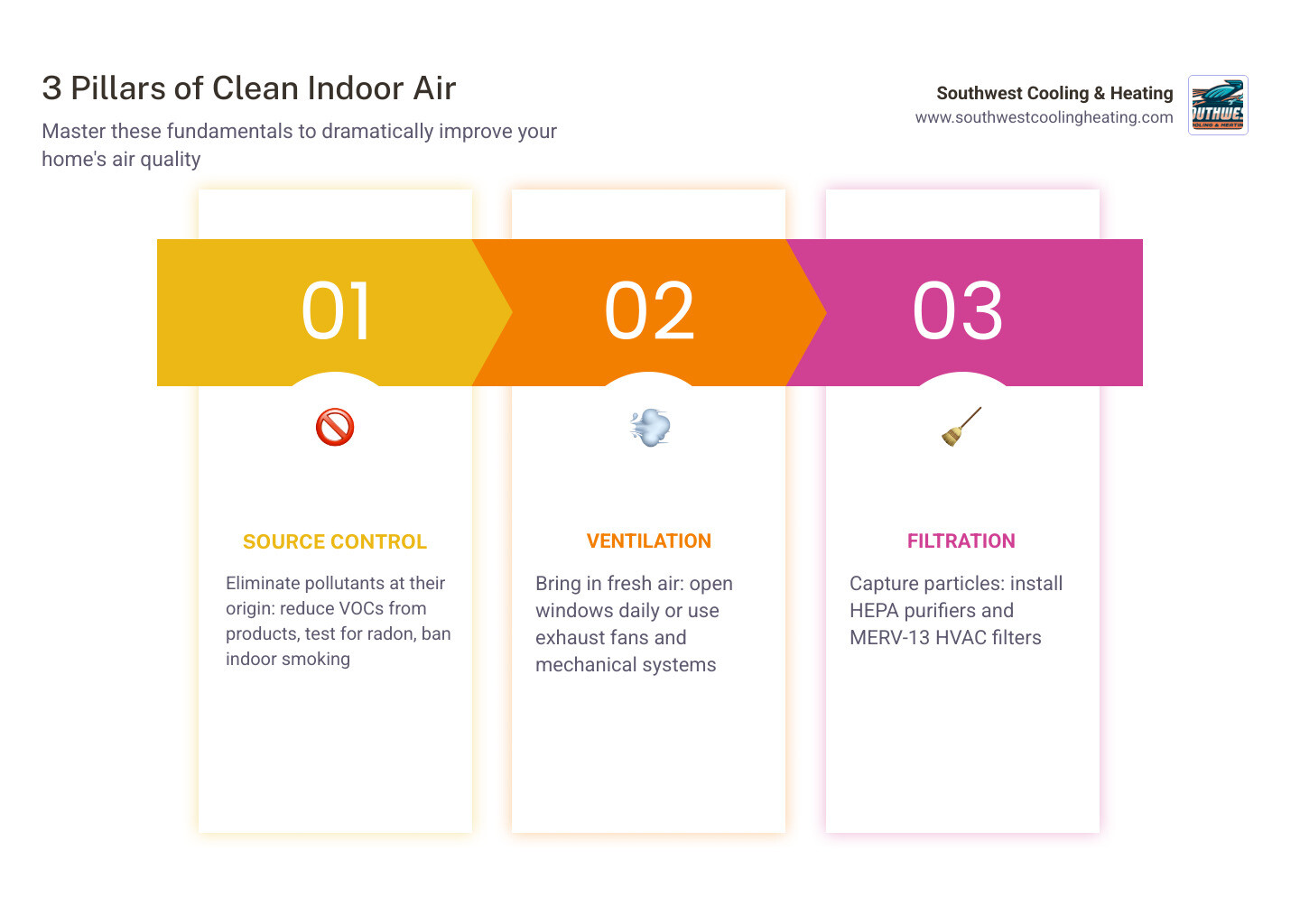
The Three Pillars of How to Improve Indoor Air Quality at Home
When we talk about “scrubbing” the air, we aren’t just talking about a single machine in the corner of the room. True air quality management relies on three fundamental pillars: Source Control, Ventilation, and Filtration. Think of it like keeping a pool clean—you wouldn’t just run the filter if someone was constantly throwing dirt into the water. You’d stop the dirt first.
By addressing these three areas, you create a comprehensive defense against respiratory irritants. Whether you live in Santa Clara or Hurricane, these principles remain the same. For those who need a professional assessment of their current setup, our HVAC Services can help identify which pillar needs the most support in your specific home layout.
How to improve indoor air quality at home by managing source control
The most effective (and often the cheapest) way to improve your air is to stop pollutants from entering in the first place. This is called source control. If you remove the source of the smell or the chemical, you don’t have to worry about filtering it out later.
One of the biggest culprits in modern homes is Volatile Organic Compounds (VOCs). These are gases emitted from paints, new carpets, air fresheners, and even that “new car smell” in your garage. In fact, VOC levels can be 2 to 5 times higher indoors than out. Another silent threat is Radon, a naturally occurring radioactive gas that enters through cracks in the foundation. It is the second leading cause of lung cancer in the U.S., making testing essential for every homeowner.
| Pollutant | Common Sources | Health Risk |
|---|---|---|
| VOCs | Paints, cleaners, new furniture, air fresheners | Headaches, nausea, organ damage |
| Radon | Soil under the foundation, crawl spaces | Lung cancer |
| Carbon Monoxide | Leaking gas furnaces, wood stoves, idling cars | Dizziness, fatigue, can be fatal |
| Particulate Matter | Dust, pet dander, cooking smoke, tobacco | Asthma triggers, heart issues |
| Formaldehyde | Pressed wood (MDF), glues, permanent press fabrics | Respiratory irritation, cancer risk |
To manage these, we recommend switching to low-VOC cleaning products, avoiding scented candles, and ensuring that any fuel-burning appliances are properly vented to the outside.
How to improve indoor air quality at home through proper ventilation
If source control is your first line of defense, ventilation is your second. Most traditional HVAC systems in areas like Bloomington or Ivins don’t actually bring in fresh air; they just recirculate the air already inside. This leads to “stale” air where carbon dioxide and pollutants build up.
Natural ventilation—opening windows and doors—is great when the outdoor air quality is good. However, in our desert climate, we often deal with dust or extreme heat. This is where mechanical ventilation comes in. Systems like Energy Recovery Ventilators (ERVs) or a HVAC Ductless Heat Pump can help manage air exchange more efficiently. Local exhaust fans in bathrooms and kitchens are also vital; they should be run during and for at least 20 minutes after cooking or showering to remove moisture and combustion byproducts.
Advanced Filtration and HVAC Maintenance Strategies
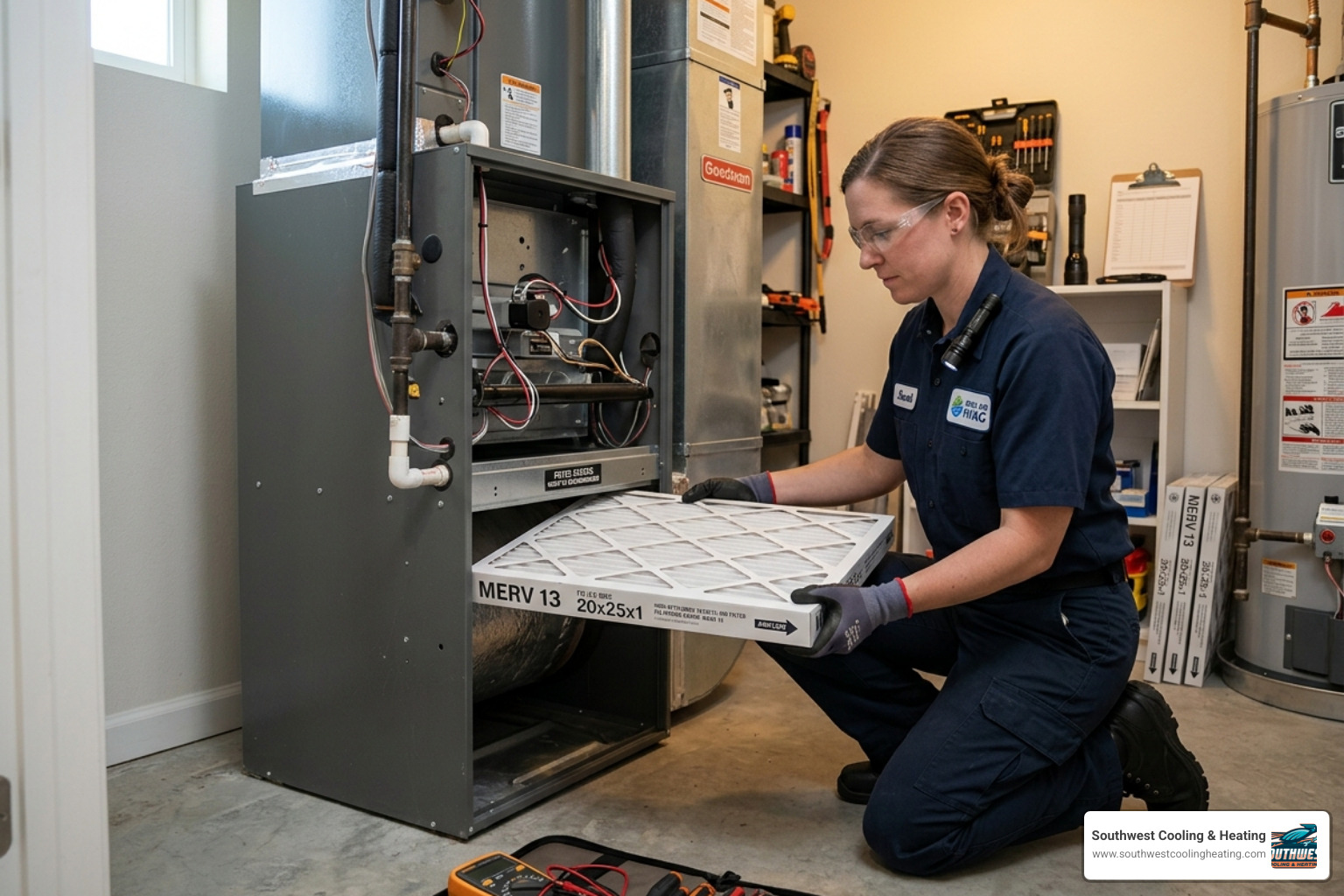
Once you’ve limited the sources and brought in some fresh air, the final step is to catch whatever particles remain. This is where your HVAC system becomes a powerful air purifier. Most people think the filter is just there to keep the machine clean, but with the right filter, it can actually protect your lungs.
HEPA (High-Efficiency Particulate Air) filters are the gold standard, capable of removing more than 99% of particles as small as 0.3 microns. However, not all systems can handle a true HEPA filter because they are very dense and can restrict airflow. For most residential systems in St. George, a filter with a MERV 13 rating is the “sweet spot”—it’s strong enough to catch bacteria and smoke particles but won’t “suffocate” your furnace.
Regular maintenance is non-negotiable. A clogged filter or a dirty blower motor makes your air quality plummet. We recommend:
- Monthly Inspections: Check your filter every 30 days, especially during high-use seasons.
- AC Maintenance: Professional cleaning of coils and drains prevents mold growth within the unit.
- Furnace Maintenance: Ensuring proper combustion prevents dangerous carbon monoxide leaks.
Utilizing modern air purification technology
If you have family members with asthma or severe allergies, standard filtration might not be enough. Modern technology offers “active” purification. While filters are “passive” (they wait for air to hit them), devices like UV germicidal lights actively kill biological contaminants.
UV lights are installed inside your ductwork or near the cooling coil. They use specific wavelengths of light to scramble the DNA of mold spores, viruses, and bacteria, rendering them harmless. This technology has been used in hospitals for years and is now a staple in healthy homes. If you are considering a Mini Split Installation or upgrading to a high-efficiency Heat Pump, ask us about integrating these air-cleaning allies into your new system.
When choosing a portable air purifier for a specific room, look at the CADR (Clean Air Delivery Rate). You want a unit that can cycle the air in the room at least 4 to 6 times per hour.
Managing Humidity and Moisture for Health
Humidity is the “Goldilocks” of indoor air quality—it needs to be just right. The EPA and health experts recommend keeping indoor relative humidity between 30% and 50%.
In the St. George area, we often struggle with air that is too dry in the winter, which can irritate your sinuses and make you more susceptible to viruses. Conversely, if humidity rises above 60%, you’re inviting mold and dust mites to move in. Dust mites, in particular, thrive in moist environments and are a leading cause of year-round allergies.
To maintain this balance:
- Use a Hygrometer: These are inexpensive devices that tell you exactly how much moisture is in your air.
- Dehumidify: Use exhaust fans in the bathroom and kitchen. If you have a damp basement or crawl space in Toquerville, a dedicated dehumidifier may be necessary.
- Humidify Carefully: If using a portable humidifier during the dry months, use distilled water to avoid “white dust” (mineral buildup) and clean the unit daily to prevent bacterial growth.
Frequently Asked Questions about Home Air Quality
Are houseplants effective for cleaning air?
It’s a common myth that a few spider plants will turn your living room into a pristine forest. While a famous NASA study from the 1980s showed plants could remove VOCs, you would need hundreds of plants working in a sealed environment to see a significant difference in a modern home. In fact, over-watered houseplants can actually hurt your air quality by fostering mold growth in the soil. Enjoy your greenery for the aesthetic, but rely on your HVAC system for the actual cleaning.
What should I do during wildfire smoke events?
Wildfire smoke is a major concern in Southern Utah. During these events, the “open the windows” rule is reversed.
- Seal the Home: Keep all windows and doors tightly shut.
- Recirculate: Set your HVAC system to “recirculate” so it isn’t pulling in smoky outside air.
- Upgrade the Filter: This is the time to ensure you have a fresh MERV 13 filter installed.
- Create a Clean Room: Use a portable HEPA air purifier in the bedroom where you spend the most time.
When should I hire a professional for IAQ testing?
You don’t always need a pro, but there are three times you definitely should call one:
- Radon Testing: Because you can’t see or smell it, a professional-grade test is the only way to be sure your foundation is safe.
- Visible Mold: If you find a mold colony larger than 10 square feet, the EPA recommends professional remediation to prevent spores from spreading through the whole house.
- Persistent Symptoms: If you feel better the moment you leave your house but suffer from headaches or itchy eyes while inside, a professional air quality audit can find the “hidden” source of the problem.
Conclusion
Improving the air you breathe is one of the best investments you can make in your family’s health. By focusing on source control, staying on top of your ventilation, and ensuring your filtration is up to date, you can breathe easy knowing your home is a true sanctuary.
At Southwest Cooling & Heating, we’ve been helping our neighbors in Santa Clara, Diamond Valley, and throughout the St. George area since 1980. We combine modern technology with old-school values to ensure your home is comfortable and safe.
Immediate Low-Cost Steps You Can Take Today:
- Take your shoes off at the door to avoid tracking in pesticides and lead dust.
- Open your windows for just 10 minutes a day to flush out stale air.
- Wash your bedding in 130°F water once a week to kill dust mites.
- Switch to a damp microfiber cloth for dusting instead of dry rags that just move dust around.
- Check your furnace filter—if it’s grey or fuzzy, change it today!
If you’re ready to take your home’s health to the next level, we’re here to help. More info about HVAC services is just a click away, or give us a call to schedule your next maintenance visit. Keep it clean, stay comfortable, and breathe easy!