


What an HVAC Maintenance Visit Includes (Quick Answer)
What does an HVAC maintenance visit include is something every St. George homeowner should understand before the next season hits — and the short answer is more than most people expect.
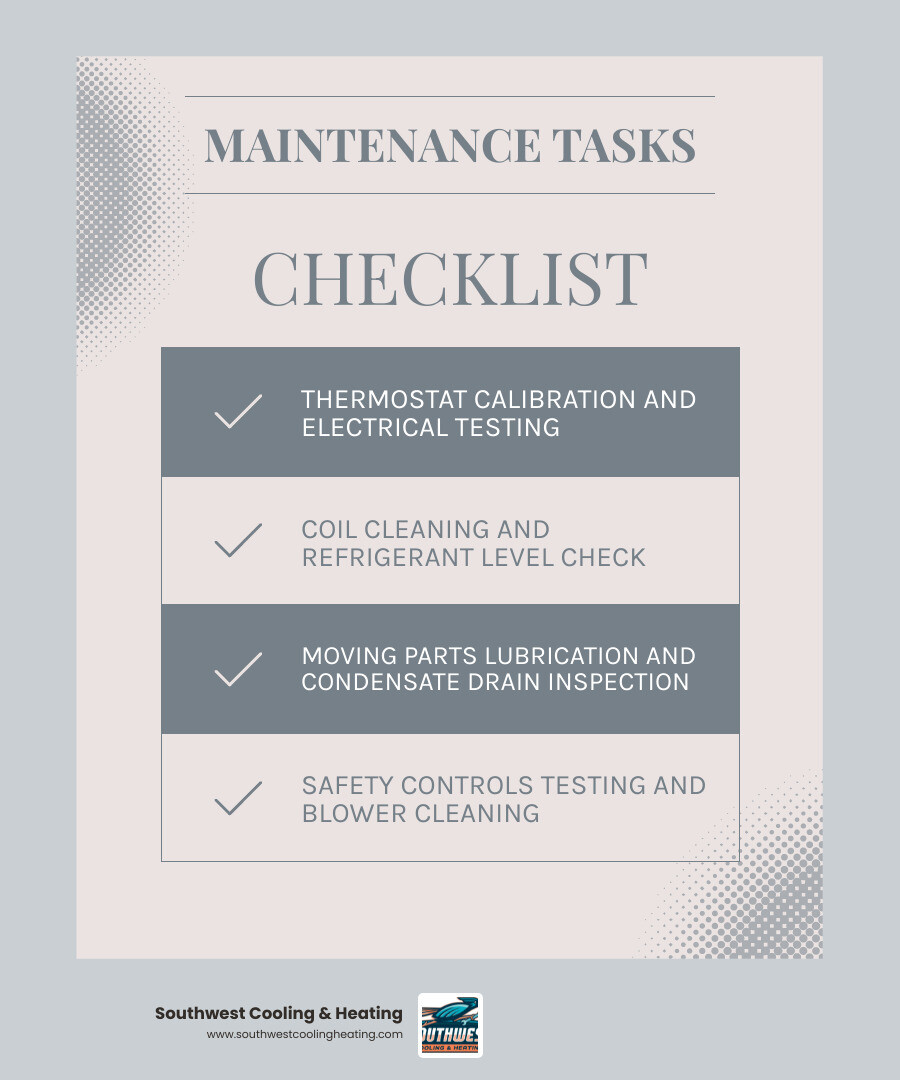
A standard professional visit covers:
- Thermostat calibration – verifying accuracy and proper cycling
- Electrical connections – tightening and testing voltage and amperage
- Moving parts lubrication – reducing friction and wear on motors and fans
- Condensate drain inspection – clearing clogs that cause water damage
- Air filter assessment – replacing or flagging dirty filters
- Coil cleaning – removing buildup from evaporator and condenser coils
- Refrigerant level check – confirming proper charge and inspecting for leaks
- Blower component cleaning – restoring airflow and efficiency
- Safety controls testing – verifying safe startup, operation, and shutdown
- Ductwork visual review – spotting leaks that waste 20-30% of conditioned air
A thorough visit typically takes between one and one and a half hours per system. Anything significantly shorter may be little more than a visual inspection.
Regular maintenance can improve your system’s lifespan by up to 48% and prevent yearly efficiency losses of up to 15% — two numbers that add up quickly over the life of a central HVAC system that’s built to last 15 to 20 years.
I’m Bruce Hymas, owner of Southwest Cooling and Heating, and with decades of hands-on experience in the St. George area, I’ve seen what understanding what does an HVAC maintenance visit include can mean for a homeowner’s comfort and budget. In this guide, I’ll walk you through exactly what happens during a professional visit so you know what to expect and what to ask for.
Similar topics to what does an hvac maintenance visit include:
What Does an HVAC Maintenance Visit Include?
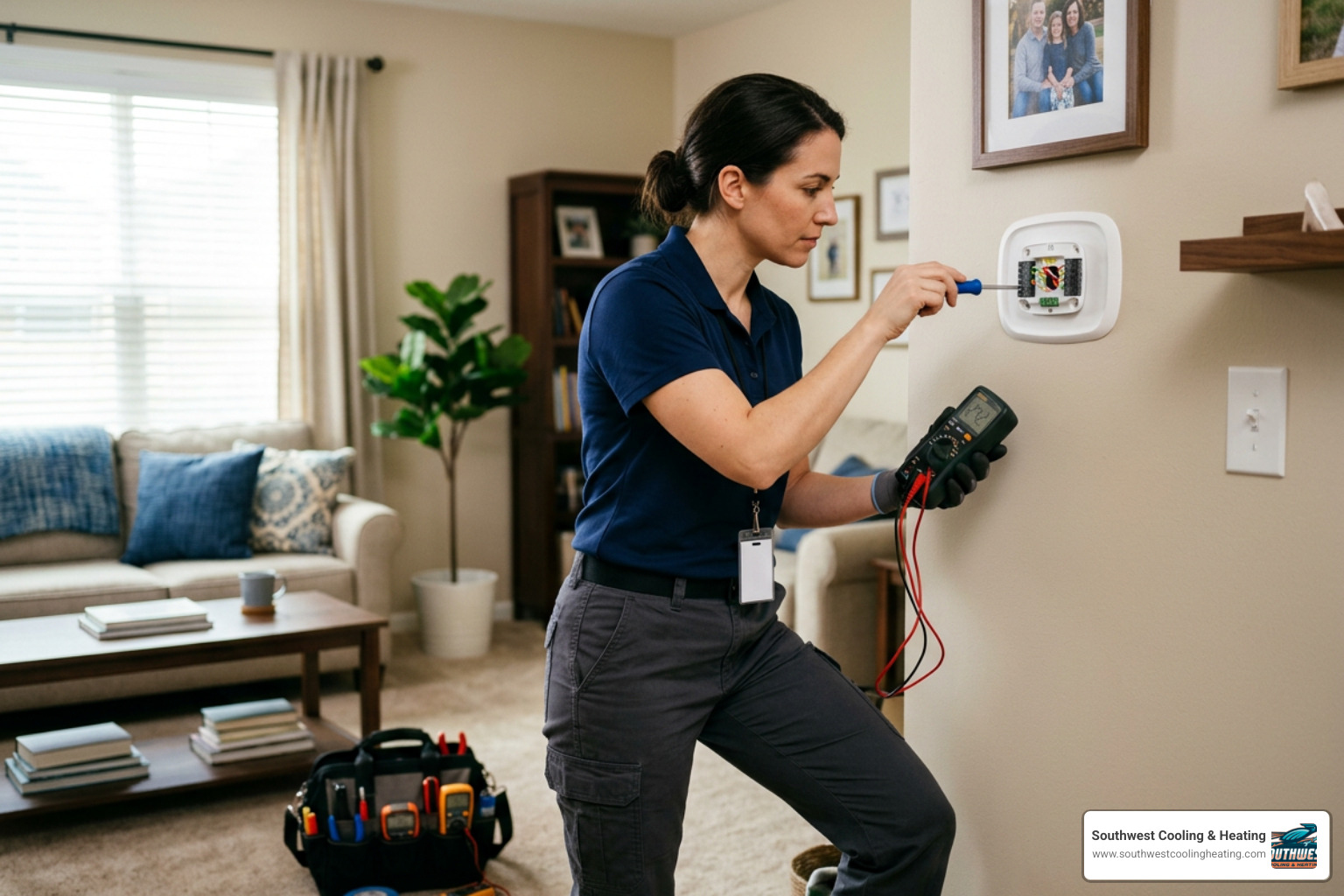
When we step into your home for a routine check-up, we aren’t just here to kick the metal cabinet, change a filter, and call it a day. A true, comprehensive maintenance visit is a highly technical physical exam for your home’s climate control system. Think of it as a wellness check that looks at every mechanical, electrical, and airflow pathway to prevent unexpected system failures on a blazing July afternoon in Santa Clara or a freezing winter morning in Winchester Hills.
Here is a closer look at the core tasks included in a professional maintenance visit:
Thermostat Calibration and System Controls
The thermostat is the brain of your home comfort setup. If it is miscalibrated by even a couple of degrees, your system will run longer than necessary, driving up utility bills and placing unnecessary wear on the compressor. During a visit, we verify that the temperature reading on your thermostat matches the actual room temperature. We also test the system’s starting cycle to ensure it powers up, runs smoothly, and shuts down safely without “short cycling” (turning on and off too rapidly).
Tightening Electrical Connections
Electricity is what keeps the comfort flowing, but the constant vibrations of running fans and compressors can loosen electrical connections over time. Loose wires cause increased resistance, which generates heat, wastes power, and can eventually melt wire insulation or damage expensive control boards. We inspect all wiring, tighten terminal screws, and measure the voltage and current on motors. If a capacitor (the small component that acts like a starting battery for your motors) is losing its electrical storage capacity, we catch it here before it leaves you without cooling.
Lubricating Moving Parts
Friction is the ultimate enemy of mechanical longevity. Motors and fans that lack proper lubrication must work harder to spin, which draws more electricity and generates destructive heat. We inspect all moving parts and apply high-quality lubricant where needed to keep everything spinning freely and silently.
Inspecting and Clearing the Condensate Drain
Your air conditioner doesn’t just cool the air; it also dehumidifies it. In places like Bloomington Hills or Coral Canyon, the moisture pulled from your indoor air collects on the cold evaporator coil and drips into a drain pan before flowing outside.
If this drain line becomes clogged with dust, algae, or mold, that water has nowhere to go but back into your home. A clogged condensate line is the number one cause of water damage to ceilings, floors, and drywall surrounding indoor air handlers. We physically inspect, flush, and clear the condensate drain line to ensure gravity is doing its job.
To learn more about why these detailed steps are crucial for protecting your property and budget, check out our article: Is Annual HVAC Maintenance Worth It in St. George?
Seasonal Breakdown of Professional Tune-Ups
Because our Southern Utah climate transitions from blistering summer heat to crisp, cold desert winter nights, your comfort needs change dramatically depending on the season. That is why we recommend scheduling maintenance twice a year: once in the spring to prepare your air conditioner for the summer sun, and once in the fall to ensure your heating system is ready to keep you warm.
| Maintenance Task | Spring Cooling Visit | Fall Heating Visit |
|---|---|---|
| Thermostat Calibration & Controls Test | Yes | Yes |
| Electrical Connections Check & Tightening | Yes | Yes |
| Condensate Drain Flush & Inspection | Yes | Yes (especially for heat pumps & high-efficiency furnaces) |
| Evaporator & Condenser Coil Cleaning | Yes | No |
| Refrigerant Level & Leak Inspection | Yes | Yes (for heat pumps in heating mode) |
| Heat Exchanger Integrity & Crack Check | No | Yes |
| Burner Combustion & Gas Pressure Test | No | Yes |
| Flue Vent & Draft Hood Inspection | No | Yes |
| Reversing Valve & Defrost Cycle Test | No | Yes (heat pumps only) |
By tailoring our visits to the specific demands of the upcoming season, we maximize your system’s efficiency and prevent the minor issues that lead to catastrophic breakdowns. For a deeper dive into how this proactive care acts as a shield for your system, read our guide An Ounce of Prevention: Keeping Your HVAC Out of the ER.
Spring Cooling: What does an hvac maintenance visit include for air conditioners?
As the spring air warms up in Hurricane and Ivins, our focus shifts entirely to heat transfer and cooling efficiency.
- Evaporator and Condenser Coils: The evaporator coil (located indoors) and the condenser coil (located outdoors) must be clean to transfer heat effectively. Dust, pollen, and pet dander act as insulating blankets on these coils. If the coils are dirty, your system can experience up to a 30% increase in energy consumption because the compressor has to run much longer to cool your home. We gently clean these coils to restore optimal heat transfer.
- Refrigerant Levels: Refrigerant is the lifeblood of your air conditioner. If refrigerant levels are low, your system cannot cool efficiently, and the compressor can overheat and fail. It is important to note that air conditioners do not “consume” refrigerant; if the level is low, it means there is a leak. We perform subcooling and superheat calculations to verify the exact charge and inspect for potential leaks.
- Blower Components: We inspect and clean the blower wheel and motor. A dusty blower wheel cannot push air effectively, which reduces airflow and can cause your evaporator coil to freeze into a solid block of ice.
Ready to book your spring tune-up? Learn more about our specialized AC Maintenance services designed to keep your home cool all summer long.
Fall Heating: What does an hvac maintenance visit include for furnaces and heat pumps?
When late autumn arrives in Toquerville and La Verkin, we pivot our technical checklists to heating safety and reliability.
- Heat Exchanger Inspection: In a gas furnace, the heat exchanger is the metal chamber where combustion gases heat the air circulating through your home. If this metal cracks due to years of expanding and contracting, dangerous carbon monoxide gas can leak directly into your indoor air. We perform thorough visual and camera inspections of the heat exchanger to verify your family’s safety.
- Gas Connections and Burner Combustion: We check all gas lines for leaks, test the gas pressure to ensure the furnace is burning fuel efficiently, and clean the burner assembly to prevent soot buildup and uneven heating.
- Heat Pump Special Checks: If you heat your home with a heat pump (which is common in Hidden Valley and Diamond Valley), we test the reversing valve—the component that switches the system from cooling mode to heating mode. We also test the defrost control board and sensors to ensure the outdoor unit won’t freeze up when winter temperatures drop.
Homeowner Maintenance vs. Professional Service
A common question we hear from homeowners in Southern Utah is: “Can I do this maintenance myself?”
The answer is a mix of yes and no. While there are several simple, highly effective tasks you should perform regularly to keep your system running smoothly, the technical, high-voltage, and pressure-sensitive components must be left to licensed professionals.
To keep your system in top shape between our visits, check out our helpful guide on How Often to Change Your HVAC Air Filter: A Simple Guide.
Tasks Homeowners Can Safely Handle
As a homeowner, your primary role is maintaining proper airflow and cleanliness around your equipment.
- Change the Air Filter Regularly: This is the single most important task you can do. A clogged filter restricts airflow, forcing your blower motor to work harder, which can reduce your system’s efficiency by up to 15 percent. Inspect your filter monthly and replace it every 30 to 90 days depending on your household (homes with pets or allergy sufferers should change them more frequently).
- Maintain Outdoor Clearance: Your outdoor condenser unit needs room to breathe. Keep shrubs, plants, and weeds trimmed back at least two feet away from all sides of the metal cabinet. Ensure that grass clippings, leaves, and blowing desert dirt are not packed into the aluminum fins.
- Keep Vents Clear: Walk through your home and verify that furniture, rugs, drapes, or toys are not blocking your supply vents or return air grilles. Blocking vents builds up static pressure in your ductwork, which can damage the blower motor and cause uneven temperatures.
Why Complex Tasks Require a Professional
While clearing weeds and changing filters is safe and easy, opening up electrical cabinets or handling chemical refrigerants is highly dangerous.
- Electrical Hazard: HVAC systems run on high-voltage electricity (usually 240 volts). Testing capacitors, measuring live electrical currents, and tightening connections require specialized meters, insulated tools, and professional safety training.
- EPA Regulations: Under Section 608 of the Clean Air Act, it is illegal for anyone without EPA certification to handle, measure, or add refrigerant to an air conditioning system. Handling refrigerant incorrectly can cause severe freeze burns, and releasing it into the atmosphere is harmful to the environment.
- Warranty Protection: Most major manufacturers explicitly state in their warranty terms that the system must be professionally maintained annually. If you ever need to file a warranty claim for a failed compressor or heat exchanger, you must show documented proof of professional service.
If you suspect your system is struggling, don’t wait for a total breakdown. Read Is Your HVAC Crying for Help? Here Is How Often You Should Service It to learn the warning signs.
Frequently Asked Questions about HVAC Maintenance
How often should I schedule professional HVAC maintenance?
We recommend scheduling professional maintenance twice per year — once in the spring for your cooling system and once in the fall for your heating system. Even if you have a modern, highly efficient heat pump system that handles both heating and cooling, it still experiences wear and tear year-round and requires bi-annual check-ups to stay in peak condition.
How long does a typical HVAC maintenance visit take?
A thorough, professional HVAC maintenance visit usually takes between 60 and 90 minutes per system. During this time, our technician is actively testing, cleaning, and measuring your system’s performance. If a service provider claims they can perform a complete tune-up in 15 or 20 minutes, they are likely only performing a brief visual inspection and skipping critical steps like coil cleaning, electrical testing, and drain flushing.
What are the signs that my system needs immediate attention?
Between your scheduled maintenance visits, keep an ear and an eye out for these warning signs that indicate your system needs immediate professional attention:
- Unusual Noises: Grinding, squealing, banging, or rapid clicking noises when the system starts or runs.
- Weak Airflow: Warm air blowing from your vents in the summer, or cool air in the winter.
- Rising Utility Bills: Sudden, unexplained increases in your monthly energy bills despite normal usage.
- Short Cycling: The system turns on and off frequently without ever reaching your thermostat’s set temperature.
- Strange Odors: Musty smells (which can indicate mold in the drain pan or ductwork) or burning odors.
Conclusion
Understanding what does an HVAC maintenance visit include is the first step toward taking control of your home’s comfort, safety, and energy efficiency. By combining simple homeowner habits like regular filter changes with professional bi-annual tune-ups, you protect your investment, lower your monthly bills, and ensure your system is ready to handle whatever the Southern Utah weather throws its way.
At Southwest Cooling & Heating, we have been helping our neighbors in St. George, Santa Clara, Hurricane, Ivins, Toquerville, and La Verkin stay comfortable since 1980. We believe in combining modern diagnostic technology with old-school customer service values, backed by our solid performance and satisfaction guarantees.
Don’t wait for the summer heat or winter cold to test your system’s limits. Explore our full range of HVAC Services and contact us today to schedule your professional maintenance visit!