


Why the Benefits of Regular HVAC Maintenance in High Desert Arid Climates Matter More Than You Think
The benefits of regular HVAC maintenance in high desert arid climates go far beyond a simple tune-up — in a place like St. George, Utah, they can mean the difference between a system that lasts 15 to 20 years and one that fails in under a decade. Here’s a quick look at what consistent maintenance delivers for desert homeowners:
- Longer system lifespan – Well-maintained units survive the brutal high desert climate significantly longer than neglected ones
- Lower energy bills – Neglected systems can burn up to 30% more energy just to keep up with extreme heat
- Fewer emergency breakdowns – Catching small issues early prevents expensive failures during peak summer heat
- Better indoor air quality – Clean filters and coils keep dust, allergens, and debris out of your living space
- Consistent cooling comfort – A properly tuned system holds steady temperatures even when outdoor temps push past 100°F
- Protected warranty coverage – Regular documented maintenance keeps manufacturer warranties valid
St. George and the surrounding high desert region sit in one of the most demanding climates an HVAC system can face. Temperatures routinely top 100°F in summer, then swing dramatically downward on winter nights. The air is persistently dry, and dust storms can clog a clean filter in days rather than weeks. Your HVAC system isn’t running occasionally here — it’s running hard, for months on end, in conditions it was never exactly designed to love.
Most national maintenance advice is written for moderate climates. The standard “once a year” service recommendation simply doesn’t hold up when your air conditioner is logging 10 to 14 hours a day in triple-digit heat and your filters are catching a desert’s worth of fine particulates every single month. The high desert demands a higher standard of care.
I’m Bruce Hymas, owner of Southwest Cooling and Heating, and with over four decades of hands-on experience serving St. George-area homeowners, I’ve seen how the benefits of regular HVAC maintenance in high desert arid conditions protect families from uncomfortable, costly surprises. In this guide, I’ll walk you through exactly what your system needs — and when — to stay reliable, efficient, and ready for whatever the Southern Utah climate throws at it.
Why the Desert Environment is Your HVAC System’s Toughest Opponent

When it comes to wear and tear, our local climate doesn’t pull any punches. Understanding Why the Southern Utah Desert Is Your HVAC System’s Toughest Opponent is the first step in protecting your investment.
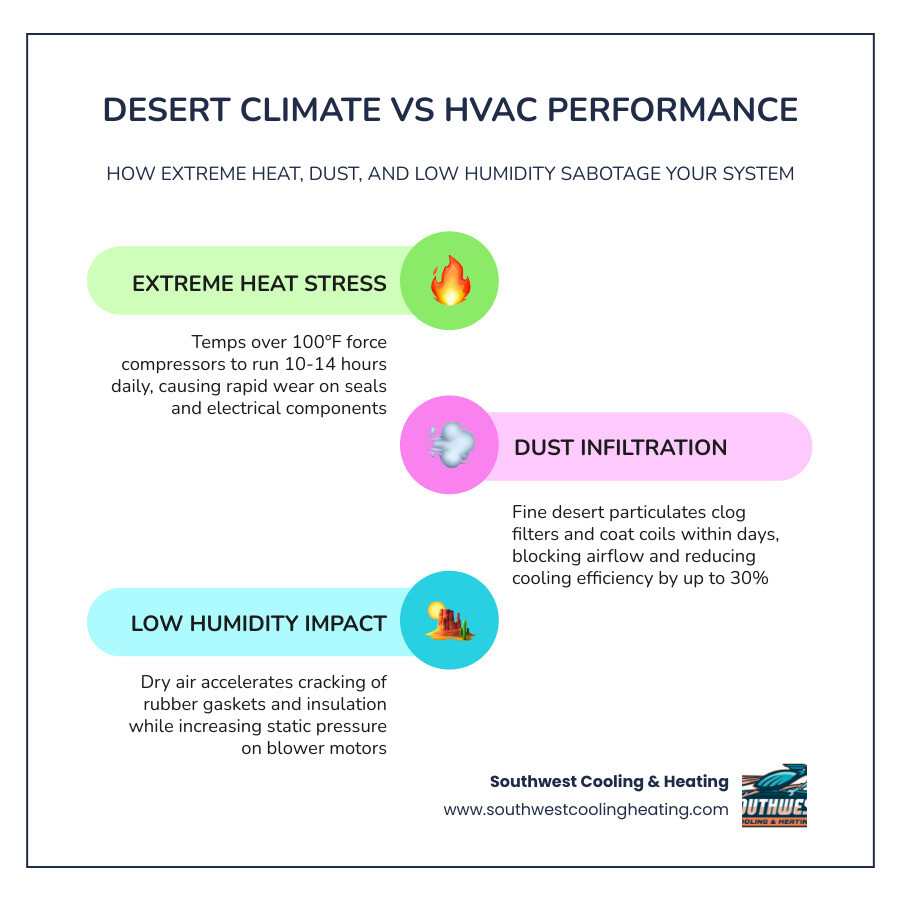
The high desert presents a unique combination of environmental stressors: aggressive diurnal temperature swings, relentless airborne dust, and extremely low humidity. While a system in a humid coastal region might struggle with rust and mold, a system in St. George faces rapid mechanical degradation, severe heat stress, and particulate intrusion.
One of the most overlooked challenges is the diurnal temperature swing. It is not uncommon for our region to experience a 30 to 40-degree temperature drop in a single 24-hour period. A blistering 100°F afternoon can quickly give way to a chilly 60°F night. This rapid temperature cycling forces the metals in your HVAC system to expand and contract aggressively. Over time, this constant physical movement stresses electrical connections, loosens mounting bolts, and can even compromise the structural integrity of your system’s coils.
How Extreme Heat and Low Humidity Strain Components
The extreme summer heat puts immense pressure on your system’s compressor, which is essentially the heart of your air conditioner. When outdoor temperatures soar, the compressor has to work much harder to reject heat from inside your home. If your system is neglected, this constant heat stress accelerates component wear, leading to premature failure.
Additionally, our dry desert air lacks the moisture found in other climates. While low humidity might make the heat feel more tolerable to us, it is brutal on the internal materials of your HVAC system. Without sufficient ambient moisture, non-metal components dry out quickly. This causes:
- Rubber gaskets and seals to dry, crack, and leak
- Plastic components and wire insulation to become extremely brittle
- Sensors and delicate electrical connections to fail due to exposure and cracking
To understand more about how these local weather factors specifically target your cooling system, read our detailed guide on Why Washington County Weather Is Hard on Your AC.
The Impact of Desert Dust and Particulates
Dust is a constant reality in the high desert. Whether it is carried by a sudden summer windstorm or simply suspended in the dry air, fine desert dust penetrates every crack and crevice of an outdoor HVAC unit.
When dust accumulates on your outdoor condenser coils, it acts as a thermal blanket. Instead of allowing heat to escape into the air, the layer of dust traps heat inside the coils. This forces your compressor to work up to 30% harder to cool your home.
Furthermore, this fine particulate matter makes its way indoors, quickly clogging your return air filters. A clogged filter chokes off airflow, forcing the blower motor to work overtime and reducing the overall efficiency of your system. The abrasive nature of desert sand also causes physical wear on moving parts, acting like sandpaper on bearings, fan blades, and motor shafts if not regularly cleaned.
Key Benefits of Regular HVAC Maintenance in High Desert Arid Regions
Investing in preventative care is the single best way to counter the harsh desert climate. Think of regular maintenance like changing the oil in your car — you wouldn’t expect an engine to run for 100,000 miles without a tune-up, and you shouldn’t expect your air conditioner to survive a St. George summer without professional attention. For a deeper dive into how early care saves you from emergency situations, check out An Ounce of Prevention: Keeping Your HVAC Out of the ER.
Maximizing Lifespan and Preventing Costly Breakdowns
A well-maintained HVAC system in a desert climate can reliably last 15 to 20 years. Conversely, a neglected system under the same harsh conditions can easily fail in under a decade, shaving 3 to 5 years off its expected lifespan.
By scheduling routine preventative care, you catch minor issues before they turn into major, expensive emergencies. For example, replacing a failing capacitor during a routine spring visit is a quick, simple fix. If left unaddressed, that bad capacitor will eventually cause the compressor to overheat and burn out in the middle of a July heatwave, leaving you without cooling when you need it most.
To help determine if your system is overdue for a checkup, read Is Your HVAC Crying for Help? Here Is How Often You Should Service It.
Lowering Energy Bills with High-Efficiency Performance
Neglected AC systems can burn up to 30% more energy as they struggle against dirty coils, restricted airflow, and worn-out electrical parts. In the high desert, where cooling bills can already run high during the peak of summer, that 30% inefficiency translates directly into higher utility bills.
Routine maintenance keeps your system running at peak performance, ensuring that every watt of electricity is used effectively. If you are considering upgrading your system to take advantage of advanced options like variable-speed or two-stage technology, you’ll want to read Will a New HVAC System Actually Save You Money? to understand how modern efficiency features interact with regular maintenance to maximize your long-term savings.
Your Seasonal High Desert HVAC Maintenance Checklist
To keep your system running reliably year-round, we recommend following a structured seasonal maintenance schedule. Because our summers are so long and intense, a bi-annual professional tune-up is the gold standard for desert homes.
| Maintenance Task | Frequency | Recommended Season | DIY or Professional? |
|---|---|---|---|
| Inspect and Replace Air Filters | Every 1–2 Months | Year-Round | DIY |
| Clear Debris Around Outdoor Unit | Monthly | Year-Round | DIY |
| Clean Condenser and Evaporator Coils | Annually | Spring | Professional |
| Check Refrigerant Levels and Pressures | Annually | Spring | Professional |
| Inspect and Tighten Electrical Connections | Twice a Year | Spring & Fall | Professional |
| Clear and Flush Condensate Drain Lines | Annually | Spring | Professional |
| Calibrate Thermostat | Annually | Fall | Professional / DIY |
| Inspect Ductwork for Leaks or Rodents | Annually | Fall | Professional |
How Spring Tune-Ups Deliver the Benefits of Regular HVAC Maintenance in High Desert Arid Homes
Spring is the most critical time for cooling maintenance in Southern Utah. Getting your system serviced in March or April ensures that it is fully prepared before the triple-digit temperatures arrive.
During a professional spring tune-up, a technician will focus heavily on:
- Refrigerant Levels: A system that is even 10% low on refrigerant loses 20% of its cooling capacity and runs significantly harder, putting your compressor at risk.
- Coil Cleaning: Removing the winter accumulation of desert dust from the outdoor condenser coils prevents heat trapping and keeps your system running efficiently.
- Condensate Drain Clearing: Even in our dry climate, your air conditioner removes moisture from the air. Clearing the drain line prevents water damage and mold growth.
By taking care of these vital tasks early, you unlock the full benefits of regular HVAC maintenance in high desert arid climates, securing low energy bills and reliable cooling all summer long.
How Fall Inspections Secure the Benefits of Regular HVAC Maintenance in High Desert Arid Climates
While our winters are shorter than our summers, desert nights can drop well below freezing. A fall maintenance visit ensures your heating system is safe and efficient before the cold weather sets in.
Key focus areas for fall inspections include:
- Heating System Safety Checks: Verifying that gas valves, heat exchangers, and ignition systems are working safely and efficiently.
- Electrical Connection Inspections: Tightening electrical terminals that may have loosened during the summer’s aggressive thermal expansion and contraction.
- Ductwork Inspections: Desert rodents often seek warmth in crawlspaces and attics during the winter, sometimes nesting in or chewing through flexible ductwork. Inspecting the ducts keeps your heated air flowing where it belongs.
Professional Tune-Ups vs. DIY Maintenance in Arid Climates
Many homeowners wonder what tasks they can handle themselves and what requires a professional. While DIY care is important, the extreme desert climate requires specialized tools and diagnostic expertise to keep your system safe and efficient. To find a team that understands these unique local demands, consult our Southern Utah HVAC Guide: Choosing a Provider That Actually Knows the Heat.
What Homeowners Can Safely Do Themselves
As a homeowner, your primary HVAC responsibility is maintaining proper airflow. You can safely manage:
- Filter Replacements: Check your air filters every month, especially during high-wind or dusty seasons, and replace them as needed.
- Outdoor Clearance: Maintain at least two feet of clear space around your outdoor condenser unit. Trim back desert landscaping, remove weeds, and sweep away accumulated sand or leaves.
- Thermostat Monitoring: Program your thermostat to raise the temperature when you are away from home, which can save up to 10% on cooling costs.
Why Professional Calibration is Essential in the Desert
Professional technicians bring specialized diagnostic equipment that goes far beyond a visual inspection. Key professional tasks include:
- Refrigerant Charge Calibration: Measuring subcooling and superheat temperatures to ensure your system has the exact refrigerant charge required by the manufacturer.
- Electrical Capacitor Testing: Capacitors are the number-one failure point in desert AC systems. Technicians test their capacitance levels to replace weak ones before they fail and damage your compressor.
- Blower Motor Lubrication and Cleaning: Ensuring moving parts are clean and properly lubricated reduces the friction caused by fine desert dust.
Frequently Asked Questions About Desert HVAC Care
What are the signs that my desert HVAC system needs immediate professional attention?
If you notice weak airflow, warm air blowing from your vents, strange squealing or grinding noises, or your system turning on and off rapidly (frequent cycling), you should schedule a service call immediately. These symptoms indicate that your system is struggling against heat stress or mechanical failure.
How often should I change my air filters in a dusty high desert environment?
In St. George and surrounding areas, you should check your filters monthly. While standard advice suggests changing them every three months, our high dust load often requires filter changes every 30 to 60 days to maintain proper airflow and protect your indoor air quality.
Can regular maintenance prevent my AC capacitor from failing in extreme heat?
Yes. During a professional tune-up, technicians measure the electrical output of your capacitors. If a capacitor is weakening under the intense heat stress, we can replace it proactively, preventing a sudden system breakdown during the hottest part of the year.
Conclusion
Taking care of your HVAC system in Southern Utah isn’t just about comfort — it’s about protecting one of your home’s most important investments from our exceptionally demanding climate. By staying on top of seasonal maintenance, you’ll enjoy lower energy bills, a longer-lasting system, and peace of mind when the summer heat arrives.
At Southwest Cooling & Heating, we have been helping our neighbors in St. George, Santa Clara, Bloomington Hills, Bloomington, Hidden Valley, Coral Canyon, Diamond Valley, Winchester Hills, Hurricane, Ivins, Toquerville, and La Verkin stay comfortable since 1980. Our team combines modern technical expertise with old-school customer service values to keep your home comfort systems running at their very best.
Don’t wait for the next major heatwave to find out if your system is ready. Schedule your professional HVAC maintenance with Southwest Cooling & Heating today and keep your home cool and efficient all year long.