


Why How a Maintenance Plan Extends Equipment Life Matters for St. George Homeowners
How a maintenance plan extends equipment life comes down to one core idea: regular, scheduled care catches small problems before they turn into expensive failures — and in Southern Utah’s brutal heat, that difference can mean the gap between a system that lasts 20–30 years and one that gives out in under a decade.
Here’s a quick summary of how a maintenance plan extends equipment life:
- Early detection – Technicians catch failing capacitors, refrigerant leaks, and worn parts before they cause breakdowns
- Reduced operational stress – Clean coils, clear filters, and lubricated moving parts let your system run easier and shorter to reach the same temperature
- Friction and wear prevention – Proper lubrication stops metal-on-metal grinding that silently shortens component life
- Energy efficiency preservation – Maintained systems avoid the 5–10% annual efficiency drop that neglected units experience
- Warranty protection – Most manufacturers require documented annual service to keep warranties valid
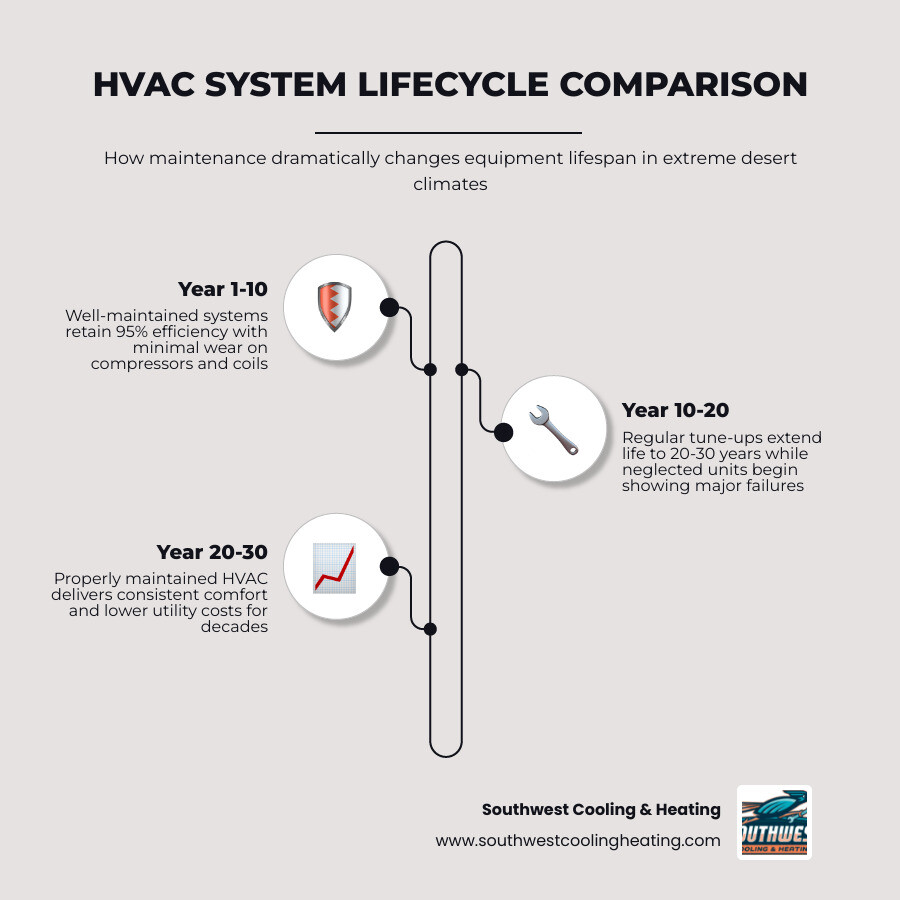
Well-maintained HVAC equipment routinely lasts 20–30 years. Neglected systems often fail within 5–10 years. That’s not a small difference — it’s potentially tens of thousands of dollars in early replacement costs, plus years of rising utility bills along the way.
St. George summers regularly push past 110°F, and your HVAC system is working harder than almost any system in the country. Without consistent maintenance, that workload accelerates wear on every major component — compressors, motors, coils, and electrical connections alike.
I’m Bruce Hymas, owner of Southwest Cooling & Heating, and after decades serving Southern Utah homeowners, I’ve seen how a maintenance plan extends equipment life — and how skipping it turns a manageable tune-up into an emergency replacement. In the sections below, I’ll walk you through exactly what maintenance does, why it works, and how to build a schedule that keeps your system running strong through every St. George summer.
Proactive Care vs. Reactive Repairs: How a Maintenance Plan Extends Equipment Life
Many homeowners fall into the “run-to-failure” trap. The logic seems simple: “If my air conditioner is blowing cold air right now, why should I pay someone to look at it?”
However, running an HVAC system until it breaks down is actually the most expensive way to manage your home comfort. Think of your air conditioner like a car. You wouldn’t drive a vehicle for 100,000 miles without changing the oil, checking the brakes, or replacing the filters, expecting it to run forever. Yet, an average home HVAC system runs about 3,300 hours per year. At highway speeds, that is the mechanical equivalent of driving a car over 200,000 miles annually!
When you operate reactively, you subject your system to massive amounts of unnecessary stress. A small, undetected issue—like a $20 failing capacitor—can easily trigger a chain reaction. If that capacitor dies, it can cause the fan motor or the compressor to overheat and burn out. Suddenly, a minor preventive fix transforms into a multi-thousand-dollar emergency replacement.
By shifting from a reactive approach to a proactive maintenance plan, you protect your system from these cascading failures. Proactive care can reduce unplanned downtime by as much as 75%. Furthermore, facilities and homes that prioritize preventive care see a 25% reduction in overall repair costs and extend the actual lifespan of their assets by 20% to 40%.
| Feature | Proactive Maintenance Plan | Reactive “Run-to-Failure” Strategy |
|---|---|---|
| Average Lifespan | 20 to 30 years | 5 to 10 years |
| Risk of Sudden Breakdown | Extremely low (up to 75% less downtime) | High, usually during peak summer or winter |
| Energy Efficiency | Remains close to factory ratings | Drops 5% to 10% annually |
| Repair Costs | Lower, planned, and caught early | High emergency fees and major component failures |
| Warranty Status | Fully protected with documented proof | Risk of being voided by the manufacturer |
If you are tired of crossing your fingers every time the thermometer climbs in Ivins or Santa Clara, it is time to stop gambling on emergency repairs. You can read more about how to protect your budget in our guide on how to Stop Wasting Money on Your AC with a Maintenance Plan. Taking care of your system before it breaks is the ultimate way to keep your home comfortable, which we discuss in depth in An Ounce of Prevention: Keeping Your HVAC Out of the ER.
The Science of Wear: Why HVAC Systems Age Prematurely
To understand how a maintenance plan extends equipment life, we have to look at the physical and environmental forces acting on your system. In Southern Utah locations like Hurricane, La Verkin, and Toquerville, our high desert arid climate introduces specific environmental stressors that accelerate mechanical aging.
1. Dust as an Insulator and a Plug
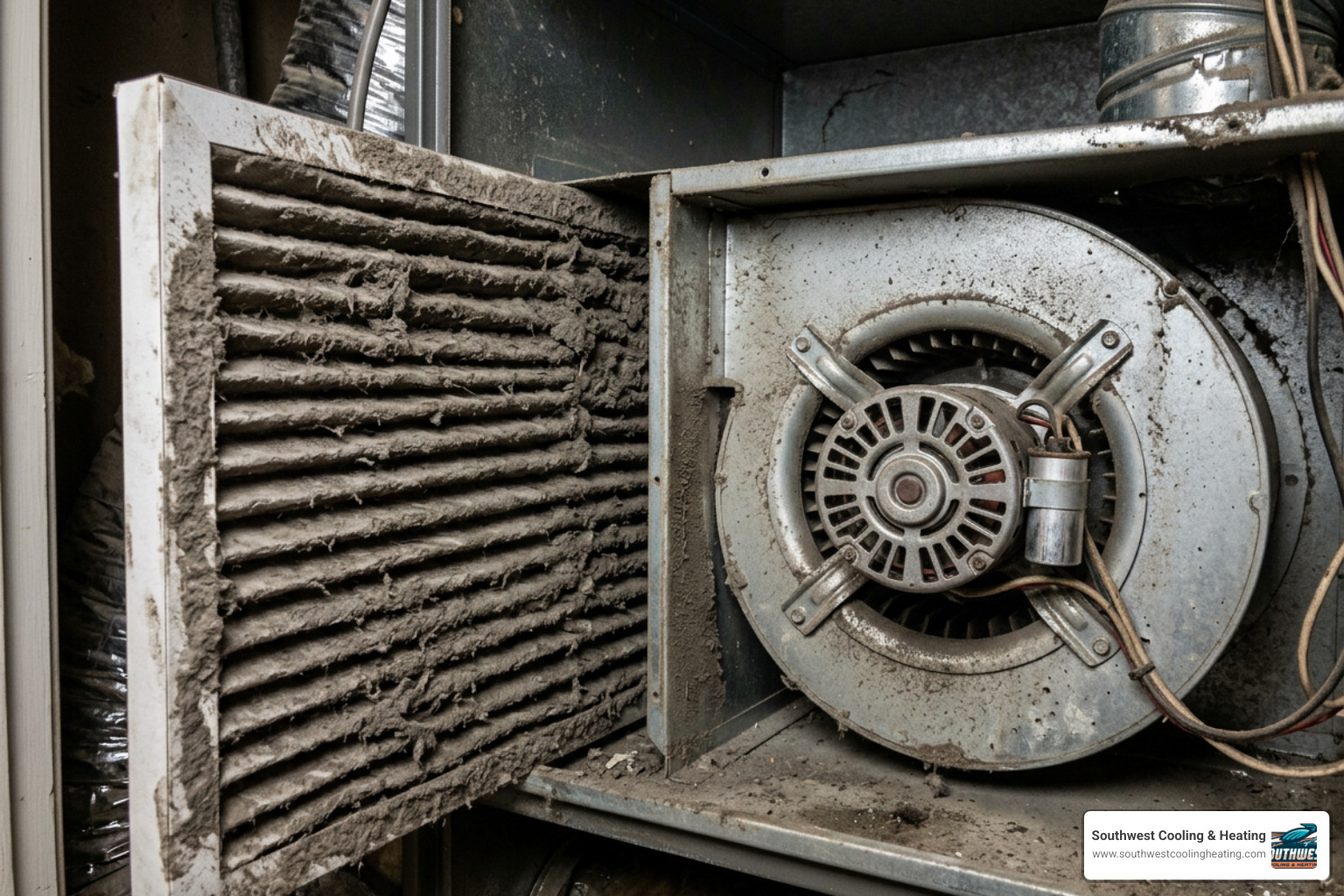
Our desert wind carries fine sand and dust that settles inside your outdoor condenser unit and indoor evaporator coils. Dust acts as a thermal insulator. In an air conditioner, the coils are designed to transfer heat. When they are coated in dust, heat is trapped inside the system.
This forces the compressor to work twice as hard and run much longer to cool your home. Dust also clogs air filters. Trying to pull air through a dirty filter is like a marathon runner trying to compete while breathing through a straw. The restricted airflow starves the system, causing the blower motor to pull high amperage, overheat, and eventually burn out.
2. Friction and Mechanical Wear
Any machine with moving parts relies on lubrication to minimize friction. Over-lubrication or under-lubrication accounts for roughly 40% of preventable bearing failures in rotating equipment. When bearings lose their lubrication, metal grinds against metal. This friction generates intense heat, warps shafts, and destroys motors. A maintenance plan ensures that bearings, fans, and motors are checked and lubricated precisely according to manufacturer specifications.
3. Thermal Stress and Rapid Cycling
When an HVAC system has dirty coils or restricted airflow, it often begins “short-cycling”—turning on and off rapidly. This rapid cycling subjects the system to intense thermal stress. Metal components expand when hot and contract when cold. Repeated, rapid temperature swings lead to microscopic fractures in electrical connections and heat exchangers.
In places like Winchester Hills or Diamond Valley, where winter nights are freezing and summer days are scorching, managing this thermal stress is critical. You can learn more about how our climate affects your system in our Ultimate Checklist for Benefits of Regular HVAC Maintenance in High Desert Arid.
If you are wondering whether this level of care is truly necessary for your home, take a look at our detailed breakdown: Is Annual HVAC Maintenance Worth It in St. George?.
5 Essential Maintenance Tasks That Directly Prevent System Failure
An effective maintenance plan is not just a quick visual inspection. It is a systematic, hands-on tune-up designed to reverse the wear and tear of seasonal operation. Here are the five most critical tasks performed during a professional maintenance visit that directly extend your system’s life.
1. Comprehensive Coil Cleaning
Your outdoor condenser coil disperses the heat removed from inside your home. If it is caked with dirt, lawn clippings, or desert dust, heat transfer drops dramatically. Professionally cleaning these coils with safe, biodegradable cleaners restores heat transfer efficiency, reduces compressor workload, and lowers your monthly utility bills.
2. Electrical Testing and Connection Tightening
HVAC systems vibrate naturally during operation. Over time, these vibrations can loosen electrical connections. Loose wires create electrical resistance, which generates heat and can cause wires to arc, melt, or short out. During a maintenance visit, we measure voltage and tighten all electrical terminals to prevent control board damage and fire hazards.
3. Precision Lubrication of Moving Parts
Reducing friction is one of the easiest ways to prevent premature motor failure. We inspect all rotating shafts, blower assemblies, and condenser fan motors, applying the correct OEM-specified lubricants to keep components spinning freely without resistance.
4. Sensor and Thermostat Calibration
If your system’s sensors are out of calibration, it may run longer than necessary or cycle too frequently. Calibrating thermostats and internal temperature sensors ensures your system operates exactly when it needs to, minimizing runtime and saving energy.
5. Condensate Line Clearing
As your air conditioner cools your home, it removes moisture from the air. This moisture drains through a small condensate line. In Southern Utah, algae, dust, and debris can easily clog these lines, leading to water backups that can damage your drywall or trigger safety switches that shut down your system completely. Flushing and clearing these lines prevents water damage and keeps your system online.
For a deeper look at what our technicians do during a home visit, check out our In-Depth Guide to HVAC Maintenance Visits. You can also keep your system running smoothly between visits by following these Keep Your Cool with These Simple HVAC Maintenance Steps.
Frequently Asked Questions about HVAC Longevity
How a maintenance plan extends equipment life through early detection?
Early detection is all about finding and fixing microscopic problems before they cause catastrophic failures. During a routine maintenance visit, technicians use advanced diagnostic tools to test electrical components like capacitors.
Capacitors store electrical energy and help start your motors. As they age, they lose their strength (measured in microfarads). If a technician catches a weak capacitor during a scheduled visit, they can replace it quickly. If left ignored, that weak capacitor will eventually fail, causing the compressor or fan motor to seize and burn out.
Similarly, detecting tiny refrigerant leaks early prevents your system from running undercharge. Running low on refrigerant forces the compressor to run hotter and work harder, which quickly leads to mechanical failure.
If your system is already showing signs of heavy wear, you may need to weigh your options. Read our guide on Should I Repair or Replace My HVAC System? to make the best decision for your home.
How a maintenance plan extends equipment life by reducing operational stress?
When your system’s air filter is clean, its coils are spotless, and its moving parts are properly lubricated, air flows freely and heat transfers perfectly. This means your system can cool or heat your home much faster.
By reaching your desired thermostat temperature quickly, the total daily runtime of your system is reduced. Less runtime means less wear and tear on the motor bearings, the compressor valves, and the electrical relays.
This reduction in operational stress directly preserves your system’s energy efficiency. While neglected systems lose about 5% of their efficiency every year, a maintained system continues to run at peak performance, keeping your utility bills low.
If you do decide to upgrade to a modern system, you will enjoy even greater efficiency gains. Learn more in The Ultimate Guide to New HVAC Benefits Beyond Comfort.
How often should I schedule professional HVAC maintenance in Southern Utah?
For homes in St. George, Bloomington Hills, Coral Canyon, and surrounding areas, we highly recommend a semi-annual maintenance schedule:
- Spring Visit: Focused on preparing your air conditioner or heat pump for the intense summer heat.
- Fall Visit: Focused on checking your heating system, electrical connections, and safety controls before winter temperatures drop.
If you have a heat pump that provides both heating and cooling year-round, it operates during both seasons and absolutely requires professional service twice a year to maintain its efficiency and protect your warranty.
Conclusion
Your home’s HVAC system is a major investment. Leaving its lifespan to chance in our harsh Southern Utah climate is a gamble that often leads to uncomfortable summer days and unexpected emergency bills. By enrolling in a structured maintenance plan, you actively protect your system from premature aging, keep your utility bills low, and secure true peace of mind.
At Southwest Cooling & Heating, we have been helping homeowners across St. George, Bloomington, Hidden Valley, Ivins, and Santa Clara keep their homes comfortable since 1980. Our expert technicians combine modern diagnostic technology with honest, old-school values to ensure your system gets the precise care it needs to stand the test of time.
Do not wait for the next heatwave or cold snap to find out if your system is in trouble. Schedule professional furnace maintenance today and let us help you keep your heating and cooling systems running efficiently for decades to come.