


Why Every St. George Homeowner Should Know How to Maintain Their Heating and Cooling System
Knowing how to maintain your heating and cooling system is one of the smartest things you can do as a homeowner — especially in St. George, Utah, where summers push systems to their limits and winters demand reliable heat.
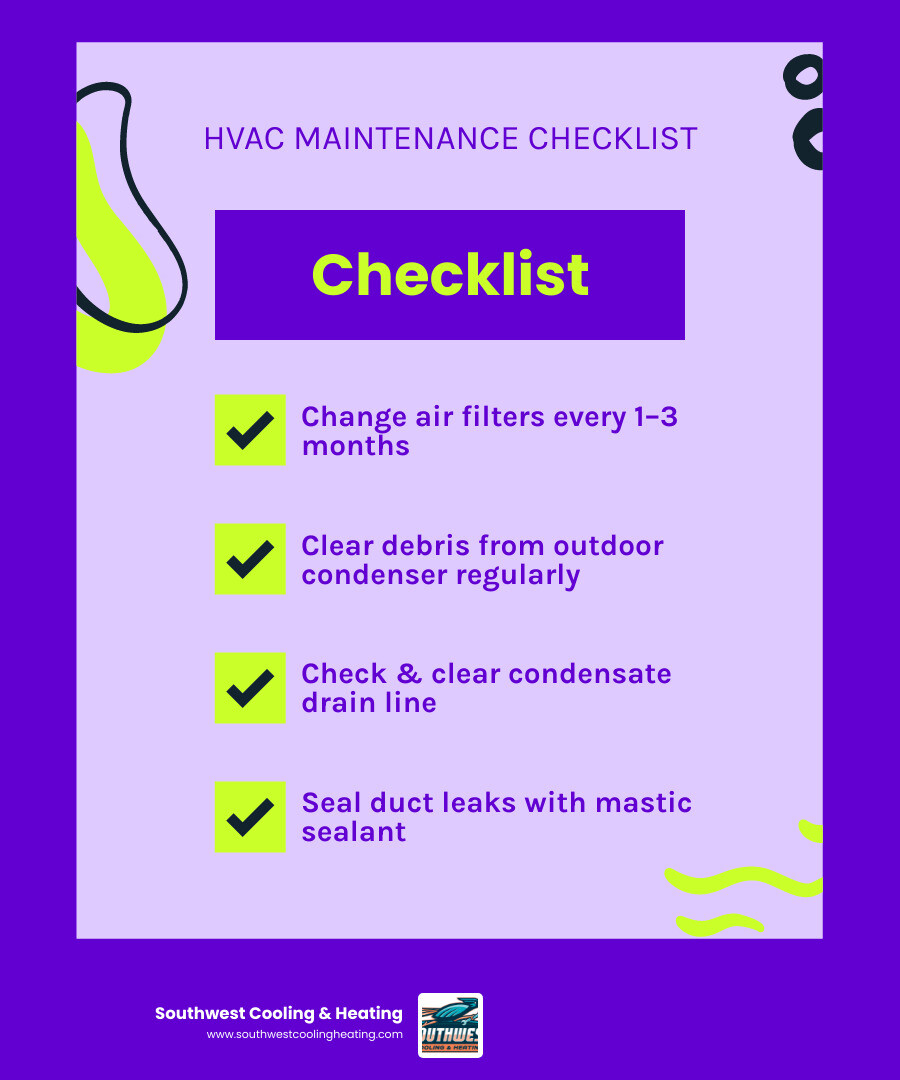
Here’s a quick overview of the core maintenance steps:
- Change air filters every 1–3 months
- Clear debris from your outdoor condenser unit regularly
- Check and clear the condensate drain line every few months
- Seal duct leaks with mastic sealant or metal tape
- Test your thermostat and consider upgrading to a smart model
- Schedule professional tune-ups each spring and fall
- Test carbon monoxide detectors monthly, especially before heating season
Nearly half of the average home’s annual energy bill goes straight to heating and cooling costs. That’s a significant chunk of your budget — and routine maintenance can improve your system’s efficiency by 10–20%, while small, consistent care can extend your HVAC’s lifespan by 25% or more. Skipping maintenance, on the other hand, doesn’t just cost you in energy bills. It risks breakdowns during the hottest and coldest days of the year — exactly when you need your system most.
I’m Bruce Hymas, owner of Southwest Cooling & Heating, and with decades of hands-on HVAC experience serving St. George families, I’ve seen how simple, consistent habits make the difference between a system that lasts and one that fails early. In this guide, I’ll walk you through everything you need to know about how to maintain your heating and cooling system — from quick DIY tasks to knowing when it’s time to call a pro.
Why Regular HVAC Maintenance is Essential for Your Home

When we talk to our neighbors in Santa Clara or Bloomington Hills, the conversation often turns to the rising cost of living. Did you know that the average home spends nearly $1,900 a year on energy bills? In many cases, about two-thirds of that is dedicated specifically to space heating and cooling.
By understanding how to maintain your heating and cooling system, you aren’t just checking a chore off your list; you are actively protecting your wallet. Here is why we believe maintenance is a non-negotiable part of homeownership:
- Lower Energy Bills: Routine maintenance improves seasonal efficiency by 10–20%. When your system is clean and well-lubricated, it doesn’t have to work as hard to reach your desired temperature.
- Extended System Lifespan: An HVAC system typically lasts between 15 and 25 years. Furnaces usually hit the 15-20 year mark, while air conditioning units often last 10-15 years. Consistent maintenance can add 25% or more to that lifespan, delaying a replacement that can cost upwards of $7,500 to $12,500.
- Improved Indoor Air Quality: Your HVAC system is the lungs of your home. If the filters and ducts are filled with dust, dander, and pollen, that’s what your family is breathing. Proper care keeps the air fresh and reduces allergens.
- Safety First: For those with gas furnaces, maintenance is a matter of safety. We check for cracked heat exchangers and gas leaks that could lead to carbon monoxide poisoning.
- Emergency Prevention: There is nothing worse than your AC failing during a 105-degree July afternoon in Hurricane. Most emergency repairs, which average about $350, could have been prevented with a simple seasonal check-up.
If you ever feel overwhelmed by the mechanical side of things, our team provides comprehensive HVAC Services to ensure your system is optimized for the unique climate of Southern Utah.
How to Maintain Your Heating and Cooling System: The DIY Checklist
You don’t need a tool belt and a van to perform some of the most impactful maintenance tasks. In fact, some of the best things you can do for your system are simple enough to handle on a Saturday morning.
Clear the Outdoor Condenser Unit
Your outdoor unit needs to “breathe” to release the heat it pulls from your home. If it’s choked by weeds or debris, it will overheat and lose efficiency.
- Clear the Area: Keep plants, shrubs, and weeds at least 18 to 24 inches away from the unit.
- Remove Debris: Check for leaves, twigs, or grass clippings trapped in the fins.
- Gently Clean: You can use a garden hose on a low-pressure setting to wash away dust and dirt from the exterior coils. Never use a pressure washer, as it can bend the delicate aluminum fins.
Inspect the Coils and Fins
Dirty coils force the system to run longer, increasing energy costs and shortening the equipment’s life.
- Straighten Fins: If you notice the silver “fins” on your outdoor unit are bent, you can use a “fin comb” (available at most hardware stores) to gently straighten them. This restores proper airflow.
- Evaporator Coil Check: While the indoor evaporator coil is harder to reach, you can check the area around your indoor air handler for any signs of ice or excessive moisture, which could indicate a dirty coil.
Clear the Condensate Drain Line
Your AC doesn’t just cool the air; it removes humidity. That moisture collects in a pan and flows out through a drain line. If this line clogs with algae or debris, it can cause water damage in your home or trigger a system shutdown.
- The Vinegar Flush: Every few months, pour a cup of distilled white vinegar down the drain line (usually located near the indoor unit) to kill algae and prevent clogs.
- Check the Pan: If you see standing water in the backup drain pan, you likely have a clog that needs immediate attention.
Regularly performing these steps is the foundation of AC Maintenance. It keeps the air moving and the components cool.
How to Maintain Your Heating and Cooling System by Sealing Leaks
In a typical house, about 20 to 30 percent of the air that moves through the duct system is lost due to leaks, holes, and poorly connected ducts. Imagine buying a gallon of milk and pouring 30% of it on the floor before you even get to the fridge—that’s what leaky ducts do to your energy budget!
To stop this waste, focus on these areas:
- Duct Sealing: Inspect accessible ductwork in attics or crawlspaces. Look for disconnected sections or holes. Use mastic sealant or metal-backed tape to seal gaps. Never use standard duct tape; despite the name, it dries out and fails quickly under HVAC temperatures.
- Weather Stripping and Caulking: Seal the “envelope” of your home. Use weather stripping around doors and caulk around window frames. This prevents your expensive conditioned air from escaping to the outside.
- Register Connections: Ensure the vents in your rooms are tightly sealed to the wall or floor. If there’s a gap, air can leak into the wall cavity instead of cooling your room.
If you have a heat pump, sealing these leaks is even more critical for efficiency. You can learn more about how these systems function and how we can help keep them airtight through our Heat Pump Services.
Mastering Air Filters and Thermostats for Efficiency
Two of the most powerful tools in your maintenance arsenal are the air filter and the thermostat. They are simple, but they govern the health and behavior of your entire system.
The Power of the Air Filter
A dirty filter is the #1 cause of HVAC failure. It restricts airflow, making the motor work harder and eventually causing the system to overheat or the coils to freeze.
- Frequency: Check your filter once a month. In St. George, where we deal with desert dust and seasonal pollen, you may need to change it every 30 days during peak summer or winter. At a minimum, change it every 90 days.
- MERV Ratings: Filters are rated by MERV (Minimum Efficiency Reporting Value).
- MERV 1-4: Basic protection for the furnace, but doesn’t do much for air quality.
- MERV 8-11: A great “sweet spot” for most homes, catching dust, dander, and pollen.
- MERV 13+: High-efficiency, but be careful—some older systems aren’t designed for the high air resistance of these filters. Always check your manual.
Smart Thermostats for Smart Savings
Properly installed smart thermostats typically reduce heating and cooling use by 8–15%. They help you learn how to maintain your heating and cooling system by providing alerts when it’s time to change a filter or schedule a tune-up.
- Programmable Settings: Set your thermostat to 78°F in the summer and 68°F in the winter when you are home. When you’re away, let the temperature drift by 5-8 degrees to save energy.
- Avoid Constant Adjustments: Don’t “crank” the thermostat to 60°F to cool the house faster; it doesn’t work that way. It just makes the system run longer and waste more energy.
Consistent filter changes are a core part of Furnace Maintenance, ensuring that your heating elements stay clean and efficient throughout the winter months in places like Ivins and Toquerville.
Seasonal Checklists for Year-Round Comfort
In Southern Utah, our maintenance needs shift with the seasons. By following a calendar, you ensure no part of your system is neglected.
Spring: The Cooling Prep
- Schedule a Tune-Up: Before the first 90-degree day hits, have a professional inspect your AC.
- Clean the Condenser: Clear away the winter’s accumulation of leaves and dirt.
- Check the Drain Line: Flush it with vinegar to prep for high-humidity days.
- Inspect the Roof and Gutters: Leaky roofs can damage attic-mounted units or furnaces. Ensure gutters are clear so water doesn’t pool near your outdoor unit.
Summer: Performance Monitoring
- Monitor Airflow: Ensure all vents are open and unblocked by furniture.
- Check the Filter: With the AC running constantly, the filter will get dirty faster.
- Listen for Noises: If you hear squealing or banging, it’s time to call us.
Fall: The Heating Prep
- Test the Heat: Turn on your furnace in October to ensure it works before you actually need it.
- Carbon Monoxide Check: Test your detectors and replace batteries.
- Seal Exterior Cracks: Caulk gaps in your home’s exterior to keep the heat in.
- Professional Inspection: Ensure the burner and heat exchanger are clean and safe.
Winter: Reliability and Safety
- Clear Snow/Ice: If we get a rare Southern Utah snow, ensure your outdoor unit (especially if it’s a heat pump) isn’t buried.
- Keep Vents Open: Don’t close vents in unused rooms; it can actually damage your system by increasing pressure in the ducts.
For those living in our local service areas, we have specific guides for your neighborhood, such as how to Keep Your Cool with Expert AC Maintenance in Diamond Valley.
Seasonal Maintenance: How to Maintain Your Heating and Cooling System Year-Round
| Task | Spring (AC Focus) | Fall (Heating Focus) |
|---|---|---|
| Filter Change | Yes | Yes |
| Coil Cleaning | Clean Condenser Coils | Inspect Heat Exchanger |
| Thermostat | Calibrate for Cooling | Calibrate for Heating |
| Drain Line | Flush with Vinegar | Inspect for leaks |
| Safety Check | Check electrical connections | Test CO Detectors |
| Ductwork | Inspect for leaks | Check for blockages |
Whether you are in Santa Clara or Hurricane, following this table will help you stay ahead of the weather. If you’re feeling the heat already, check out our tips on Don’t Sweat It: Finding the Best AC Maintenance in Santa Clara.
Professional Tune-Ups and Warning Signs
While DIY steps are vital, there are things only a trained eye can spot. A professional tune-up is like a 30,000-mile service for your car—it goes deep into the mechanics to prevent a breakdown.
What a Professional Tune-Up Includes
When we visit your home in Toquerville or La Verkin, our checklist includes:
- Tightening Electrical Connections: Faulty wiring can cause unsafe operation and reduce the life of major components.
- Lubricating Moving Parts: Friction in motors increases electricity usage and leads to premature wear.
- Checking Refrigerant Levels: Too much or too little refrigerant makes the system less efficient and can damage the compressor.
- Blower Component Cleaning: Airflow problems can reduce your system’s efficiency by up to 15%.
- Safety Inspection: We check gas pressure, burner combustion, and the heat exchanger for any signs of cracks or rust.
Warning Signs You Need Professional Help
If you notice any of the following, don’t wait for your seasonal check-up. You may need an AC Repair or heating inspection immediately:
- Unusual Noises: Squealing, grinding, or loud banging.
- Strange Odors: A “dirty sock” smell could mean mold in the coils, while a burning smell indicates an electrical issue.
- Frequent Cycling: If the system turns on and off every few minutes, it’s struggling.
- Inconsistent Temperatures: Some rooms are freezing while others are sweltering.
- Rising Bills: A sudden spike in energy costs without a change in weather is a red flag.
Finding the right help shouldn’t be stressful. We’ve put together a guide on Finding the Best AC Maintenance in Toquerville, UT Without Breaking a Sweat to help you vet local contractors.
Debunking Common HVAC Maintenance Myths
There is a lot of misinformation out there that can actually hurt your system. Let’s set the record straight:
- Myth: “If it’s working, it doesn’t need maintenance.” False. Maintenance is preventative. Waiting for it to break is like never changing the oil in your car because “it’s still driving.”
- Myth: “Closing vents in unused rooms saves money.” False. Your system is designed to move a specific volume of air. Closing vents increases pressure, which can lead to duct leaks and blower motor failure.
- Myth: “A bigger HVAC system is always better.” False. An oversized system will “short cycle,” turning on and off too quickly, which fails to dehumidify the air and wears out the parts faster.
- Myth: “All air filters are the same.” False. Using a filter that is too thick for your system’s design can actually “suffocate” your HVAC.
For more local insights, read our post on How to Find the Best AC Maintenance in Winchester Hills Without Losing Your Cool.
Frequently Asked Questions about HVAC Maintenance
How often should I change my air filters?
In our Southern Utah climate, we recommend checking your filter every 30 days. If you have pets, allergies, or if it’s a particularly dusty season in Bloomington, you should change it every 1–2 months. At the very least, never go longer than 90 days.
What are the signs that my HVAC system needs professional repair?
The most common signs are unusual noises (banging or squealing), strange smells (burning or musty), a sudden increase in your energy bills, or if your home just isn’t reaching the temperature you’ve set on the thermostat. If you see ice on the outdoor unit or water pooling around the indoor unit, call a pro immediately.
Is a smart thermostat worth the investment for maintenance?
Absolutely. Beyond the 8–15% energy savings, smart thermostats track your system’s “run time” and can send you reminders to change your filter or schedule a tune-up. Some models can even detect if your system is underperforming and alert you before a total breakdown occurs.
Conclusion
Learning how to maintain your heating and cooling system is the best way to ensure your home remains a sanctuary of comfort, regardless of the temperature in St. George. From changing your filters monthly to scheduling professional tune-ups twice a year, these small steps pay off in lower bills, fewer repairs, and a system that lasts for decades.
At Southwest Cooling & Heating, we’ve been dedicated to serving our community since 1980. Whether you’re in Santa Clara, Bloomington, Coral Canyon, or any of our surrounding neighborhoods, we combine modern technology with old-school values to keep your home running smoothly. We are committed to quick, expert assistance and stand behind our work with performance and satisfaction guarantees.
Want to learn more about our commitment to your comfort? Visit our About HVAC Service page, or if you’re ready to schedule your seasonal tune-up, Contact Us today. Let us help you keep your home efficient and your family comfortable with our expert HVAC Services.