


Is It Time to Repair or Replace Your HVAC System in St. George, UT?
Knowing when to repair vs replace your HVAC system can save you thousands of dollars and a lot of unnecessary stress. Here is a quick answer to help you decide right now:
Repair your HVAC system if:
- The system is under 10 years old (AC) or under 15 years old (furnace)
- The repair cost is less than 50% of a new system’s value
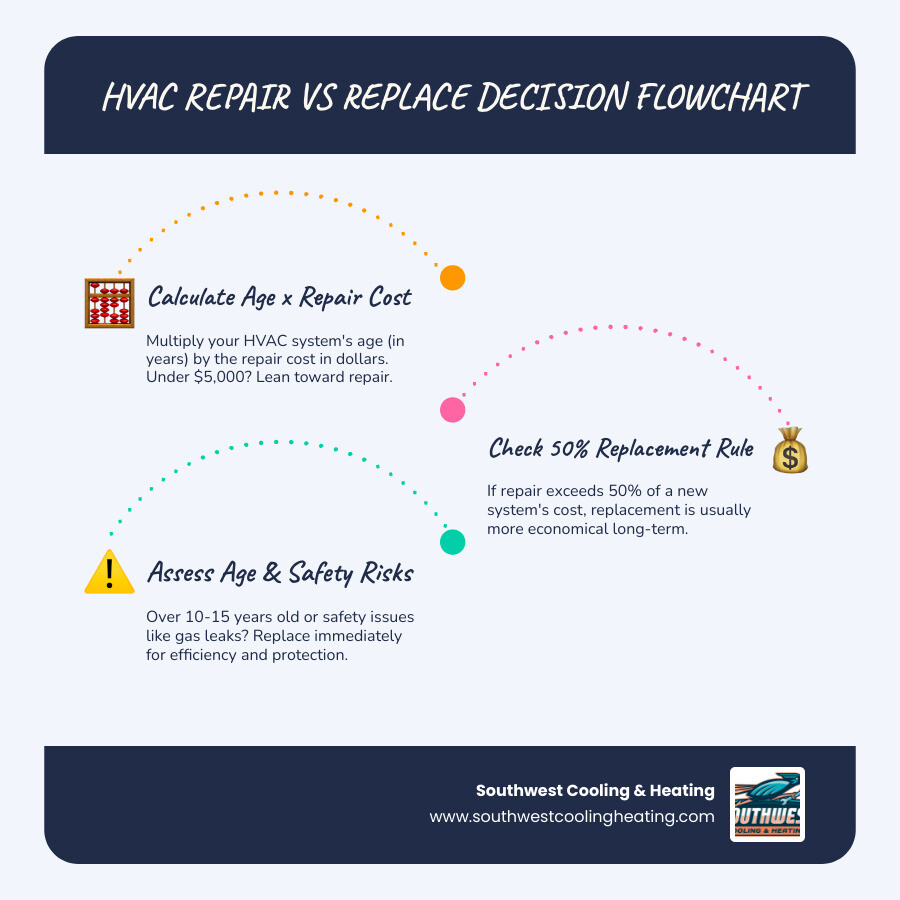
- The Age x Repair Cost formula gives you a result under $5,000
- You have had fewer than 3 repairs in the last 3 years
Replace your HVAC system if:
- Your AC is over 10-12 years old or your furnace is over 15 years old
- The repair cost exceeds 50% of what a new system would cost
- Age x Repair Cost gives you a result over $5,000
- You are facing a safety issue such as a cracked heat exchanger or gas leak
- Your system uses R-22 refrigerant, which is no longer produced in the US
- Your energy bills have been climbing steadily for no other clear reason
For most St. George homeowners, the decision comes down to age, cost, and safety — and those three factors rarely lie.
Most homeowners face this crossroads at the worst possible moment. The AC quits during a July heatwave in St. George. The furnace stops working on a cold January night. Suddenly you are on the phone with a technician, trying to make a decision that could cost you thousands of dollars — without nearly enough time to think it through clearly.
It does not have to feel that way. With a few straightforward frameworks, you can move from panic mode to confident decision-making, whether you are dealing with an aging system, a surprise breakdown, or simply wondering if your HVAC is still pulling its weight.
I’m Bruce Hymas, owner of Southwest Cooling and Heating, and after years of running HVAC operations in Southern Utah — and inheriting a business my family has built since 1980 — I have helped countless homeowners work through the question of when to repair vs replace your HVAC system with honesty and clarity rather than a sales pitch. In the sections ahead, I will walk you through every factor that matters, so you can make the right call for your home and your budget.
The Financial Formulas: When to Repair vs Replace Your HVAC System
When your system breaks down, emotions can run high. You want your comfort back immediately, but you also don’t want to throw good money after bad. To take the guesswork out of the equation, we use proven financial formulas that help determine the Should I Repair Or Replace My Hvac System question based on cold, hard logic.
| Indicator | Favor Repair | Favor Replacement |
|---|---|---|
| System Age | AC < 10 years / Furnace < 15 years | AC > 12 years / Furnace > 18 years |
| Repair History | First major issue in years | 3+ repairs in the last 3 years |
| Refrigerant Type | R-410A (Puron) | R-22 (Freon) |
| Energy Bills | Stable or slight fluctuations | Consistently rising month-over-month |
| Safety Status | Minor part failure (capacitor, etc.) | Cracked heat exchanger or gas leak |
Evaluating the $5,000 rule when to repair vs replace your hvac system
One of the most reliable benchmarks in our industry is the “$5,000 Rule.” It is a simple multiplication formula that helps homeowners visualize the “break-even” point of their investment.
To use it, multiply the age of your unit by the estimated cost of the repair. If the total exceeds $5,000, the math suggests that a replacement is the smarter financial move. For example, if you have a 12-year-old AC unit and the repair quote is $600, the total is $7,200. In this case, you are likely better off investing that money into a new, warrantied system rather than patching up a unit that has already reached the end of its expected lifespan. Conversely, a $400 fix on a 6-year-old unit equals $2,400—well under the threshold—making the repair a safe bet.
Applying the 50% rule to major component failures
Another rule of thumb we often discuss with our customers in Santa Clara and Ivins is the “50% Rule.” This rule is straightforward: if the cost of a single repair is more than 50% of the value of a brand-new HVAC system, it is time to say goodbye to the old one.
Major component failures, such as a seized compressor or a leaking evaporator coil, often fall into this category. These parts are the “heart” of your system. Replacing them on an out-of-warranty unit is like putting a brand-new engine into a car with 300,000 miles on it. While the engine might be new, the rest of the components—the blower motor, the control board, the wiring—are still old and prone to failure. By choosing replacement, you get a completely new system with a fresh manufacturer’s warranty, protecting you from the “repair spiral” where one fix leads directly to another.
Critical Safety Hazards and Performance Warning Signs
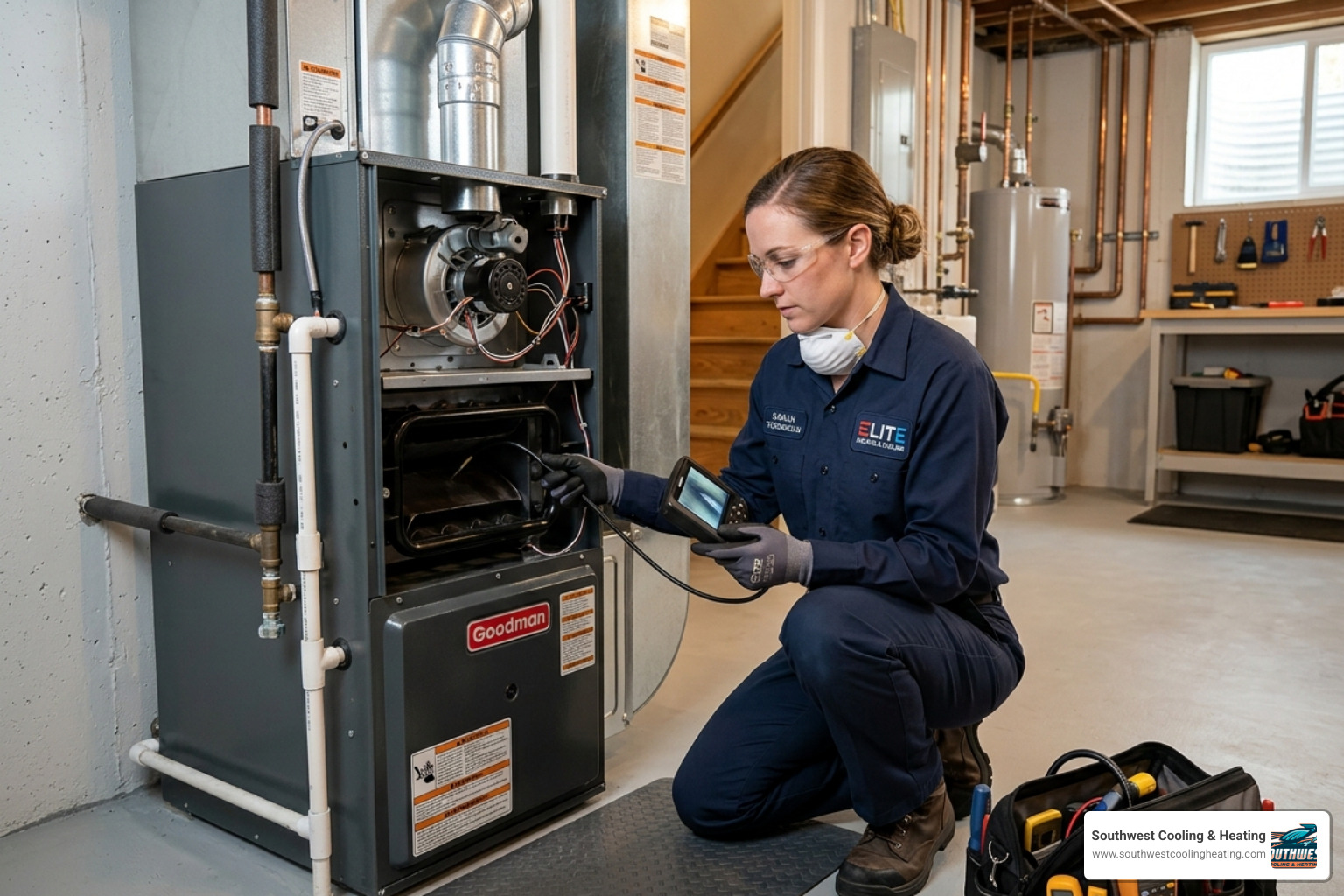
While math is helpful, safety is non-negotiable. There are certain “Red Alerts” that override any financial formula. If your system poses a risk to your family, the decision is already made for you. We often see these issues during our routine Hvac Services and take them very seriously.
When to replace your hvac system immediately for safety
The most critical safety hazard in a heating system is a cracked heat exchanger. This component is responsible for separating the toxic products of combustion—like carbon monoxide—from the air that circulates through your home. If the heat exchanger is cracked, those lethal gases can leak into your living space.
Because a cracked heat exchanger cannot be safely patched or repaired, replacement is often the only responsible course of action. Other immediate replacement triggers include:
- Persistent gas leaks that cannot be isolated.
- Evidence of electrical scorching or fire hazards within the cabinet.
- Frequent “tripping” of the circuit breaker, which may indicate a dangerous electrical short or a motor that is drawing excessive, unsafe levels of power.
If you suspect any of these issues, you should follow our Dont Sweat It Your Immediate Hvac Breakdown Action Plan and shut the system down immediately until a professional can evaluate it. You can learn more about these warning signs in our guide on Red Alerts And Cold Comforts Signs Your Hvac Needs Help Asap.
Comfort performance and humidity in St. George
In Southern Utah, our climate presents unique challenges. We deal with extreme dry heat, but we also face periods where indoor humidity control becomes vital for comfort. If you notice that some rooms in your Hurricane or La Verkin home are “iceboxes” while others are “saunas,” your system may be struggling.
Uneven temperatures, poor airflow, and excessive noise are all signs that your system is no longer sized correctly for your home or that its internal components are failing. As units age, they also lose their ability to filter air effectively, leading to increased dust accumulation. If your home feels “stale” or you are constantly dusting, it may be because your old system is simply circulating debris rather than trapping it.
How Age and Efficiency Standards Impact Your Decision
As we move into mid-2026, the technology gap between old and new systems has never been wider. The federal government and industry regulators have introduced strict new standards that make older units look like dinosaurs in terms of energy consumption.
Why age matters when to repair vs replace your hvac system
Most air conditioners are designed to last 10 to 15 years, while furnaces typically have a lifespan of 15 to 20 years. However, in the intense heat of St. George and Washington County, systems often age faster. A 12-year-old AC in Utah has likely worked the equivalent of a 17-year-old unit in a more moderate climate.
As a system ages, its efficiency naturally declines. Industry data suggests that a SEER rating (Seasonal Energy Efficiency Ratio) can drop by one point every 4 to 5 years. Furthermore, parts for older units become increasingly scarce. If your system still uses R-22 refrigerant (often called Freon), you are essentially operating a “legacy” machine. R-22 has been phased out by the EPA because it depletes the ozone layer. Recharging an R-22 system is now prohibitively expensive, often making a single leak the “death knell” for the unit.
The role of energy efficiency in modern upgrades
Modern HVAC units are roughly 15% to 40% more efficient than standard models from just a decade ago. Upgrading from an old SEER 10 unit to a modern SEER2 15 or 16 model can reduce your cooling consumption by more than 35%.
When you see the ENERGY STAR label, you are looking at a system that has met rigorous efficiency guidelines. These units can save you up to 20% on your annual heating and cooling costs. In our service areas like Toquerville and Santa Clara, where the summer sun can be relentless, those monthly savings add up quickly, often helping the new system “pay for itself” over its first several years of operation.
The Long-Term Benefits of Upgrading Your Home Comfort
Replacing your HVAC system is about more than just avoiding repairs; it is about upgrading your quality of life. Modern systems offer features that simply weren’t available 15 years ago.
Variable-Speed Technology: Unlike older “single-stage” systems that are either 100% on or 100% off, variable-speed systems can adjust their output to match the exact needs of your home. This leads to incredibly stable temperatures and much quieter operation.
Zoning Systems: Zoning allows you to maintain different temperatures in different parts of the house. No more fighting over the thermostat—family members can enjoy their “personal degree of perfection” in their own rooms.
Financial Incentives: In 2026, there are more ways than ever to offset the cost of a new system. The Inflation Reduction Act provides significant federal tax credits for high-efficiency heat pumps (up to $2,000) and other HVAC upgrades. Additionally, local utility companies often offer rebates for ENERGY STAR-certified equipment.
By being proactive, you can take advantage of these incentives rather than waiting for an emergency breakdown where you might be forced to settle for whatever unit is in stock. As we say in our guide, An Ounce Of Prevention Keeping Your Hvac Out Of The Er, planning ahead is the best way to protect your wallet.
Frequently Asked Questions about HVAC Decisions
How long is the typical lifespan of an HVAC system in Utah?
In the St. George area, you can generally expect an air conditioner to last 10–15 years and a gas furnace to last 15–20 years. However, the extreme summer heat means our cooling systems run harder and longer than in other parts of the country. Regular annual maintenance is the only way to ensure your system reaches the upper end of that lifespan.
When are major repairs like compressor replacement not worth it?
If your system is over 10 years old and the compressor fails, replacement is almost always the better choice. A compressor is one of the most expensive parts to replace, and it is usually a sign that the rest of the system is under extreme stress. Spending thousands on a new compressor for an old unit doesn’t give you a new warranty on the other parts that are likely to fail next.
What questions should I ask an HVAC professional during an evaluation?
When a technician visits your home in Bloomington or Coral Canyon, don’t be afraid to ask:
- What exactly caused this part to fail?
- What is the overall condition of the rest of the system?
- Are parts for this specific model still readily available?
- What would my projected energy savings be if I upgraded to a higher SEER2 unit?
- Can you provide a side-by-side written quote for both the repair and a replacement option?
Conclusion
Deciding when to repair vs replace your HVAC system is a significant milestone for any homeowner. At Southwest Cooling & Heating, we believe in giving you the facts so you can make the decision that fits your family’s needs and budget. Whether you are in Santa Clara, Bloomington Hills, Hurricane, or Ivins, we are here to provide an honest, professional evaluation of your equipment.
We have been serving the St. George area since 1980, combining modern technology with the old-school values of honesty and hard work. If you are struggling with a system that is noisy, expensive, or simply unreliable, let us help you run the math. We provide a full range of hvac-services to keep your home comfortable in every season.
Ready for a professional opinion? Contact the team at Southwest Cooling & Heating today for a comprehensive system evaluation.