


Why Pets Change the Rules for Air Filter Replacement
Understanding how pets affect how often you change your filter is one of the most overlooked parts of home HVAC maintenance — and it can make a real difference in your energy bills, air quality, and system lifespan. The standard advice says to replace your air filter every 90 days. But if you share your home with a dog, cat, or other pet, that timeline can shrink to 30 days or less. Here’s a quick breakdown:
| Household Type | Recommended Filter Change Frequency |
|---|---|
| No pets | Every 90 days |
| One small, low-shedding pet | Every 60 days |
| One large dog or multiple pets | Every 30-45 days |
| Multiple large pets or heavy shedders | Every 30 days or sooner |
| Allergy sufferers with pets | Every 20-30 days |
The reason is simple: pets constantly shed fur and microscopic dander particles — skin flakes ranging from 2.5 to 10 microns — directly into the air your HVAC system is circulating. Every time your system runs, it pulls those particles toward your filter. Over time, that adds up fast. In fact, in homes with multiple pets or heavy shedders, filters can become fully clogged in as little as three weeks.
With roughly 94 million U.S. households owning at least one pet, this is a maintenance gap that affects a huge number of homeowners — many of whom don’t realize their filter is working twice as hard as it should be.
I’m Bruce Hymas, owner of Southwest Cooling and Heating, and through decades of serving homeowners in St. George, Utah, I’ve seen how pets affect how often you change your filter — and the costly HVAC problems that follow when that maintenance gets skipped. In the sections below, we’ll walk you through exactly what to watch for and how to stay ahead of it.
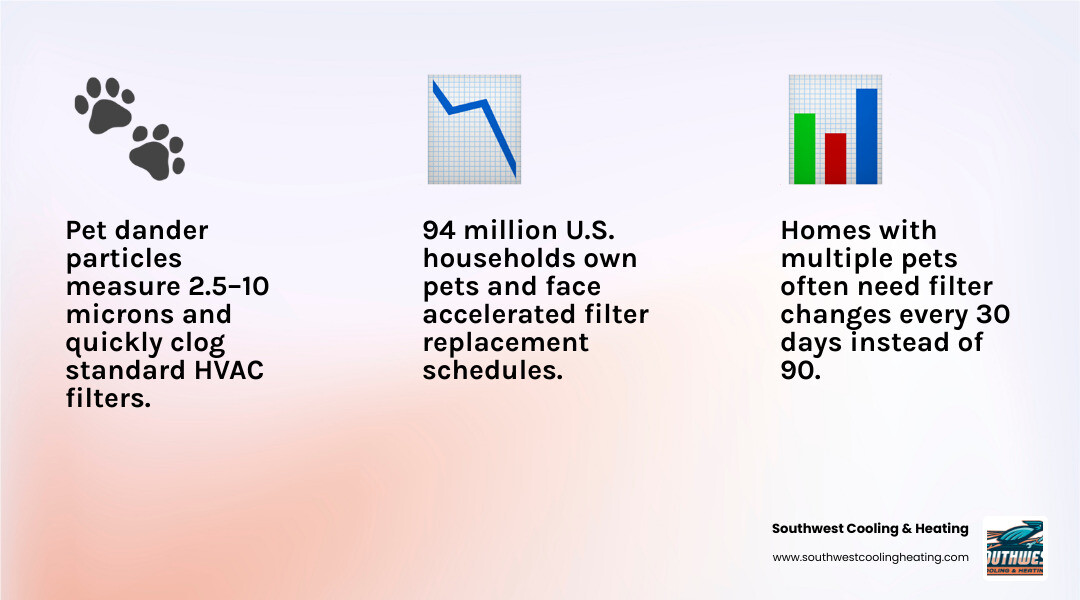
Quick look at how pets affect how often you change your filter:
- Top Rated Air Filters to Keep Your Home Fresh
- How High Desert Arid Conditions Affect Filter Replacement Frequency
How Pets Affect How Often You Change Your Filter
When we talk about pet debris, most people immediately think of pet hair. You see it on your clothes, your rugs, and clustered in the corners of your hardwood floors. However, pet hair is actually only the tip of the iceberg. The real culprit behind a prematurely clogged air filter is pet dander.
Unlike hair, which is heavy and tends to settle on the floor, pet dander consists of microscopic skin cell flakes that are incredibly lightweight. These tiny particles stay suspended in the air for hours, floating through your living spaces until your heating and cooling system pulls them into the return vents.
Additionally, pets bring in outdoor dust, pollen, and soil on their coats, and their saliva contains proteins that dry up, flake off, and become airborne. When you combine dander, saliva proteins, outdoor dirt, and floating fur, you get a highly effective, filter-clogging mixture.
To keep your home fresh, you need a high-quality filter designed to handle this workload. You can explore some of the best options in our guide on Top Rated Air Filters to Keep Your Home Fresh.
To help you visualize how these factors compress your maintenance timeline, here is a detailed breakdown of how different household configurations affect how often you should swap out your filter:
| Household Size & Pet Count | Filter Type | Standard Recommendation | Pet-Adjusted Schedule |
|---|---|---|---|
| Single resident, no pets | 1-inch basic pleated | 90 days | 90 days |
| Family of 4, no pets | 1-inch basic pleated | 90 days | 60–90 days |
| 1 small dog or cat (low shed) | 1-inch pleated (MERV 8) | 90 days | 60 days |
| 1 large dog (heavy shedder) | 1-inch pleated (MERV 11) | 90 days | 30–45 days |
| 2+ pets (cats/dogs mixed) | 1-inch pleated (MERV 11) | 90 days | 30 days |
| Multiple pets + allergy sufferers | 2-inch deep pleated (MERV 13) | 60 days | 20–30 days |
How Pets Affect How Often You Change Your Filter Based on Pet Count
The relationship between the number of animals in your home and how quickly your filter clogs is exponential, not linear. In a home with a single small, low-shedding pet (like a Chihuahua or a domestic shorthair cat), you can easily get away with changing your filter every 60 days. The particle load is relatively low, and your filter can manage the debris without restricting airflow.
However, once you introduce multiple pets or heavy-shedding breeds, the equation changes completely. Heavy shedders like Siberian Huskies, German Shepherds, Golden Retrievers, and Maine Coon cats undergo intense shedding cycles. Even “hypoallergenic” breeds like Poodles or Maltese, which do not shed fur, still shed dander and spread saliva proteins that build up in your ductwork.
If you have three or more pets, their overlapping shedding cycles and daily activity mean your HVAC filter is working 24/7 to clear the air. In these multi-pet households, the filter can become completely matted with fur and choked with dander in as little as 20 to 30 days. Waiting the manufacturer-recommended 90 days to change your filter in this scenario is a recipe for poor indoor air quality and severe system strain.
How Pets Affect How Often You Change Your Filter Seasonally
Shedding isn’t a steady, year-round event. Most dogs and cats go through a “coat blow” twice a year, typically in the spring and autumn. During these seasonal transitions, pets shed their thick winter undercoats or prepare to grow them back. This results in a massive surge of loose fur and dander floating through your home. If you live in Santa Clara, Ivins, or Hurricane, you know how quickly these seasonal shifts can bring outdoor allergens indoors, compounding the load on your system.
In the winter, we tend to keep our homes tightly shut to keep the cold air out. With reduced natural ventilation, pet dander and indoor pollutants accumulate rapidly. Because your heating system runs frequently during chilly desert nights in Diamond Valley or Winchester Hills, the air is constantly recirculated, forcing the filter to capture a concentrated amount of dander.
Furthermore, our local environment plays a massive role in filter lifespan. In Southern Utah, our high desert climate means we deal with constant dust, dry winds, and fine sand. When your pets play outside in Toquerville or La Verkin, they collect dry dirt and dust in their coats and bring it right back inside.
This combination of desert dust and pet dander creates a thick, almost cement-like coating on your filter media. You can learn more about managing this unique local challenge in our article on How High Desert Arid Conditions Affect Filter Replacement Frequency.
Choosing the Right MERV Rating for Pet-Friendly Homes
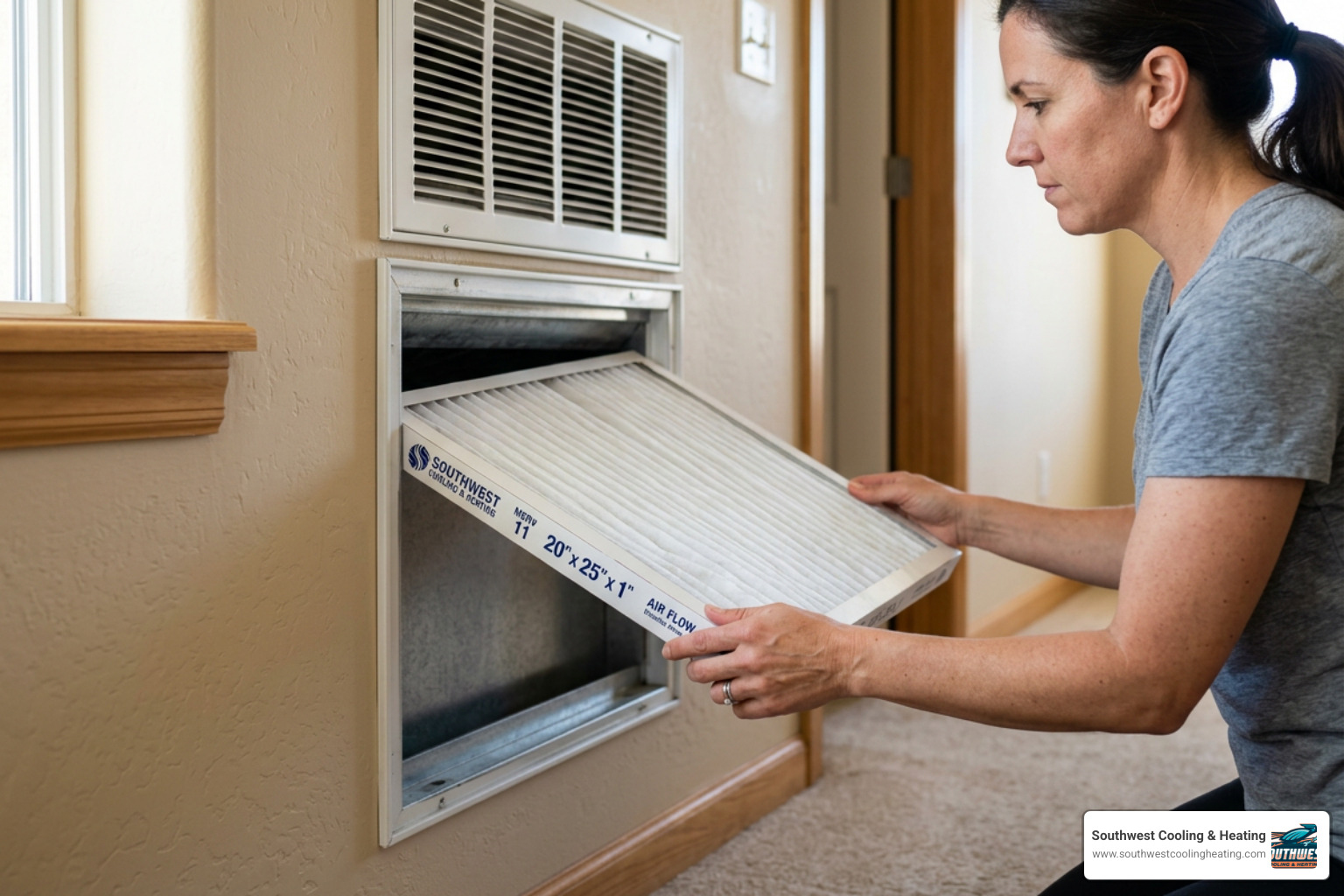
Many pet owners try to solve their indoor air quality issues by simply buying the cheapest filters available in bulk and throwing them away every couple of weeks. Others buy the most expensive, heavy-duty filters on the market, only to find their air conditioner struggling to cool the house. The secret to success lies in choosing the right MERV rating.
MERV stands for Minimum Efficiency Reporting Value. It is a scale that runs from 1 to 20, measuring how effectively a filter traps particles of various sizes.
For pet owners, flat fiberglass filters (typically rated MERV 1 to 4) are practically useless. They are designed only to stop large debris, like tumbleweeds of pet hair, from entering your system. They let microscopic dander, dust mites, and pollen pass right through, allowing these particles to settle on your evaporator coils and recirculate through your home.
Instead, pet owners should always opt for pleated filters, which offer significantly more surface area to trap both large hair and microscopic dander. To explore more ways to optimize your home’s air, check out our guide on Simple Ways to Scrub Your Homes Air Clean.
MERV 8 vs. MERV 11 vs. MERV 13 for Pets
To find the perfect balance between clean air and healthy airflow, let’s look at the three most common MERV ratings used in residential homes:
- MERV 8: This is the baseline filter we recommend for homes with pets. A MERV 8 pleated filter will successfully capture large pet hair, dust mites, and some dander. If you have one small, low-shedding pet and no allergy sufferers in your home, a MERV 8 filter changed every 45 to 60 days is a cost-effective and safe choice.
- MERV 11: This is the “sweet spot” for the vast majority of pet-friendly households. MERV 11 filters are highly efficient, capturing roughly 85% of particles between 3 and 10 microns, including the majority of pet dander, mold spores, and fine dust. It provides excellent air filtration without creating excessive airflow resistance in modern HVAC systems. If you have multiple pets, a MERV 11 filter changed every 30 to 45 days will keep your air clean and your utility bills low.
- MERV 13: This rating is highly recommended for households with heavy shedders, multiple pets, or family members who suffer from asthma and severe allergies. MERV 13 filters capture up to 95% of large particles and up to 80% of microscopic allergens, including bacteria and virus carriers.
However, there is a catch: MERV 13 filters have very tight pleats, which naturally create more airflow resistance (also known as a pressure drop). If your HVAC system is older or wasn’t designed to handle a high-resistance filter, a MERV 13 can choke your system’s airflow, causing the blower motor to work harder, consume more energy, and potentially overheat.
If you want to upgrade to a MERV 13 filter, it is always wise to have a professional technician inspect your system to ensure your ductwork and blower motor can handle the added resistance.
Warning Signs Your Filter Needs Immediate Replacement
While keeping a calendar reminder is a great habit, your pets don’t follow a schedule. Variations in outdoor play, sudden shedding cycles, and weather patterns mean you should rely on physical warning signs rather than just the date on your calendar.
If you notice any of the following signs in your home, your filter is likely fully loaded and needs to be replaced immediately:
- Visible Dust Buildup Around Vents: If you notice a fine layer of gray dust or pet hair clinging to your supply registers or return grilles, your filter is likely saturated and can no longer trap incoming debris.
- A Lingering, Musty Pet Odor: When an air filter becomes packed with pet hair, dander, and saliva proteins, the air passing through it carries those odors back into your living spaces. If your home has a persistent “wet dog” or dusty smell even after you’ve cleaned, check your filter.
- Weak Airflow From Supply Registers: Hold your hand up to one of your air vents while the system is running. If the airflow feels weak or lukewarm, a clogged filter is likely blocking the air from moving freely through your system.
- Longer System Cycles: If your air conditioner or heater seems to run constantly without ever reaching the temperature set on your thermostat, it is struggling to pull enough air through a dirty filter to cool or heat your home efficiently.
- Worsening Allergy Symptoms: If family members are experiencing sudden sneezing fits, itchy eyes, or congestion while indoors, your filter has likely stopped capturing airborne allergens.
The Visual Light-Through-Pleats Test
The single most reliable way to determine if your air filter is dirty is to perform a simple visual inspection using a light source.
- Turn off your HVAC system at the thermostat to prevent unfiltered air from entering your ductwork.
- Carefully slide the air filter out of its slot.
- Hold the filter up toward a bright light source, such as a light fixture, a flashlight, or even the sun.
- Look through the back of the filter (the side facing your furnace or air handler).
If you can easily see light passing through the white pleated material, your filter still has remaining capacity and can be put back. However, if the pleats look gray, dusty, or matted with hair, and the light is completely blocked, your filter is fully compromised. Replace it immediately, regardless of how many days are left on your schedule.
Frequently Asked Questions About Pet Dander and HVAC Filters
Can I vacuum a dirty air filter to extend its life?
We get asked this question a lot by well-meaning homeowners looking to save a few dollars, but the answer is a firm no.
Disposable pleated filters are made of specialized synthetic fibers that are statically charged to attract and trap microscopic particles like dander and pollen. Running a vacuum cleaner over the surface of a disposable filter might pull off the large clumps of pet hair, but it will not remove the deeply embedded dander and dust.
Even worse, the suction from a vacuum cleaner can tear or stretch the delicate filter media, creating microscopic holes. When you reinstall a damaged filter, dirty air and pet hair will bypass the filter entirely, heading straight for your sensitive indoor coils and blower motor. Always replace disposable filters with fresh, new ones.
Do standalone air purifiers reduce how often I need to change my HVAC filter?
Yes, standalone air purifiers can be an excellent supplement to your home’s HVAC system, but they will not eliminate the need for regular filter changes.
High-quality air purifiers equipped with True HEPA filters and activated carbon filters do a fantastic job of capturing localized pet dander and neutralizing stubborn pet odors in high-traffic areas, like bedrooms or living rooms where your pets sleep. By trapping these particles locally, they reduce the overall volume of floating debris that reaches your central HVAC return vents.
However, your central heating and cooling system still moves a massive volume of air throughout your entire home. It will always pull in dust, hair, and dander from areas your portable air purifier can’t reach. Think of an air purifier as a helpful assistant that lightens the load, but your HVAC filter remains your primary line of defense.
What happens to my HVAC system if I don’t change the filter?
Ignoring your air filter in a pet-friendly home is one of the quickest ways to cause expensive, preventable damage to your heating and cooling system.
When a filter is completely clogged with pet hair and dander, your blower motor has to work twice as hard to pull air through the restricted media. This constant strain causes the motor to consume up to 15% more energy, leading to a sudden spike in your monthly utility bills. Over time, this extra strain will overheat the blower motor, leading to premature failure.
Additionally, restricted airflow prevents your system’s evaporator coil from absorbing heat properly. In the summer, this causes the temperature of the coil to drop below freezing, turning the condensation on the coil into solid ice. A frozen evaporator coil will completely shut down your cooling system, and if left running, can cause liquid refrigerant to flood back into your compressor, destroying it.
Regularly changing your filter is a simple, inexpensive task that can save you from a major system failure.
Conclusion
Sharing your home with pets brings immense joy, but it also means your heating and cooling system has to work much harder to keep your air clean and comfortable. Knowing how pets affect how often you change your filter is the first step toward protecting your home’s air quality, lowering your energy bills, and extending the lifespan of your HVAC equipment.
Whether you live in Santa Clara, Bloomington, Hidden Valley, Coral Canyon, or Hurricane, keeping your home comfortable requires consistent maintenance. At Southwest Cooling & Heating, we have been helping Southern Utah families maintain healthy, efficient homes since 1980. We combine modern technology with old-school values to deliver reliable, high-quality service backed by our performance and satisfaction guarantees.
If you want to ensure your system is operating at peak efficiency, or if you need help choosing the perfect filtration setup for your multi-pet home, we are here to help. Schedule Professional HVAC Maintenance Services with us today, and let our expert team keep your home fresh and comfortable all year long!