


Is a Ductless System Better Than Central Air? Here’s What St. George Homeowners Need to Know
When a ductless system is better than central air comes down to a few key factors about your home — and in many cases, the answer is clear. Here’s a quick breakdown:
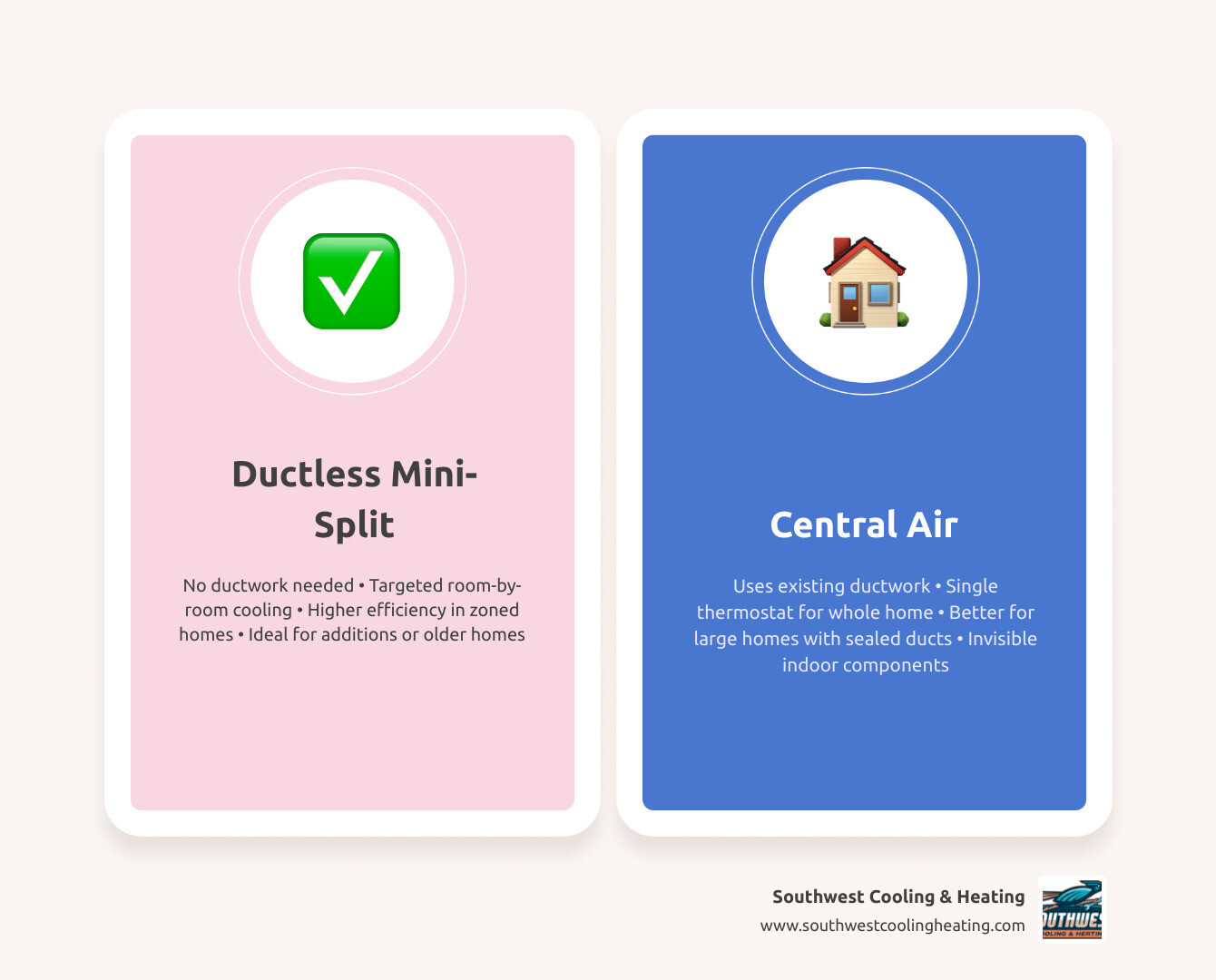
A ductless mini-split is the better choice when:
- Your home has no existing ductwork
- You’re adding a room, garage conversion, or finished basement
- You live in an older or historic home where running ducts would damage walls or structure
- Certain rooms never seem to reach the right temperature
- You want room-by-room temperature control
- Your existing ductwork is leaky, damaged, or poorly insulated
- You need both heating and cooling without a separate furnace
Central air is still the better fit when:
- Your home already has well-maintained, properly sealed ductwork
- You want a single thermostat controlling the whole house
- You prefer a completely hidden, invisible indoor system
- You’re cooling a large home where multiple mini-split zones would exceed the cost of central
Most homeowners spend years uncomfortable in certain rooms — a bedroom that never cools down, a finished basement that feels like a sauna in July, or an addition that the central system just can’t reach. The good news is that the choice between ductless and central air doesn’t have to be a guessing game. Understanding which system fits your home’s layout, ductwork condition, and comfort goals makes the decision straightforward.
I’m Bruce Hymas, owner of Southwest Cooling and Heating, and I’ve spent years helping St. George-area homeowners navigate exactly this question — when a ductless system is better than central air — drawing on decades of hands-on HVAC experience across a wide range of home types and climates. Let’s walk through everything you need to know so you can make a confident, informed decision for your home.
Understanding the Core Differences: Ductless vs. Central Air
To understand which system fits your home best, it helps to look at how each technology handles the job of keeping you comfortable. While both systems rely on a split design—meaning they use an outdoor condenser unit paired with indoor components to transfer heat—the way they deliver conditioned air to your living spaces is entirely different.
When comparing these systems, the primary dividing line is the presence of ductwork. To see how these technologies stack up side-by-side, we have outlined the core differences in the table below. For a deeper dive into how these options fit your specific property, you can read our comprehensive breakdown on Is a Mini Split Better Than Central Air for Your Home?.
| Feature | Ductless Mini-Split System | Central Air Conditioning |
|---|---|---|
| Air Delivery | Direct delivery via individual indoor air handlers | Forced air distributed through hidden ductwork |
| Zoning | Built-in room-by-room control (up to 8 zones per outdoor unit) | Typically single-zone (requires complex dampers for zoning) |
| Energy Efficiency | Extremely high (up to 35+ SEER2; no duct energy loss) | High (typically up to 26 SEER2; subject to duct leakage) |
| Aesthetics | Visible indoor wall, floor, or ceiling cassettes | Completely hidden indoor components with subtle floor or ceiling vents |
| Maintenance | Washable mesh filters cleaned every 2–4 weeks | Disposable filters replaced every 1–3 months; periodic duct cleaning |
| Ideal For | Additions, historic homes, zoning, homes without ducts | Large homes with existing, well-maintained ductwork |
How Central Air Conditioning Works
Central air conditioning is a forced-air system that relies on a centralized air handler—often integrated with a furnace in an attic, basement, or dedicated utility closet. The system pulls warm air from your home through return grilles, cools it over an evaporator coil, and then uses a powerful blower fan to push the conditioned air through a network of metal or flexible ducts.
This air is distributed to every room through registers on your floors, walls, or ceilings. Because the entire system is controlled by a single central thermostat, it operates on an all-or-nothing basis. When the temperature near the thermostat rises, the system kicks on and cools the entire home simultaneously, regardless of which rooms are actually occupied.
How Ductless Mini-Splits Work
Ductless mini-split systems completely bypass the need for centralized air distribution. Instead of one large indoor unit pushing air through a maze of ducts, a mini-split system uses small, individual indoor air handlers installed directly in the rooms you want to cool or heat.
These indoor units are connected to a single outdoor condenser via a small conduit housing the power cable, communication lines, condensate drain, and refrigerant lines. This setup requires only a small three-inch hole through an exterior wall.
Additionally, mini-splits leverage advanced inverter technology. While traditional central air systems operate like a standard light switch—turning fully on at maximum capacity and then shutting completely off—inverter-driven compressors act like a dimmer switch. They continuously adjust their speed to match the exact cooling load of the room, running longer at lower, whisper-quiet speeds to maintain a perfectly steady temperature.
When a Ductless System is Better Than Central Air
In our hot and arid Southern Utah climate, achieving efficient, reliable home comfort is essential. While central air has long been the default choice for many suburban builds, there are many scenarios where ductless technology is superior.
Ductless systems eliminate the inherent energy waste associated with traditional forced-air setups. When you choose a mini-split, you are opting for direct, targeted cooling that delivers conditioned air straight into your living space without any detour through hot attics or dusty crawlspaces.
If you’ve been wondering why so many of your neighbors are making the switch, explore our guide on Why Ductless Systems Are the Coolest Choice for Your Home. Let’s examine the specific situations where going ductless is the absolute best move for your home.
Home Layouts When a Ductless System is Better Than Central Air
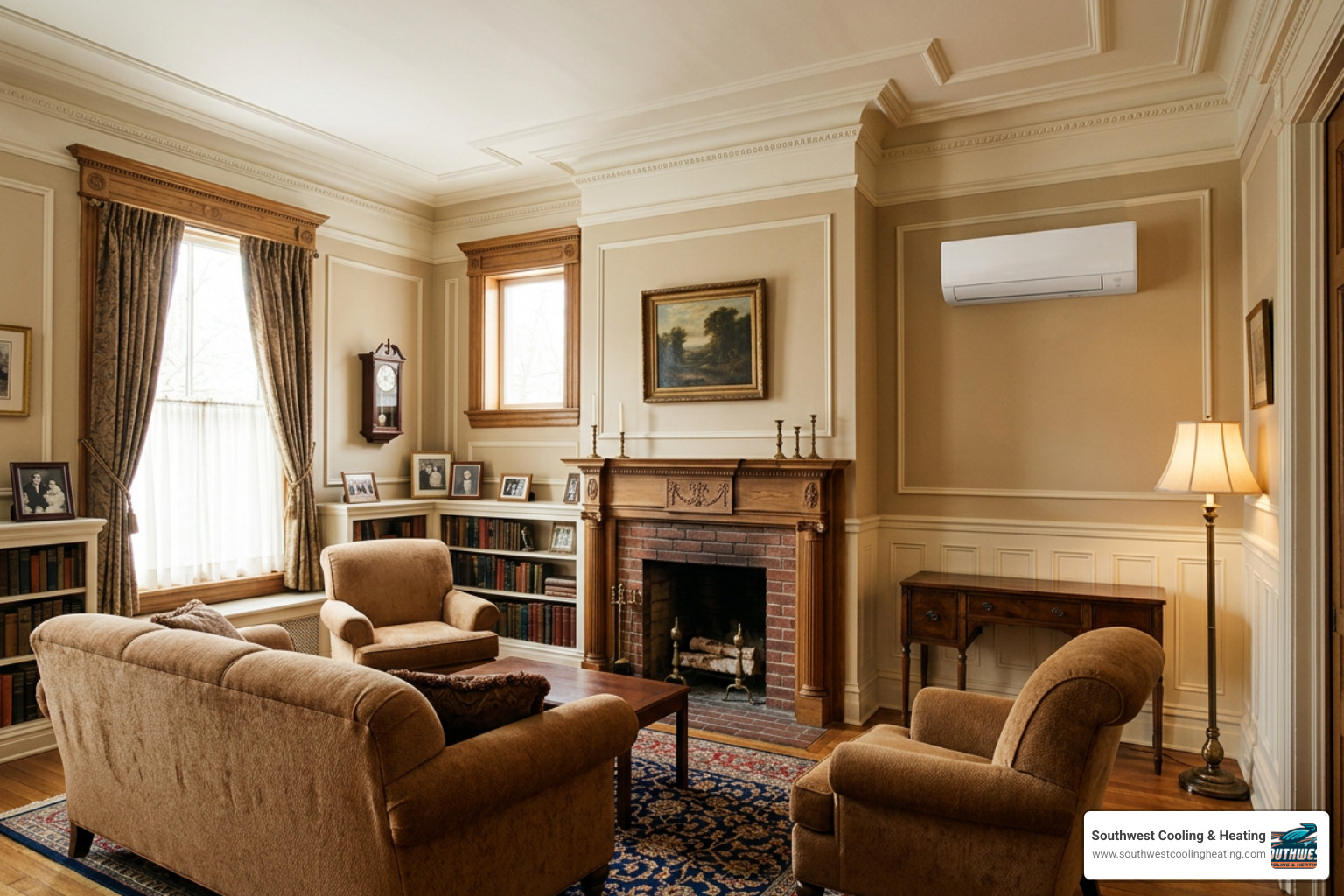
The physical layout and age of your home are often the most decisive factors in this debate. For historic homes—such as those in older residential pockets of St. George or Santa Clara—installing central air from scratch is often a structural nightmare. Retrofitting ductwork requires opening up plaster walls, lowering ceilings, and sacrificing precious closet space to accommodate bulky metal trunks. A ductless system preserves the architectural integrity of historic properties, requiring nothing more than a tiny wall penetration to bring modern comfort indoors.
Ductless systems are also the undisputed champions for targeted home improvements. If you are building a home addition, converting a garage into a home gym, or finishing a basement in Hurricane, extending your existing central ductwork can easily unbalance your entire HVAC system. This often leaves both the new addition and the rest of your home uncomfortable.
Similarly, homes built on concrete slabs with no crawlspace or attic space face steep challenges when it comes to traditional duct installation. For practical advice on managing these architectural hurdles, read our guide on How to Stay Cool When Your House Has Zero Ductwork.
Even in modern multi-story homes, certain “problem rooms”—like a bonus room over the garage or an upstairs master bedroom—frequently struggle to stay cool during our blistering summers. By addressing these local comfort issues independently, you can enjoy tailored comfort where you need it most. This is precisely Why Bloomington Hills Homes Are Going Ductless This Season.
Efficiency Benefits When a Ductless System is Better Than Central Air
When it comes to pure energy efficiency, ductless systems have a massive technological advantage. According to the U.S. Department of Energy, typical homes with ducted systems lose 20% to 30% of their conditioned air through leaks, poor insulation, and loose duct connections. This means nearly a third of the energy you pay for is wasted before the cool air ever reaches your living spaces. Ductless systems completely eliminate this energy loss because they deliver air directly into the room.
Furthermore, mini-splits boast some of the highest efficiency ratings in the industry. While standard central air systems typical of the St. George area operate with SEER2 (Seasonal Energy Efficiency Ratio) ratings ranging from 14 to 22, high-end ductless mini-splits can achieve extraordinary SEER2 ratings of up to 35 or higher.
Because mini-splits utilize variable-speed inverter compressors, they consume significantly less electricity over the course of a hot summer day. Instead of constantly starting and stopping—a cycle that draws a massive amount of power—a mini-split runs at a low, highly efficient cruise control.
This level of performance is particularly valuable in our unique climate. For a closer look at how these efficiency gains perform in our local desert environment, see our article on Why Desert Homeowners Are Switching to Ductless Systems. You can also learn about tailored comfort upgrades by reading about Discovering Ductless Heat Pump Solutions for Santa Clara Homes.
Zoning and Temperature Control Advantages
Have you ever had “thermostat wars” in your home? One person wants the living room cool, while another is freezing in the bedroom. Traditional central air systems struggle with this because they rely on a single thermostat to make decisions for the entire house.
Ductless mini-splits solve this problem by offering built-in, true zone control. Because each indoor air handler operates on its own independent thermostat, you can customize the temperature room by room.
If you spend your days working in an upstairs home office, you can cool that single room to a comfortable temperature while leaving the rest of the house warmer. This zoning capability can cut your cooling utility usage by up to 30%, as you are no longer paying to condition empty, unused spaces.
To help you decide if this customizable setup is practical for your household’s daily routine, read The Honest Truth About Whether Ductless Fits Your Home.
When Central Air Remains the Practical Choice
Despite the incredible efficiency and flexibility of ductless mini-splits, central air conditioning remains a highly practical and popular choice for many homeowners. It is not a matter of one system being universally superior; rather, it’s about matching the right technology to your home’s existing infrastructure and your personal preferences.
Before making a final decision, it is wise to weigh the unique demands of our local environment. For a balanced look at how these systems handle our dry heat, check out our resource on Ductless Heat Pumps in Arid Climates: Pros, Cons, and Performance.
Whole-Home Consistency and Aesthetics
For large, open-concept homes—especially those over 2,500 square feet—central air is often the most practical way to maintain uniform, even temperatures across every room. Central systems excel at moving massive volumes of air quietly and invisibly.
Aesthetics also play a significant role in this choice. With a central air system, all of your indoor equipment is completely hidden away in an attic, basement, or utility closet. The only visible elements inside your living spaces are small, flush-mounted supply and return grilles that blend seamlessly into your ceilings or floors.
For homeowners who are highly particular about their interior decor, the thought of mounting visible plastic units on their walls or ceilings can be a dealbreaker. Central air preserves your wall space and keeps your home’s design entirely undisturbed.
Homes with Existing and Well-Maintained Ductwork
If your home already has a robust, well-insulated, and properly sealed network of ducts, upgrading to a modern, high-efficiency central air conditioner is often the most straightforward and cost-effective path forward. Replacing an old central unit with a new, high-efficiency model allows you to leverage your existing infrastructure without the need for major renovations.
Additionally, central HVAC systems make it very simple to integrate whole-home indoor air quality (IAQ) products. Because all the air in your home passes through a single centralized return, we can easily install advanced air purification systems, high-MERV media filters, and whole-home dehumidifiers directly into your ductwork. While ductless units do feature individual filters, they cannot accommodate the robust, hospital-grade whole-home filtration systems that can be integrated into a central ducted system.
Frequently Asked Questions About Ductless and Central Air
Selecting a new cooling and heating system is a major decision. To help you navigate your options, we have gathered some of the most common questions we hear from homeowners across St. George, Ivins, and the surrounding areas.
Can a ductless mini-split supplement an existing central air system?
Absolutely! This is what we call a hybrid approach, and it is an incredibly common solution for local comfort issues. You do not have to choose strictly one or the other.
Many homeowners keep their existing central air system to handle the main living areas of the home, but install a single-zone ductless mini-split to solve comfort issues in specific trouble spots. This is a perfect solution for converted attics, sunrooms, workshops, or primary bedrooms that always seem to stay too warm in the summer.
By adding a targeted ductless unit, you can keep your favorite rooms perfectly comfortable without putting unnecessary strain on your main central system. If you are interested in this type of hybrid setup, check out our guide on the Ductless Heat Pump St. George Upgrade.
How do maintenance requirements differ between the two systems?
Both systems require regular attention to operate at peak efficiency and achieve their full 15-to-20-year lifespan, but the daily hands-on tasks are quite different:
- Ductless Mini-Splits: These units rely on built-in, washable mesh filters located inside each indoor air handler. Because these filters are smaller than central air filters, they need to be popped out, rinsed under a tap, dried, and reinstalled every 2 to 4 weeks—especially if you have pets. They also benefit from professional deep cleanings every year to keep the indoor coils free of dust and mold.
- Central Air Systems: These systems typically use standard disposable pleated filters located at the return grille or the air handler. These only need to be replaced every 1 to 3 months. However, central systems also require periodic duct inspections and professional duct cleaning to ensure that dust, allergens, and debris are not circulating through your home.
For a comprehensive look at how to care for ventless systems throughout the year, refer to The Ultimate Guide to Heating Homes Without Vents.
Which system is better for heating capability in cold climates?
Most modern ductless mini-splits sold today are actually heat pumps, meaning they can provide both cooling in the summer and highly efficient heating in the winter. Because they move heat rather than creating it, ductless heat pumps can operate up to three times more efficiently than traditional electric baseboard heaters or standard furnaces.
While older heat pumps used to struggle when temperatures dropped near freezing, modern cold-climate mini-splits utilize advanced compressor technology that allows them to maintain high heating capacity even when outdoor temperatures drop well below freezing.
Central air systems, on the other hand, are typically paired with a natural gas furnace or electric heat strips to handle winter heating. In areas like Diamond Valley or Winchester Hills where winter temperatures can get quite chilly, a dual-fuel central system (pairing a heat pump with a gas furnace backup) is an excellent option, but a modern multi-zone ductless heat pump system is equally capable of delivering reliable, year-round comfort.
Conclusion
Choosing between a ductless mini-split and a central air conditioning system isn’t about finding the “perfect” system—it’s about finding the perfect system for your home.
If you are dealing with a historic home, planning a new addition, or simply tired of fighting over the thermostat in a house with hot and cold spots, a ductless system offers unmatched efficiency, zoning control, and installation flexibility. On the other hand, if your home already has a solid network of ducts and you prefer an invisible, whole-home cooling solution controlled by a single thermostat, upgrading your central air system remains a highly practical choice.
At Southwest Cooling & Heating, we have been helping our neighbors in St. George, Santa Clara, Bloomington, Coral Canyon, and throughout the region stay comfortable since 1980. We combine modern HVAC technology with old-school customer service values to ensure you get the absolute best solution for your unique space.
If you’re ready to explore your options and find the perfect cooling setup for your home, contact us today to schedule a professional consultation. You can learn more about our specialized offerings by visiting our Southwest Cooling & Heating ductless heat pump services page. Let our family help your family stay cool all summer long!