


Is Your AC Trying to Tell You Something? Signs Your AC Needs Repair in St. George, UT
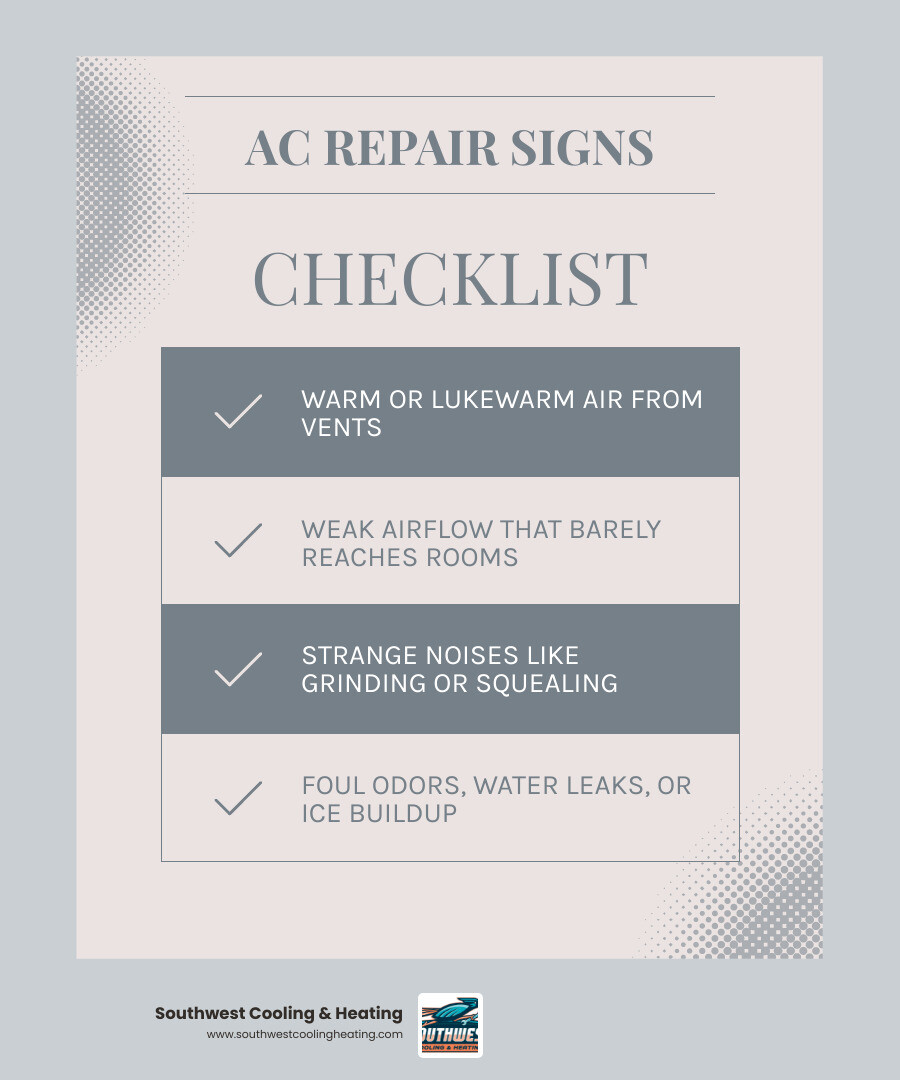
The signs your ac needs repair are often easy to miss — until your home feels like a furnace in the middle of a Southern Utah summer. Here’s a quick look at the most common warning signs:
Common Signs Your AC Needs Repair:
- Warm or lukewarm air blowing from vents despite the system running
- Weak airflow that barely reaches across the room
- Strange noises — grinding, squealing, or banging during operation
- Foul odors — musty, burning, or chemical smells from vents
- Water leaks or ice buildup around the indoor or outdoor unit
- Frequent cycling — the system turns on and off more than usual
- Rising energy bills with no change in usage habits
- High indoor humidity — air feels sticky even when the AC is on
- Uneven cooling — some rooms freezing, others roasting
Most of these signs point to a system that needs professional attention soon. Ignoring them can turn a minor fix into a major breakdown — especially when St. George temperatures push past triple digits.
Air conditioning accounts for anywhere from 12% to 27% of a typical monthly power bill, so a struggling system isn’t just uncomfortable — it’s quietly draining your wallet every day it goes unaddressed. And in Southern Utah, where the heat is relentless from late spring through early fall, a failing AC isn’t a minor inconvenience. It’s a real health and safety concern, particularly for children, older adults, and pets.
I’m Bruce Hymas, owner of Southwest Cooling & Heating, and with over four decades of HVAC experience serving St. George and the surrounding communities, I’ve seen how early recognition of the signs your ac needs repair can save homeowners from costly emergency breakdowns. In this guide, I’ll walk you through exactly what to watch for and when it’s time to call a pro.
7 Common Signs Your AC Needs Repair Before the St. George Heat Hits
Living in the desert means our cooling systems work harder and longer than units in almost any other part of the country. By the time May 2026 rolls around, your system has likely already endured several seasons of intense demand. Recognizing the signs your ac needs repair early is the difference between a controlled service visit and a frantic call for AC Repair on a Saturday night in July.
One of the most visually alarming signs is a frozen evaporator coil. You might see a layer of ice forming on the copper pipes of your outdoor unit or even on the indoor coil. This usually happens because of restricted airflow (like a filthy filter) or a refrigerant leak. When the coil gets too cold, it freezes the humidity in the air, creating an ice block that prevents any cooling from happening.
Other red flags include:
- Warm Air: If your thermostat is set to “cool” but the air coming out of the registers feels like a desert breeze, your compressor may be failing or your refrigerant levels could be low.
- Weak Airflow: This often points to a failing blower motor or issues deep within your ductwork. If the air isn’t moving, your home won’t reach the set temperature.
- Frequent Cycling: Known as “short cycling,” this is when the unit turns on and off every few minutes. It is incredibly taxing on the electrical components and prevents the system from properly dehumidifying your home.
- Water Leaks: While a little condensation is normal, large puddles around your indoor unit usually mean a clogged condensate drain line or a cracked drain pan.
Identifying the signs your AC needs repair through unusual noises
Your air conditioner should operate with a steady, predictable hum. When it starts sounding like a heavy metal concert or a bag of marbles in a blender, something is wrong.
- Grinding: This typically indicates that the bearings in your blower motor or condenser fan are shot.
- Squealing: Usually a sign of a slipping or frayed belt, or high pressure within the compressor.
- Banging or Clanking: This often means a part has come loose—like a connecting rod or a fan blade—and is hitting other components.
If you hear any of these, we recommend shutting the system down immediately and calling for Emergency HVAC Services to prevent a small loose part from destroying the entire motor.
Foul odors and high humidity as red flags
In Southern Utah, we don’t always deal with the “wet blanket” humidity of the South, but your AC is still responsible for maintaining a comfortable indoor balance. If your skin feels sticky or your windows are fogging up, your AC isn’t doing its job as a dehumidifier.
Odors are equally telling. A musty, “dirty sock” smell usually indicates mold or bacterial growth on the coils or in the ducts. On the other hand, a sharp, pungent burning smell is a major red flag for electrical issues, such as overheating wires or a shorted-out circuit board. For a deeper dive into these urgent warnings, check out our guide on Red Alerts and Cold Comforts: Signs Your HVAC Needs Help ASAP.
Distinguishing Between a Simple Tune-Up and a Major Fix
Homeowners often ask us if they need a repair or just a “tune-up.” Think of it like a car: a tune-up is your routine oil change and tire rotation—it’s preventive. A repair is what happens when the car won’t start or the engine is smoking.
If your system is simply “slipping”—maybe it’s running a little longer than it used to or your bills have crept up slightly—you likely need AC Maintenance. During a maintenance visit, we clean the coils, check refrigerant levels, and tighten electrical connections to restore efficiency.
| Symptom | Likely Need |
|---|---|
| No service in over a year | Tune-Up |
| Minor humming or vibration | Tune-Up |
| Slight increase in energy bills | Tune-Up |
| Blowing warm air | Repair |
| Loud banging or grinding | Repair |
| Puddles of water or refrigerant | Repair |
When minor performance slips indicate a need for service
Don’t wait for a total breakdown. If you notice your AC is struggling to keep up during the hottest part of the afternoon, or if it seems to be making a new, minor humming noise, it’s time for a professional check. Annual spring prep is vital in places like Hurricane and Ivins, where the summer heat can be punishing. Catching a worn capacitor during a tune-up can prevent your system from failing when you need it most. Learn more about An Ounce of Prevention: Keeping Your HVAC Out of the ER.
When to Stop Repairing and Start Replacing Your Unit
There comes a point where continuing to fix an old unit is like throwing good money after bad. Most central air conditioners have a lifespan of 10 to 15 years. If your unit is approaching its 15th birthday and starts needing frequent repairs, it’s likely time for an upgrade.
A major factor in this decision is the type of refrigerant your system uses. If your unit was built before 2010, it likely uses R-22 (Freon). The production and importation of R-22 were phased out in 2020, making it extremely scarce and expensive to source. If you have a significant leak in an R-22 system, the cost of the refrigerant alone can make a repair move into the “not worth it” category.
We often use the $5,000 Rule to help our neighbors in Santa Clara and Bloomington make this choice: Multiply the age of the unit by the cost of the repair. If the total is more than $5,000, replacement is usually the smarter financial move. For example:
- A 12-year-old unit with a $500 repair = $6,000 (Replace)
- An 8-year-old unit with a $300 repair = $2,400 (Repair)
Understanding What to Expect When Your AC Expects the Unexpected can help you plan for these transitions without the stress of a surprise breakdown.
How the age of your system in May 2026 impacts your decision
As we move through 2026, the technology gap between old units and new high-efficiency systems is wider than ever. Modern units use SEER2 ratings to measure efficiency, and a new system can often pay for itself over time through significantly lower monthly power bills. Plus, upgrading gives you a “reset” on your warranty, providing peace of mind that a 20-year-old unit simply can’t offer. Explore our full range of HVAC Services to see the latest in energy-efficient cooling.
DIY Troubleshooting Steps to Try Before Calling a Pro
Before you pick up the phone, there are a few simple things you can check that might save you a service call. We want you to be cool, and sometimes the fix is simpler than you think.
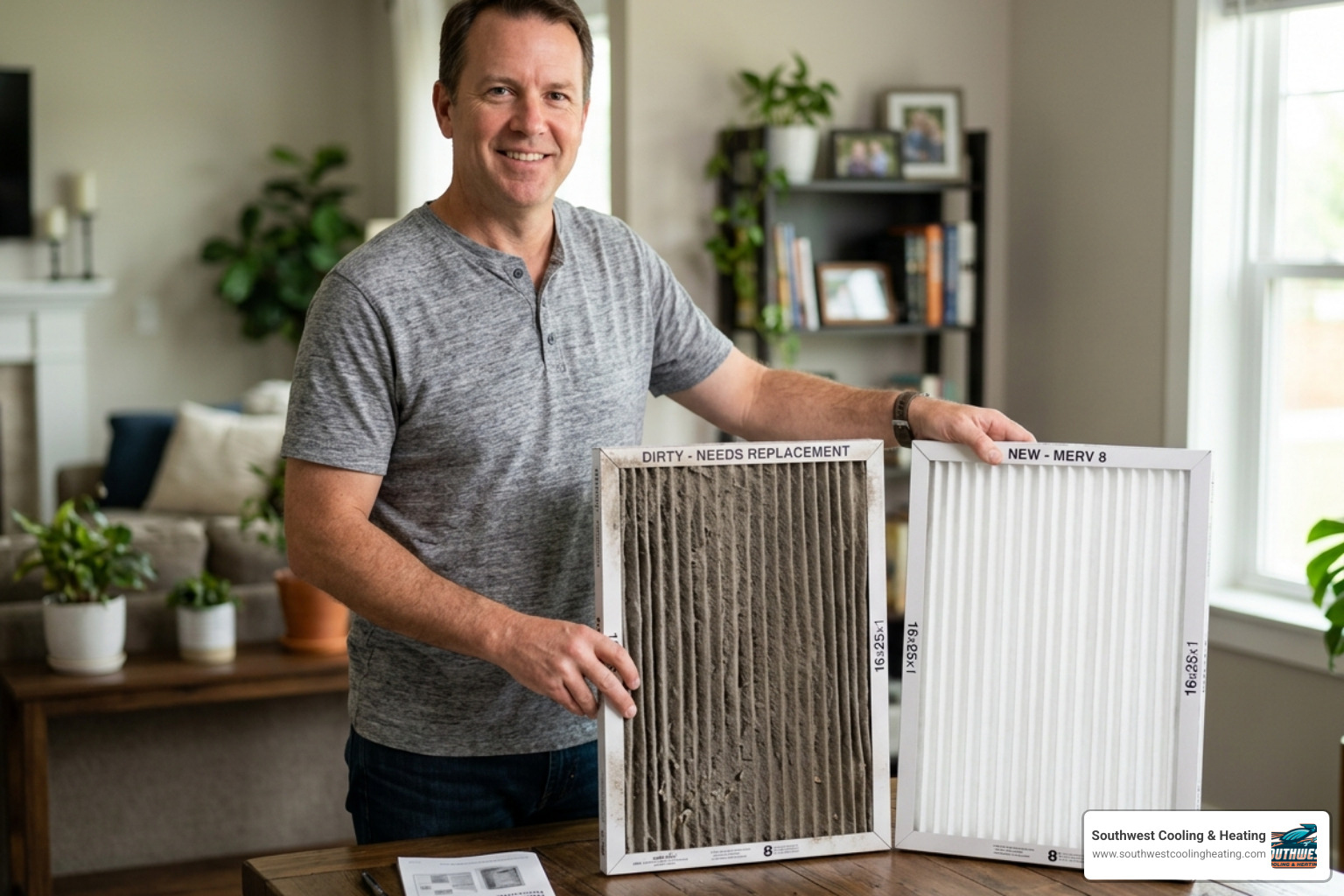
- Check the Air Filter: This is the #1 cause of AC issues. A dirty filter chokes off airflow, causes the system to overwork, and can even lead to frozen coils. Replacing a dirty filter can save you 5% to 15% on energy costs.
- Inspect the Thermostat: Ensure it’s set to “Cool” and “Auto.” If the screen is blank, try replacing the batteries.
- Check the Circuit Breaker: Sometimes a power surge can trip the breaker. Reset it once, but if it trips again immediately, do not reset it a second time—this indicates a dangerous electrical short.
- Clear the Outdoor Unit: Make sure there aren’t weeds, desert dust, or debris crowding your condenser. It needs at least two feet of clear space to “breathe” and release heat.
For more immediate steps, see our Don’t Sweat It: Your Immediate HVAC Breakdown Action Plan.
Frequently Asked Questions about AC Performance
What are the most urgent signs your AC needs repair in Southern Utah?
In our region, any sign that appears during a triple-digit heatwave is urgent. However, the “red alerts” are burning smells (fire risk), a complete loss of cooling when vulnerable people are in the home, and strange grinding noises that suggest a motor is about to seize. If your system fails when it’s 105°F outside, it’s an emergency. Don’t hesitate to contact us for Emergency HVAC Services.
How does desert dust affect my outdoor condenser unit?
Living in areas like Diamond Valley or Winchester Hills means dealing with plenty of dust and wind. This dust coats the delicate fins of your outdoor condenser coils, acting as an insulator that prevents the unit from releasing heat. This forces the compressor to work much harder and run longer, leading to premature failure. Regular coil cleaning is a must for desert dwellers. Keep your system running smoothly with routine AC Maintenance.
Why is my energy bill suddenly 27% higher than last month?
If your usage habits haven’t changed but your bill has spiked, your AC is likely losing efficiency. This could be due to mechanical friction (worn bearings), a refrigerant leak, or even leaky ductwork. According to the Department of Energy, leaky ducts can lose 20-30% of conditioned air before it ever reaches your living room. If your wallet is feeling the pinch, it’s time to Contact Us for a professional diagnostic.
Conclusion
At Southwest Cooling & Heating, we’ve been the trusted name for home comfort in St. George and surrounding areas like Santa Clara, Hurricane, and Ivins since 1980. We know that your air conditioner is your lifeline during a Utah summer. By keeping an eye out for the signs your ac needs repair, you can protect your investment and keep your family cool all season long.
Whether you’re in Bloomington Hills or Toquerville, our team is ready to provide the expert, “old-school value” service you deserve. If your AC is waving any of these red flags, don’t wait for the next heatwave. Schedule your AC Repair with us today and experience the peace of mind that comes with a perfectly cooled home.