


Is a Ductless Heat Pump Right for Your Home? Here’s What You Need to Know First
Is a ductless heat pump right for your home — and the short answer is: it depends on a few key factors. Here’s a quick look at when ductless makes sense:
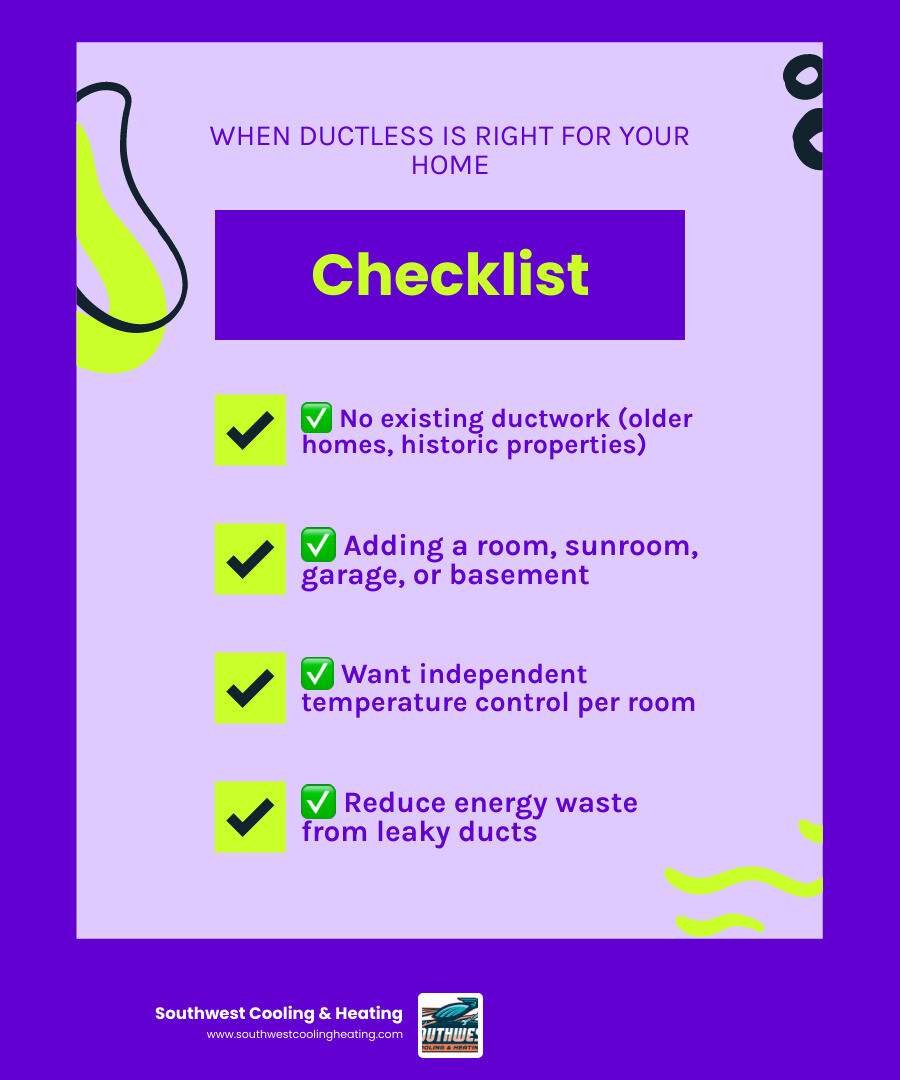
A ductless heat pump is likely a good fit if you:
- Have no existing ductwork (older homes, historic properties)
- Are adding a room, sunroom, garage, or basement space
- Want independent temperature control in different rooms
- Are looking to reduce energy waste from leaky ducts
- Live in a home where extending ductwork is impractical or costly
It may not be the best fit if you:
- Already have well-maintained ductwork throughout your home
- Need whole-home heating and cooling from a single system
- Have a very tight upfront budget (ductless carries higher initial costs)
If you own a home in St. George, Utah, you’ve probably noticed that heating and cooling takes a serious bite out of your monthly bills. The way your home is conditioned — whether through ducts, wall units, or something in between — makes a bigger difference than most people realize. Duct losses alone can account for more than 30% of your home’s energy use, especially when those ducts run through unconditioned spaces like attics. That’s a significant amount of money slipping away before the air even reaches your living room.
Ductless heat pumps — also called mini-splits — have become one of the most talked-about solutions for homeowners looking to cut energy waste, improve comfort, and gain more control over their indoor climate. But like any major home system, they’re not a one-size-fits-all answer. Knowing whether they’re the right fit for your specific home, layout, and climate is what really matters before making a decision.
I’m Bruce Hymas, owner of Southwest Cooling & Heating, and with decades of hands-on experience helping St. George homeowners navigate exactly this question — is a ductless heat pump right for your home — I’ve seen which homes benefit most and where other solutions serve people better. In this guide, I’ll walk you through everything you need to make a confident, informed decision.
Is a ductless heat pump right for your home?
When we talk to neighbors in Santa Clara or Hurricane, the conversation usually starts with a specific problem: “This one room is always too hot,” or “I’m tired of paying to cool the whole house when I only use the bedroom at night.” Determining is a ductless heat pump right for your home often comes down to how your house was built and how you use your space.
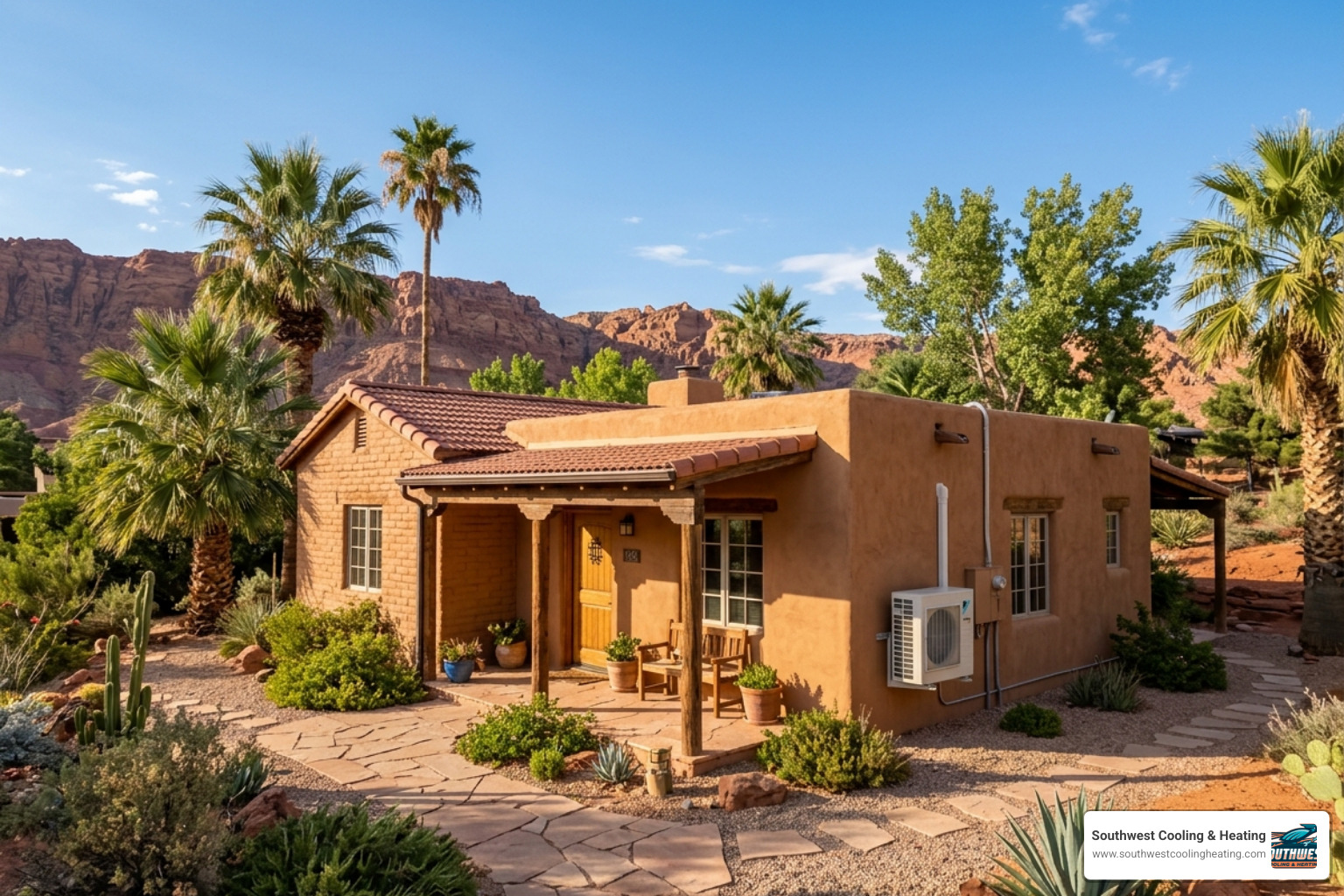
For owners of older or historic homes in the St. George area, ductless systems are often a lifesaver. Many of these beautiful properties were built before central air was standard, meaning there is simply no room in the walls or ceilings to squeeze in bulky metal ductwork. A Ductless Heat Pump St. George Upgrade allows these homes to enjoy modern climate control without a messy, invasive renovation that destroys the home’s character.
The zoning flexibility is another major factor. In a traditional system, one thermostat controls the whole house. If you like the living room at 72 degrees but want the bedroom at 68, someone is going to be unhappy. Ductless systems allow you to set different temperatures for different zones. This “space conditioning” means you aren’t wasting energy cooling an empty guest room just to stay comfortable in your home office.
Comparing Efficiency: Ducted vs. Ductless
To give you an idea of the performance gap, look at the efficiency ratings. While traditional ducted heat pumps are quite efficient, they generally top out around 25 SEER2. Ductless mini-splits, however, can reach staggering ratings of up to 35 SEER2.
| Feature | Ducted Heat Pump | Ductless Mini-Split |
|---|---|---|
| Efficiency (SEER2) | 15.2 to 25 | 15.2 to 35 |
| Energy Loss | Up to 30% via ducts | Near 0% (no ducts) |
| Installation | Invasive (requires ducts) | Minimal (3-inch hole) |
| Temperature Control | Single-zone (usually) | Multi-zone flexibility |
How Mini-Split Technology Works Without Ducts
To understand why these systems are so efficient, you have to look at how they move heat. A HVAC Ductless Heat Pump consists of two primary parts: an outdoor compressor/condenser unit and one or more indoor air-handling units.
The magic happens in the connection. Instead of large ducts, these two units are linked by a small conduit — usually requiring only a three-inch hole through the wall. This conduit houses the power cable, refrigerant lines, suction tubing, and a condensate drain. Because the air is cooled or heated right at the indoor unit and blown directly into the room, you completely bypass the energy losses associated with traditional ductwork.
We also utilize “inverter technology” in these systems. Unlike older HVAC units that are either “all on” or “all off” (which creates those annoying temperature swings), a ductless system’s compressor can speed up or slow down to match the exact needs of the room. It’s like using a dimmer switch instead of a standard on/off light switch. This results in much steadier temperatures and significantly lower electricity bills.
Determining if a ductless heat pump is right for your home layout
Home layout plays a huge role in system design. In Discovering Ductless Heat Pump Solutions for Santa Clara Homes, we often find that open floor plans are ideal for ductless units. A single high-capacity wall-mounted unit can often condition a large living area and kitchen combined.
However, if your home has many small, enclosed rooms, you may need a multi-zone setup. One outdoor unit can typically support up to four or five indoor units, allowing you to place a “head” in each bedroom and the main living area. This ensures even air distribution throughout the house without any “dead spots.”
The Major Advantages of Going Ductless in Southern Utah
Living in Southern Utah means dealing with intense sun and dry heat. Why Bloomington Hills Homes Are Going Ductless This Season often comes down to the sheer performance of these units in our climate.
Beyond the energy savings, there’s the benefit of Indoor Air Quality (IAQ). Traditional ducts are notorious for collecting dust, allergens, and even mold over time. Every time the fan kicks on, those particles are circulated through your home. Since mini-splits have no ducts to clean and feature advanced multi-stage filtration, the air you breathe is often much cleaner.
Another advantage we hear about constantly is how quiet they are. The noisy part of the system is outside, and the indoor units are designed to be “whisper quiet.” You can watch TV or have a conversation right next to the unit without having to raise your voice. For many Top Rated Ductless Heat Pumps for St. George Residents, the combination of quiet operation and a smaller carbon footprint (reducing emissions by up to 40% compared to gas furnaces) makes it the clear winner.
Deciding if a ductless heat pump is right for your home additions
If you’re planning a remodel, Mini-Split Installation is almost always the best path forward. We see this often in:
- Converted Garages: Turning a garage into a gym or workshop? Extending your central HVAC there is usually against code and incredibly inefficient.
- Sunrooms: These rooms have massive heat gain from windows. A dedicated ductless unit can handle that specific load without affecting the rest of the house.
- Finished Basements: Often naturally cooler, basements don’t need the same “blast” of air as the upstairs.
- Attic Conversions: It’s often impossible to run new ducts up to a finished attic.
Your Local Experts: Finding the Best Ductless Heat Pump Specialists in Santa Clara can help you determine the exact BTU capacity needed for these specific spaces to ensure you don’t over-invest or under-cool.
Performance in Extreme Climates and Cold Weather
A common myth is that heat pumps don’t work when it gets cold. While that might have been true in the 1980s, modern technology has changed the game. “Hyper-Heat” systems are specifically designed to handle sub-zero temperatures.
Many of the units we install can maintain 100% of their heating capacity down to 5°F and continue to provide warmth even when it’s -13°F or -15°F outside. While St. George rarely sees those extremes, having that extra “muscle” means the system doesn’t have to struggle on our coldest winter nights.
If you are considering a Heat Pump Conversion Utah HVAC Credits can help offset the initial investment. Because these systems are so eco-friendly, there are often federal tax credits and local utility rebates available for homeowners who switch from less efficient systems like electric baseboard heat or older gas furnaces. The Ivins Heat Pump Handbook: Everything You Need to Know About Local HVAC Solutions provides more detail on how these systems perform year-round in our specific high-desert climate.
Key Considerations for Installation and Maintenance
While the benefits are huge, a ductless system is only as good as its installation. Proper sizing is critical. If a unit is too large for the room, it will “short cycle,” turning on and off constantly, which wastes energy and fails to dehumidify the air. If it’s too small, it will run constantly and never reach the desired temperature.
Maintenance is relatively simple but non-negotiable. Homeowners need to clean the filters every few weeks—a simple task of popping the front panel and rinsing the plastic filters. However, you still need a professional for a precision tune-up once a year.
When we perform a Heat Pump Installation, we also look at your electrical panel. While most homes built in the last 50 years can handle the load, some older properties in places like Toquerville or La Verkin might need a minor panel upgrade to support the new equipment.
Choosing ENERGY STAR certified units is also a smart move, as they meet strict efficiency guidelines set by the EPA, ensuring you get the maximum possible savings. If you’re looking for Ductless Heat Pumps in La Verkin, UT: How to Choose the Best Local Experts, always look for a team that emphasizes load calculations and proper unit placement.
Frequently Asked Questions about Ductless Systems
How long do ductless heat pumps typically last?
With regular maintenance, a high-quality ductless mini-split system typically lasts about 15 to 20 years. This is comparable to, and often longer than, traditional central air units, especially because they don’t have to work as hard thanks to inverter technology.
Are ductless units noisier than central air conditioning?
Actually, they are much quieter! Most indoor units operate at around 19 to 30 decibels. For context, a whisper is about 30 decibels. You’ll barely notice it’s running.
Do ductless systems work effectively in the St. George summer heat?
Absolutely. In fact, they often outperform central air in extreme heat. Because there are no ducts in a 130-degree attic losing “coolness,” the air coming out of a mini-split is often colder and more consistent than what you’d get from a central system.
Conclusion
At Southwest Cooling & Heating, we’ve been serving the St. George area since 1980. We’ve seen every type of home layout from Ivins to Bloomington, and we know that the “right” system is the one that fits your lifestyle and your budget.
Whether you are looking to fix a “hot room,” finish a basement, or completely overhaul your home’s efficiency, a HVAC Ductless Heat Pump offers a modern, personalized comfort solution that’s hard to beat. We combine the latest technology with our “old-school” values of honesty and expert craftsmanship to ensure your home stays comfortable no matter what the Utah weather throws at us.
If you’re still wondering is a ductless heat pump right for your home, the best next step is a professional evaluation. We can look at your home’s layout, insulation, and current system to give you the “honest truth” about what will save you the most money and provide the best comfort for years to come.