


What to Do When Your HVAC Breaks Down Unexpectedly in St. George, Utah
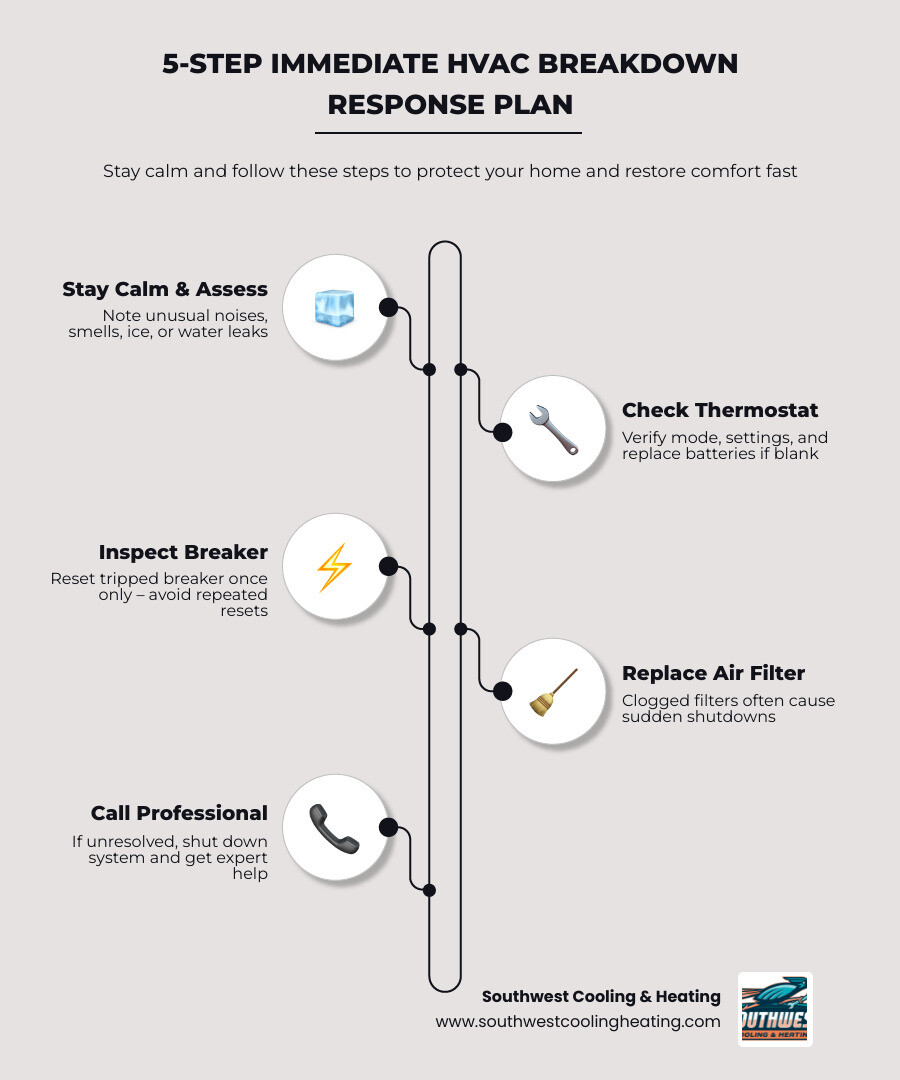
What to do when your HVAC breaks down unexpectedly can feel overwhelming, especially during a Southern Utah summer or a cold winter snap — but the right steps taken quickly can protect your home and get your comfort restored faster. Here’s what to do right away:
- Stay calm and assess the situation — note any unusual sounds, smells, or visible issues like ice or water.
- Check your thermostat — verify the mode, temperature settings, and replace batteries if the display is blank.
- Inspect your circuit breaker — reset any tripped breaker once, but do not reset repeatedly.
- Replace your air filter — a clogged filter is one of the most common causes of sudden system shutdowns.
- Turn off the system — if you smell gas, see sparks, or notice burning odors, shut everything down and call for help immediately.
- Use temporary comfort measures — close blinds, use fans, or layer clothing while you wait for a technician.
- Call a licensed HVAC professional — if basic troubleshooting doesn’t resolve the issue, stop and get expert help.
A sudden HVAC failure never happens at a convenient time. Whether it’s a furnace that stops working on a freezing January night or an air conditioner blowing warm air during a St. George heat wave in July, the stress is real — and the stakes can be high. Prolonged loss of heating or cooling isn’t just uncomfortable; in extreme weather, it can pose genuine risks to your family’s health, damage your plumbing, and strain your home’s structure.
The good news? Many HVAC breakdowns have simple, fixable causes — and knowing exactly what to look for can save you time, money, and a lot of unnecessary worry.
I’m Bruce Hymas, owner of Southwest Cooling & Heating, and with over four decades of HVAC experience serving St. George and the surrounding Southern Utah communities, I’ve seen how a clear, calm action plan makes all the difference when you’re figuring out what to do when your HVAC breaks down unexpectedly. In this guide, I’ll walk you through every step — from the first moment your system fails to getting it back up and running safely.
What to Do When Your HVAC Breaks Down Unexpectedly in St. George
When you first realize the house is getting warmer (or colder) than it should be, the most important thing you can do is stay calm. Panic leads to missed details or, worse, risky DIY attempts that could cause more damage. Start by assessing the “symptoms” of the failure. Is the unit making a loud screeching or banging noise? Do you smell something metallic or like burning plastic? Is there a puddle of water forming around the indoor unit?
Identifying these signs early helps you communicate clearly when you call for Emergency HVAC Services. If you notice hissing sounds or see ice forming on the copper lines, these are major red flags that the system needs to be shut down immediately to prevent the compressor from burning out.
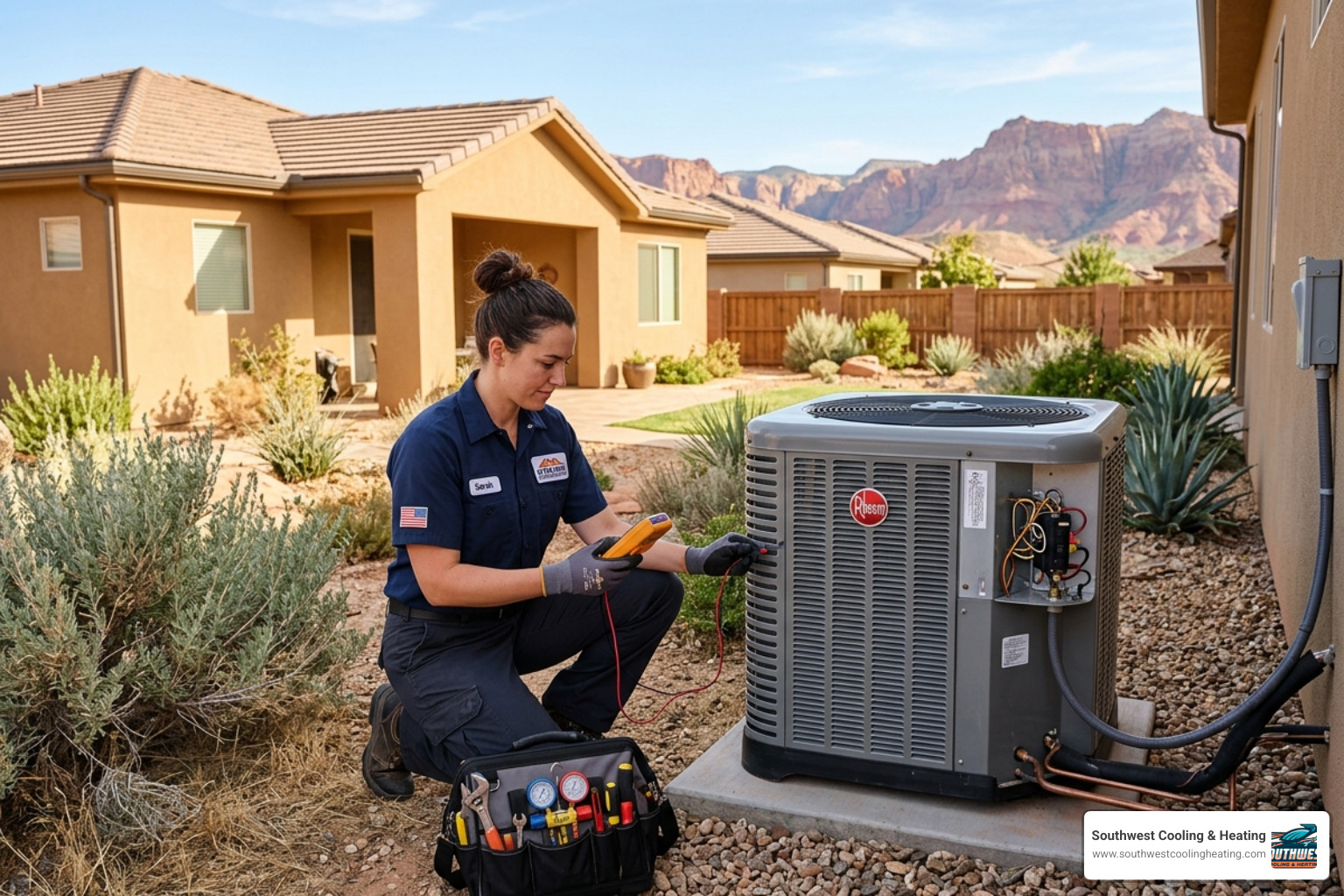
To help you decide your next move, use this quick reference table:
| Symptom | Potential Cause | Action |
|---|---|---|
| Blank Thermostat | Dead batteries or tripped breaker | DIY: Replace batteries/Check breaker |
| Warm Air from Vents | Clogged filter or low refrigerant | DIY: Change filter; Pro: Check for leaks |
| Loud Banging/Screeching | Mechanical failure (fan or motor) | Pro: Shut down and call immediately |
| Burning Smell | Electrical short or motor overheating | Pro: Shut down and call immediately |
| Water Leaking (Indoor) | Clogged condensate drain line | DIY: Check drain; Pro: Clear blockage |
Troubleshooting Your Thermostat When Your HVAC Breaks Down Unexpectedly
It sounds simple, but you would be surprised how many “emergencies” in Hurricane or Ivins are actually just thermostat glitches. If your display is blank, start by replacing the batteries. Even if the screen looks fine, weak batteries can prevent the thermostat from sending a signal to your AC or furnace.
Next, double-check your settings. Ensure the system is set to “Cool” or “Heat” as appropriate and that the fan is set to “Auto” rather than “On” if you’re trying to diagnose a cooling issue. Sometimes, a thermostat can be accidentally bumped or “locked” by another family member. If everything looks correct but the system won’t kick on, you can Contact Us to help determine if the issue is in the wiring or the unit itself.
Protecting Your Home When Your HVAC Breaks Down Unexpectedly
If the thermostat is fine, move to your electrical panel. HVAC systems pull a lot of power, especially during a St. George heatwave. Check for a tripped circuit breaker. You can flip it back once, but if it trips again immediately, do not keep trying. A repeating trip is a safety feature telling you there is a dangerous electrical short or a motor is drawing too much current.
Another critical step is checking your air filter. We’ve seen systems in Bloomington Hills completely shut down simply because a thick layer of dust was suffocating the airflow. If you haven’t changed your filter in the last 1–3 months, do it now. A clogged filter causes the system to overheat or the coils to freeze, leading to a total shutdown. If the air is still warm after a filter change, it may be time to schedule professional AC Repair to look for deeper mechanical issues.
Recognizing Critical Warning Signs and Safety Hazards
While we always encourage homeowners to be proactive, some situations are far beyond a DIY fix and can actually be dangerous. If you smell gas (a “rotten egg” odor) near your furnace in Toquerville or La Verkin, do not flip any light switches. Evacuate the home and call the gas company and an HVAC expert immediately for Furnace Repair.
Other critical warning signs include:
- Burning Smells: This often indicates electrical wiring is melting or a motor has seized.
- Ice Buildup: If you see ice on the outdoor unit or the indoor evaporator coil, turn the system off immediately. Running a frozen system can destroy the compressor.
- Short Cycling: If your unit turns on and off every few minutes, it’s under extreme stress and will eventually fail completely if not addressed.
- Carbon Monoxide Alarms: If your CO detector goes off, treat it as a life-threatening emergency. Open windows, get everyone outside, and call for help.
Maintaining Comfort While Waiting for Your Technician
Waiting for a technician during a breakdown can be the hardest part, especially when the desert sun is beating down on your roof. If your AC fails, your primary goal is to slow down the heat gain in your home. Close all curtains and blinds, particularly on the south and west sides of the house, to block out the sun’s “greenhouse effect.”
If you are waiting for Heating Repair during a winter cold snap, focus on heat retention. Keep everyone in one central room, close the doors to unused bedrooms, and use towels to block drafts under doors. If you use a portable space heater, never leave it unattended and keep it at least three feet away from furniture or curtains. Remember to stay hydrated and, if the house becomes dangerously hot or cold, consider moving to a neighbor’s home or a public space like a library until help arrives.
Preventing Future HVAC Emergencies with Proactive Care
The best way to handle an HVAC emergency is to prevent it from happening in the first place. Most systems last 15–20 years, but that lifespan is only possible with regular maintenance. We recommend professional inspections twice a year: once in the spring for your AC and once in the fall for your heating system.
Here are a few proactive steps to take today:
- The $5,000 Rule: If your unit is aging, use this formula: (Age of the unit) x (Cost of repair). If the total is over $5,000, it’s usually more cost-effective to replace the system rather than sinking money into a failing one.
- Clear the Area: Ensure your outdoor condenser has at least two feet of clearance from bushes, weeds, or debris. This allows the unit to “breathe” and prevents overheating.
- Surge Protectors: Install a dedicated surge protector for your HVAC system. Southern Utah’s summer storms can cause power surges that fry expensive control boards.
- Filter Schedule: Set a monthly reminder on your phone to check your filters. It is the cheapest “insurance policy” you can have against a breakdown.
If your system is frequently breaking down, it might be time to stop the cycle of Emergency HVAC Services and look into a modern, high-efficiency upgrade that will provide peace of mind for years to come.
Frequently Asked Questions about HVAC Emergencies in Southern Utah
What counts as a true HVAC emergency?
An emergency is any situation where the loss of climate control threatens your safety or the integrity of your home. This includes temperatures below 50°F or above 85°F indoors (especially with elderly residents or infants), the smell of gas, burning odors, or significant water leaks that could cause structural damage.
Is it safe to attempt DIY repairs on my AC or furnace?
Basic troubleshooting—like changing batteries, resetting a breaker once, or replacing a filter—is perfectly safe for most homeowners. However, you should never attempt to open the cabinet to handle electrical components or refrigerant. Not only is it dangerous, but it can also void your manufacturer’s warranty.
What information should I have ready for the technician?
When you call for service, try to have the following ready: the age of your system, any error codes on the thermostat, a description of any strange noises or smells, and a timeline of when the problem started. This helps us arrive prepared with the right parts to get you back to comfort quickly.
Conclusion
Knowing what to do when your HVAC breaks down unexpectedly is about more than just fixing a machine; it’s about protecting your home and your peace of mind. By following a logical troubleshooting path and knowing when to call in the experts, you can navigate even the hottest St. George summer or the coldest winter night with confidence.
At Southwest Cooling & Heating, we’ve been the trusted St. George HVAC experts since 1980. We combine modern technology with old-school values to ensure your family stays comfortable year-round. Whether you’re in Santa Clara, Hurricane, or right here in Bloomington, our team is ready to provide reliable repairs and 24/7 assistance when you need it most.
Don’t wait for a total system failure to take action. If your system is acting up, Contact Us today for expert Emergency HVAC Services and let us help you get back to the comfort you deserve.