


Why the Benefits of Choosing a Company Running on Trust Since 1980 Matter for St. George Homeowners
The benefits of choosing a company running on trust since 1980 are real, measurable, and especially important when you’re inviting someone into your home to work on your heating or cooling system. Here’s a quick look at what decades of trust actually deliver:
- Consistent service quality — Decades of experience means fewer mistakes and faster problem-solving
- Deep local knowledge — A company rooted in your community understands your climate, your home types, and your needs
- Institutional memory — Long-tenured teams carry knowledge that newer companies simply haven’t had time to build
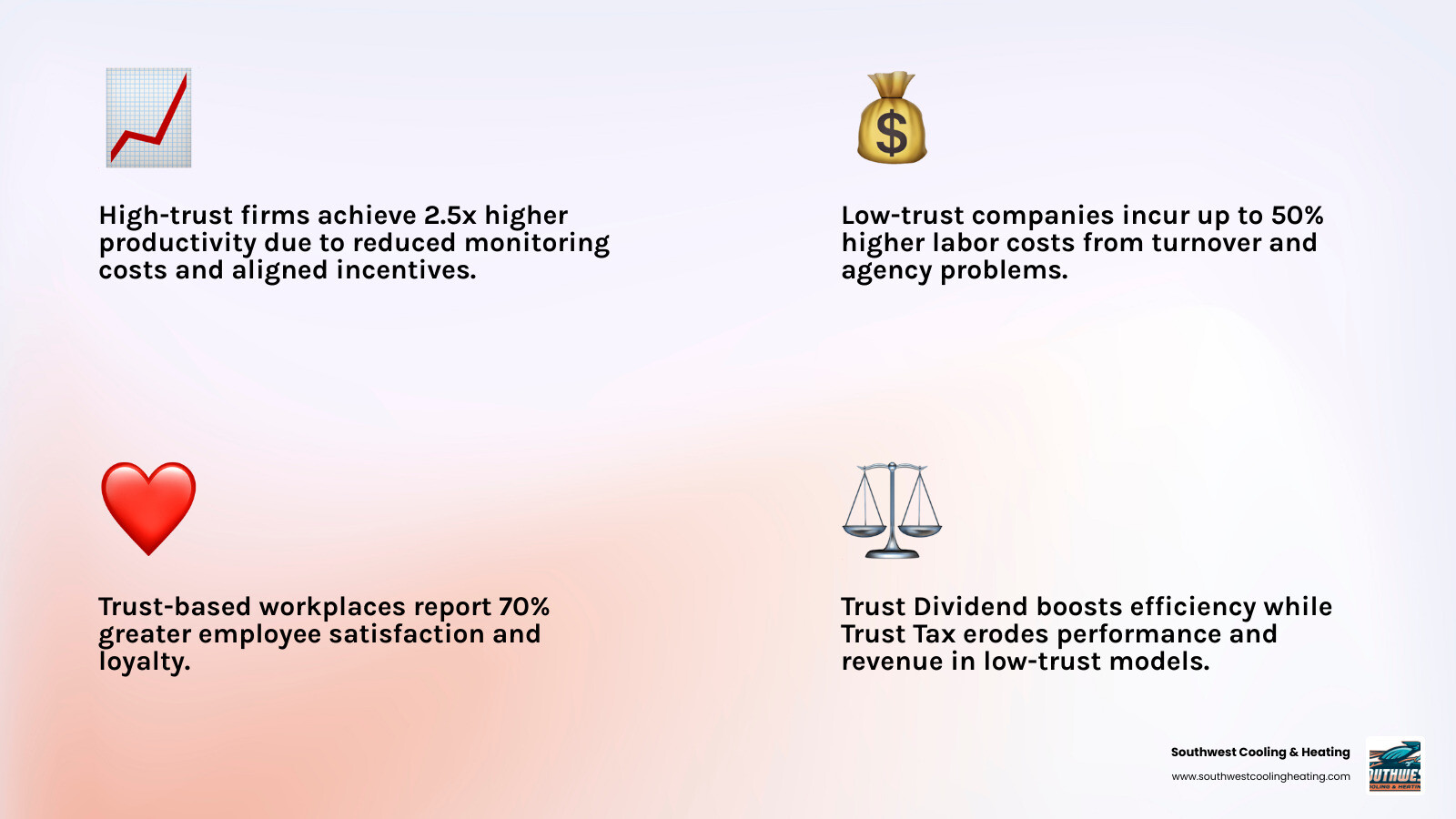
- Higher employee satisfaction — Research shows trust-based workplaces produce more motivated, loyal technicians who take pride in their work
- Reduced risk for you — A company that has survived 46 years has proven it can be held accountable over time
- Values-driven culture — Long-standing companies are built on reputation, not just transactions
That kind of track record isn’t accidental. It’s the result of thousands of service calls, honest conversations, and showing up the right way — year after year.
When a company has been operating since 1980, it has weathered recessions, technology shifts, and changing customer expectations. According to research from PwC, lapses in corporate behavior since the 1980s created a lasting “trust gap” that still affects how customers choose service providers today. The companies that survived and thrived did so by doing the opposite — building trust deliberately and protecting it carefully.
For homeowners in St. George, that history matters. Your HVAC system is one of the most important — and most used — systems in your home. The last thing you want is to hand that responsibility to a company you can’t verify. A business with roots going back to 1980 gives you something newer companies simply can’t: proof.
I’m Bruce Hymas, owner of Southwest Cooling & Heating, and having grown up in this family business before bringing operational and financial leadership experience back to it, I’ve seen how a culture of trust — not just a long history — determines the quality of service a homeowner actually receives. Understanding the benefits of choosing a company running on trust since 1980 isn’t just personal for me — it’s the foundation everything we do is built on.
The Science of Reliability: Why Trust is a Business Multiplier
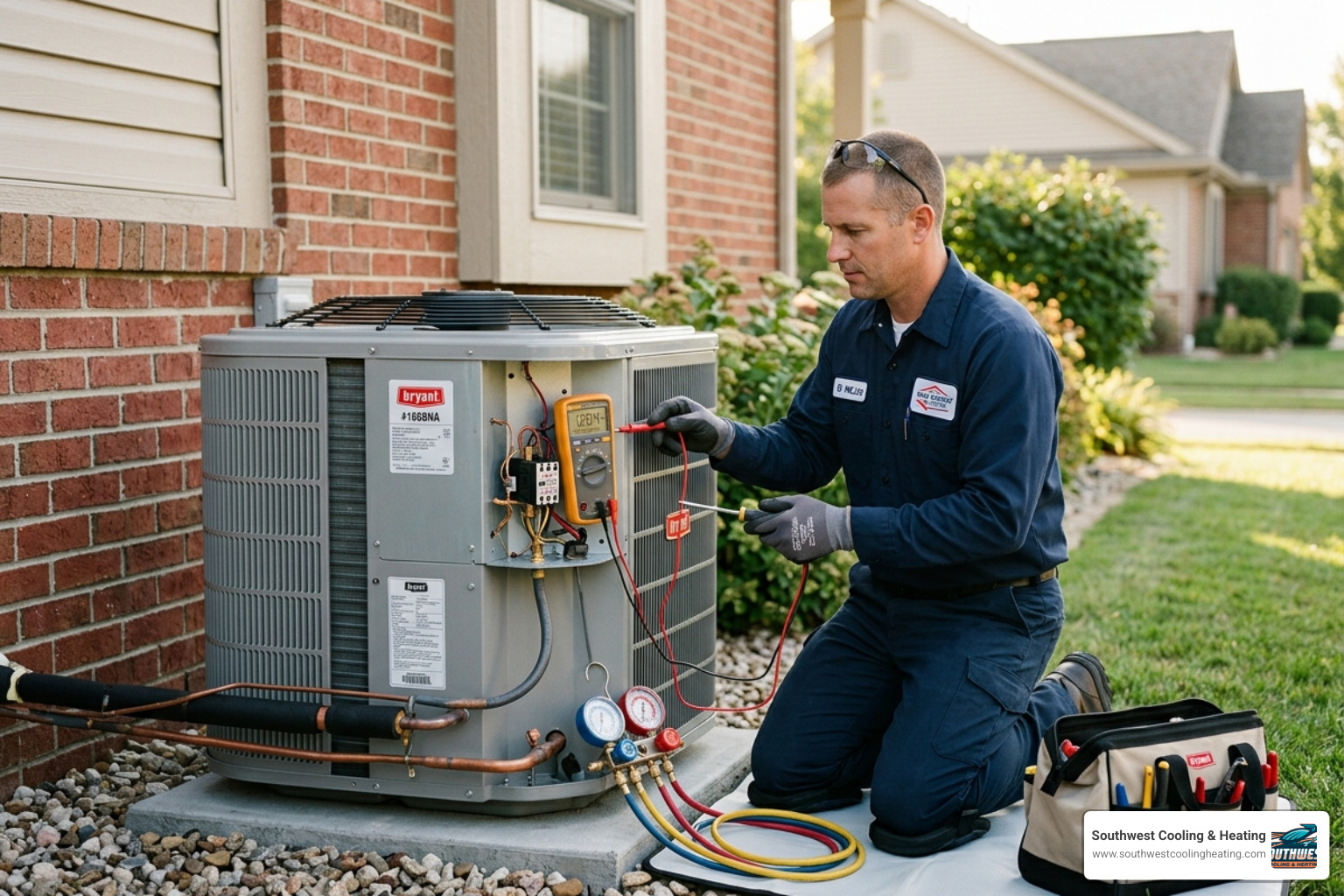
When we talk about trust, it often sounds like a “soft” concept—something nice to have but hard to measure. However, economic research tells a very different story. Trust is actually a powerful “multiplier” that makes a business run more efficiently, and those efficiencies are passed directly to you, the homeowner.
In economics, businesses often struggle with what is called the “agency problem.” This happens when the interests of the employees don’t perfectly align with the interests of the company or the customer. To fix this, many companies rely on heavy monitoring, GPS tracking, and complex incentive-based pay. While these tools have their place, they are expensive and often create a “trust tax” that slows everything down.
At Southwest Cooling & Heating, we’ve learned that About HVAC Service is better delivered through mutual altruism. When a company is built on trust, technicians don’t just work hard because someone is watching; they work hard because they care about the legacy of the company and the comfort of the family they are serving. This internal corporate governance is much more effective than any monitoring software.
Resolving the Agency Problem Through Mutual Trust
A landmark 2002 IMF Working Paper by Ralph Chami and Connel Fullenkamp, titled “Trust As a Means of Improving Corporate Governance and Efficiency,” dives deep into this. The authors argue that trust between coworkers and management resolves agency problems far more effectively than traditional tools like monitoring or performance-based pay.
In a high-trust environment, “moral hazard”—the temptation to cut corners when no one is looking—is significantly reduced. Because our team members trust one another and the company’s leadership, they exert higher effort naturally. This leads to higher productivity and lower internal costs, which allows us to focus entirely on providing the best possible technical solutions for your home in Santa Clara or Hurricane.
Benefits of choosing a company running on trust since 1980
Choosing a firm that has been operational since 1980 isn’t just about nostalgia; it’s about the tangible advantages that come with nearly half a century of refined processes. The benefits of choosing a company running on trust since 1980 include higher productivity, lower labor costs, and significantly improved employee satisfaction.
When employees are satisfied and loyal, they stay. This creates “institutional memory.” If we serviced your furnace in Bloomington Hills twenty years ago, there is a good chance some of our team members remember the layout of those homes or the specific challenges of that neighborhood’s infrastructure. This level of HVAC Services expertise is impossible to fast-track.
How long-term trust since 1980 ensures consistent service quality
Service excellence is a habit, not an act. By maintaining a trust-based culture for over four decades, we ensure that every technician who arrives at your door in Ivins or Toquerville is backed by a proven track record.
Trust induces employees to work harder and reduces the need for expensive, bureaucratic oversight. In a competitive market like Southern Utah, this gives a trust-based firm a massive advantage. We can reinvest those savings into better tools, more advanced training for our team, and higher-quality parts for your home.
The community benefits of choosing a company running on trust since 1980
Trust also has a broader economic impact. According to stakeholder theory, a business is a force for good when it creates value for customers, employees, and the community simultaneously. By choosing a local company that has stood the test of time in St. George, you are supporting a “virtuous cycle.”
We aren’t a large, faceless corporation; we are your neighbors in Hidden Valley and Coral Canyon. Our values alignment with the community ensures that we treat your home with the same respect we would our own. This mutual dependence fosters community health and economic prosperity for everyone involved.
Beyond the Transaction: Mutual Altruism and Stakeholder Success
Traditional management often falls into the trap of “one-sided altruism” or paternalistic management. This is where a boss might try to be “nice,” but the feeling isn’t mutual. Research shows this actually leads to lower efficiency.
True success comes from “reciprocal altruism”—a fancy way of saying that everyone in the circle (the company, the employees, and the customers) looks out for one another. This is why Our Guarantee is so central to our business. It isn’t just a marketing slogan; it’s a reflection of our commitment to a purpose-driven business model where your satisfaction is the ultimate metric of our success.
Why Mutual Trust Outperforms Traditional Monitoring
High-trust organizations outperform low-trust ones in total return to shareholders by 286%, according to studies by Watson Wyatt. While we aren’t a publicly traded giant, the principle remains: trust is a performance multiplier.
When our technicians feel trusted, they are more likely to demonstrate vulnerability—admitting if a repair is more complex than expected or seeking a second opinion from a senior lead. This honesty prevents small issues from becoming big, expensive problems for you. It reduces turnover, meaning you see the same friendly faces year after year in La Verkin and Diamond Valley.
Longevity as a Shield: Navigating 46 Years of Change in Southern Utah
Since 1980, the St. George climate hasn’t changed much—it’s still hot!—but the technology we use to keep you cool has evolved tremendously. Navigating 46 years of change requires a unique blend of adaptability and resilience.
A company that started in 1980 has seen the transition from basic mechanical thermostats to smart, AI-driven climate control systems. We’ve maintained our technological independence, choosing the best systems for our local environment rather than being beholden to a single manufacturer’s quarterly sales goals. If you have questions about how these modern systems can work in your older home, you can always Contact Us for expert guidance.
The Evolution of Service Standards Since the 1980s
The building automation and HVAC industries have shifted from a “break-fix” mentality to one of proactive health and sustainability. Just as the “prudent investor” rule replaced the “prudent man” rule in the financial world in the late 1980s, we have moved toward a more sophisticated, data-driven approach to home comfort.
| Feature | Trust-Based Firm (Southwest) | Standard Agency Model |
|---|---|---|
| Primary Motivator | Mutual Altruism & Reputation | Monitoring & Incentives |
| Employee Effort | High (Self-Directed) | Variable (Based on Oversight) |
| Monitoring Costs | Low | High |
| Customer Outcome | Consistent Quality | Hit-or-Miss |
| Institutional Memory | Decades (Since 1980) | Often Short-Term |
Frequently Asked Questions about Long-Term Business Trust
Why does a company’s founding year like 1980 matter for my home service?
A founding year tells a story of resilience. In an industry where many companies close their doors within the first five years, reaching the 46-year mark proves that a company has consistently delivered value through economic booms and busts. It means we have a long-term interest in maintaining our reputation in Winchester Hills and the surrounding areas.
How does internal company trust affect the quality of work in my home?
When technicians trust their employer, they are more engaged and loyal. They are less likely to rush a job just to meet a quota and more likely to take the time to ensure your system is running at peak efficiency. Trust reduces “moral hazard,” meaning the work done in your attic or crawlspace is done right, even when you aren’t there to see it.
What is the difference between a “trust tax” and a “trust dividend”?
A “trust tax” is the extra cost and time added to a job due to bureaucracy, double-checking, and poor communication common in low-trust environments. A “trust dividend” is the speed and efficiency gained when everyone is on the same page. High-trust companies operate faster and more reliably, providing a “dividend” of peace of mind and better value to the customer.
Conclusion
At Southwest Cooling & Heating, we believe that the benefits of choosing a company running on trust since 1980 are visible in every handshake and every successfully repaired air conditioner. We have spent the last 46 years building a culture of integrity and professionalism in St. George and its neighboring communities.
Whether you are in Santa Clara, Bloomington, or Hurricane, you deserve a team that combines modern technical expertise with the “old-school” values of honesty and hard work. We invite you to Experience the peace of mind that comes with our long-standing commitment to excellence and see why trust is the most important tool in our van.