


What to Expect When Your HVAC System Fails — and What to Do Next
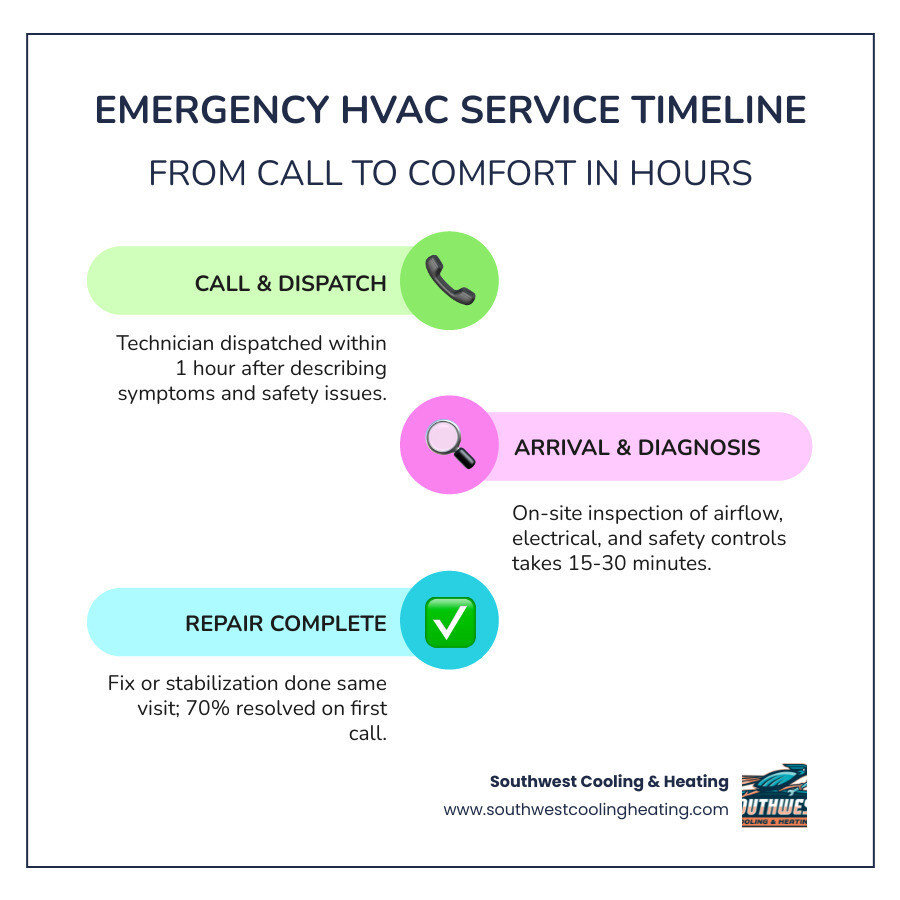
Emergency hvac repair what to expect comes down to a few key steps: a technician is dispatched to your home, performs a safety and system assessment, diagnoses the problem, and either completes the repair on the spot or stabilizes your system until parts are available. Here’s a quick overview:
- Call for service — Describe your symptoms, note any safety concerns (gas smells, burning odors, sparks), and confirm 24/7 availability.
- Basic self-checks — Before the tech arrives, check your thermostat settings, circuit breakers, and air filter. These simple steps resolve 15–20% of calls at no cost.
- Technician arrives — Expect an inspection of airflow, electrical components, safety controls, and the thermostat.
- Diagnosis and options — You’ll receive a clear explanation of the problem and your repair options before any work begins.
- Repair or temporary fix — Many issues are resolved in one visit. If parts are needed, the technician will stabilize your system and schedule a follow-up.
- Post-repair guidance — A good technician will explain what failed, why, and how to reduce the risk of it happening again.
It doesn’t matter if it’s the middle of a St. George summer scorcher or a rare freezing winter night — when your HVAC system stops working, stress sets in fast. Over 70% of homeowners face an HVAC breakdown during peak seasons, which is exactly when the system is working hardest and you can least afford to go without it. Knowing what happens next — from that first phone call to the moment cool or warm air starts flowing again — can make an already stressful situation feel a whole lot more manageable.
I’m Bruce Hymas, owner of Southwest Cooling & Heating, and with more than four decades of HVAC service experience in the St. George area behind this company, I’ve seen how understanding emergency hvac repair what to expect helps homeowners make smarter, calmer decisions when their system goes down. In the sections ahead, I’ll walk you through every step of the process so you know exactly what’s coming.
Identifying a True HVAC Emergency in Southern Utah
In the high desert of Southern Utah, our weather is beautiful but can be unforgiving. When the temperature in Hurricane or Ivins climbs well past 100°F, a broken air conditioner isn’t just an inconvenience; it can be a health hazard. But how do you know if you need to call for Emergency HVAC Services right now or if you can wait until Monday morning?
A true emergency is any situation that threatens your health, your property, or the safety of your home. Here are the red flags that require immediate attention:
- Extreme Temperatures: If it is over 95°F outside and your AC fails, indoor temperatures can quickly reach dangerous levels. This is especially critical if you have infants, elderly family members, or individuals with chronic health conditions in the home. Similarly, if the temperature is below freezing and your heater fails, your home is at risk for frozen pipes, which can lead to thousands of dollars in water damage.
- Gas Smells (The “Rotten Egg” Odor): If you smell gas near your furnace, this is a severe safety emergency. Natural gas is odorless, so utilities add a chemical called mercaptan that smells like sulfur or rotten eggs to alert you to leaks.
- Electrical Hazards: If you see sparks, smell burning plastic or “ozone,” or see smoke coming from your vents or unit, shut the system off at the breaker immediately. This indicates a potential fire risk.
- Carbon Monoxide Alarms: If your CO detector goes off, evacuate the house immediately. This often stems from a cracked heat exchanger in a gas furnace.
- Major Water Leaks: While a small drip might wait, a massive pooling of water near your indoor unit usually points to a clogged condensate line. If left unaddressed, this can flood your ceilings or floors, leading to structural damage and mold.
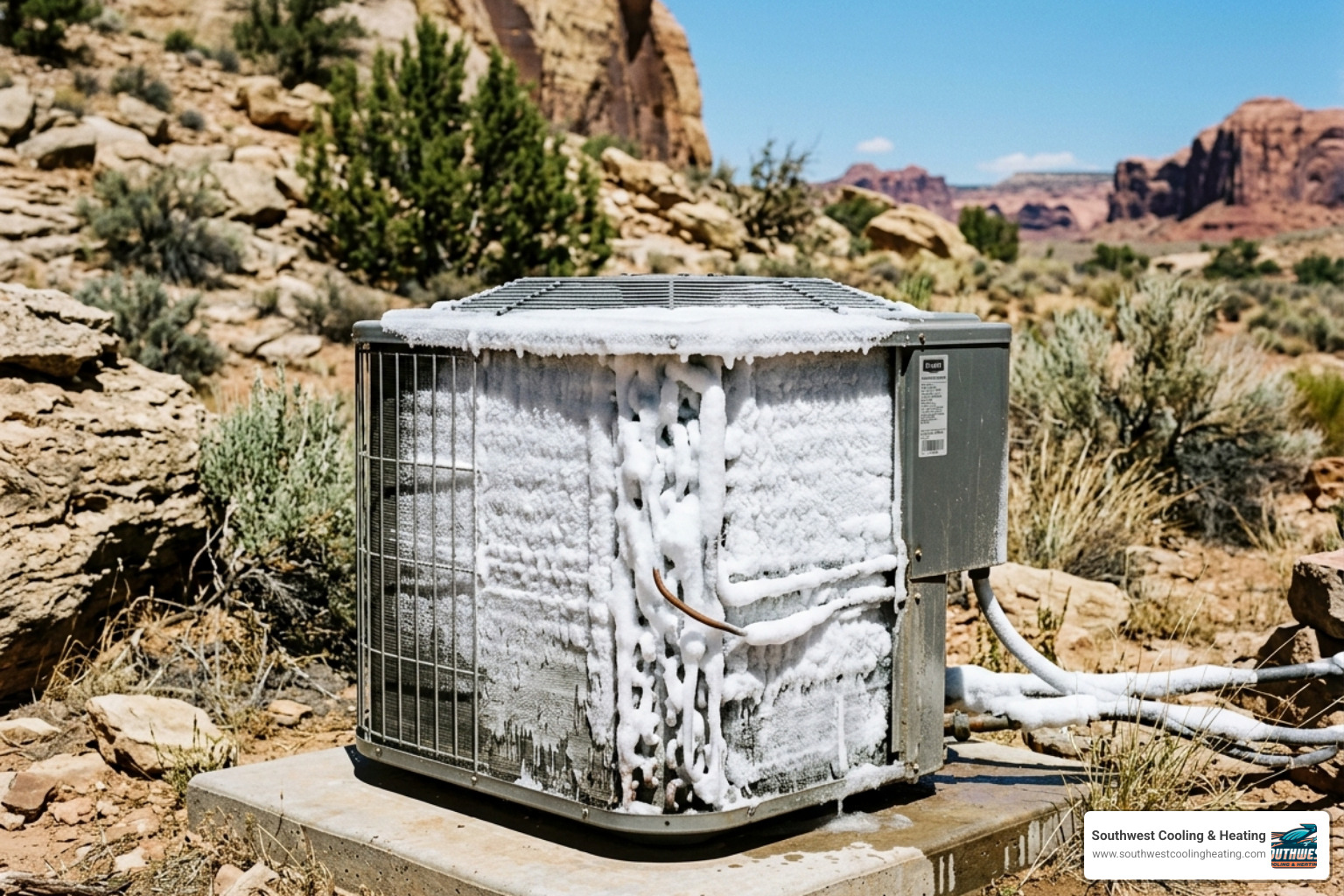
- Ice Buildup: If you see a block of ice on your outdoor unit or indoor coils during a Santa Clara summer, your system is under extreme stress. Running it in this state can kill the compressor, turning a simple repair into a total system replacement.
The Professional Process: Emergency HVAC Repair What to Expect
When you call us for an emergency, our goal is rapid dispatch. We know that every hour without climate control in Bloomington or Diamond Valley feels like a lifetime. Once a technician is on the way, here is the step-by-step breakdown of the visit.
Rapid Dispatch and Arrival
When you call, our dispatchers will ask specific questions: Are there vulnerable people in the home? Are there smells or sounds? What troubleshooting have you already tried? This helps our technicians prioritize the most dire situations and ensure they have the right parts on their truck.
The Initial Assessment
Upon arrival, the technician won’t just start turning screws. They will perform a comprehensive diagnostic. This includes checking the thermostat settings, testing airflow throughout the home, and inspecting the electrical connections. For an AC Repair, they will look at refrigerant levels, the capacitor, and the blower motor.
Diagnosis and Explanation
We believe in “old-school values,” which means we explain the problem in plain English. You’ll find out exactly what part failed and why. If it’s a Furnace Repair, the tech might show you a worn-out ignitor or a faulty gas valve. You will always be given a clear path forward before any work starts.
Temporary vs. Permanent Solutions
Our trucks are mobile warehouses, and we aim to fix the problem on the spot. However, if your system requires a specialized part that isn’t immediately available, the technician’s priority shifts to “stabilization.” This might mean bypasses to get the fan running or providing temporary cooling solutions to keep you safe until the permanent part arrives the next day.
Immediate Troubleshooting Steps to Try First
Before you hit the panic button, there are a few “zero-cost” checks you should perform. Believe it or not, about 15% to 20% of the emergency calls we receive in areas like Toquerville or La Verkin are solved by these simple steps. Checking these first can save you the time and stress of waiting for a service call.
- The Thermostat: It sounds simple, but check the batteries. A dead battery is the #1 cause of a “dead” HVAC system. Also, ensure it is set to “Cool” or “Heat” and that the temperature setting is at least five degrees away from the current room temperature.
- The Circuit Breaker: Check your electrical panel. If the breaker for the AC or furnace has tripped to the “off” or “neutral” position, flip it back once. If it trips again immediately, do not flip it a second time—this indicates a dangerous electrical short.
- The Air Filter: A clogged filter can cause a furnace to overheat and shut down, or an AC unit to freeze up. If your filter looks like a wool sweater, replace it immediately.
- The Power Switch: Most furnaces have a switch that looks like a light switch nearby (often in the closet or attic). Sometimes these are bumped into the “off” position during cleaning or while moving boxes.
- Vents and Grilles: Ensure your return air grilles and supply vents aren’t blocked by furniture or heavy curtains. This restricted airflow can cause the system to “limit out” and stop working for safety reasons.
Simple checks for emergency hvac repair what to expect
| Potential Issue | DIY Check | When to Call a Pro |
|---|---|---|
| System won’t turn on | Check thermostat batteries & breaker | Breaker trips repeatedly or thermostat is blank |
| Blowing warm air (AC) | Check air filter for clogs | Refrigerant leak or compressor failure |
| Strange Noises | Look for loose panels or debris | Banging, screeching, or grinding sounds |
| Water pooling | Check if the drain pan is full | Clogged internal lines or cracked drain pan |
| No airflow | Check all vents are open | Blower motor failure or ductwork issues |
If you’ve run through these checks and the system is still unresponsive, it’s time for a professional Heating Repair.
Staying Safe and Comfortable While Waiting for Service
Even with the fastest response times in Coral Canyon or Winchester Hills, there will be a waiting period while the technician drives to your location. During this time, your comfort and safety are the priority.
In the Summer:
- Close the Blinds: Block out the intense St. George sun. Heavy curtains or even cardboard over windows can keep the heat out.
- Hydrate: Drink plenty of water. Avoid caffeine or alcohol, which can dehydrate you faster.
- Use Fans: Ceiling fans and portable fans don’t lower the temperature, but they help sweat evaporate, making you feel 4–6 degrees cooler.
- Limit Appliance Use: Don’t run the dishwasher, oven, or clothes dryer. These all add significant heat to your home.
In the Winter:
- Seal Drafts: Use towels to block the gaps at the bottom of doors.
- Gather Together: Have the family stay in one central room with the door closed to retain body heat.
- Secondary Heat Safety: If you use space heaters, keep them at least three feet away from curtains or furniture. Never leave them unattended. If you have a Heat Pump, do not try to “force” it to work if it’s making loud noises; stick to your secondary heat source.
- Drip the Faucets: If the temperature is well below freezing, let your faucets drip slightly to prevent pipes from bursting while the heat is off.
Proactive Strategies to Prevent Future System Breakdowns
The best way to handle an HVAC emergency is to prevent it from ever happening. Statistics show that homeowners who invest in regular maintenance are 50% less likely to experience a total system failure. Most emergencies don’t happen out of thin air; they are the result of small problems—like a dirty coil or a loose wire—that were ignored for too long.
Avoiding the need for emergency hvac repair what to expect
- Annual Precision Tune-Ups: We recommend a “spring for cool, fall for heat” schedule. These inspections catch worn capacitors, low refrigerant, and cracked ignitors before they leave you stranded.
- Filter Schedules: Mark your calendar. In the dusty Southern Utah climate, a 1-inch filter should be changed every 30 days.
- Clear the Debris: Keep the area around your outdoor unit clear of weeds, leaves, and “desert fluff.” Your unit needs to “breathe” to release heat; if it’s choked by debris, it will overheat and fail.
- Listen to Your System: If you hear a new squeal, a thumping sound, or notice your system is “short cycling” (turning on and off every few minutes), call us for a standard appointment. Addressing these signs early prevents the 2:00 AM emergency call.
Regular maintenance doesn’t just prevent breakdowns; it also extends the lifespan of your equipment. A well-maintained AC unit can last 15–20 years, whereas a neglected one might give out in as little as 8–10 years.
Frequently Asked Questions about Emergency HVAC Services
What should I do if I smell rotten eggs near my furnace?
Evacuate the home immediately and do not turn on any lights or use your phone inside (as these can create a spark). Once you are a safe distance away, call your gas utility provider and then call for emergency repair. Do not re-enter the home until a professional has cleared it.
How long does a typical emergency repair visit take?
Most emergency repairs are diagnosed and fixed within one to two hours. Simple issues like a failed capacitor or a blown fuse can be done in under 45 minutes. If a major component like a compressor or heat exchanger has failed, the technician will discuss longer-term repair or replacement options with you.
Is it safe to run my system if it is making loud banging noises?
No. Loud banging usually indicates a mechanical failure, such as a loose blower wheel or a failing compressor. Running the system in this condition can cause “collateral damage,” where a $300 part breaks a $2,000 part. Shut the system off and wait for a technician.
Conclusion
At Southwest Cooling & Heating, we’ve been serving the St. George community since 1980. We understand that an HVAC failure feels like a crisis because, in our climate, it often is. Whether you are in Santa Clara, Bloomington Hills, or out in Hurricane, our commitment remains the same: high-quality service, modern technology, and honest, old-school values.
When you know emergency hvac repair what to expect, you take the power back from the situation. You know how to stay safe, how to troubleshoot the basics, and that a professional technician is on the way to restore your comfort. Don’t let a breakdown ruin your week. If your system is acting up or has failed completely, reach out to us for Emergency HVAC Services. We’re here to help you get back to your life, cool and comfortable.